Émile Riopel
S’il le faut, je me réduirai en cendres pour être sûr que le vent m’emporte
09.11–10.24.2026
Current
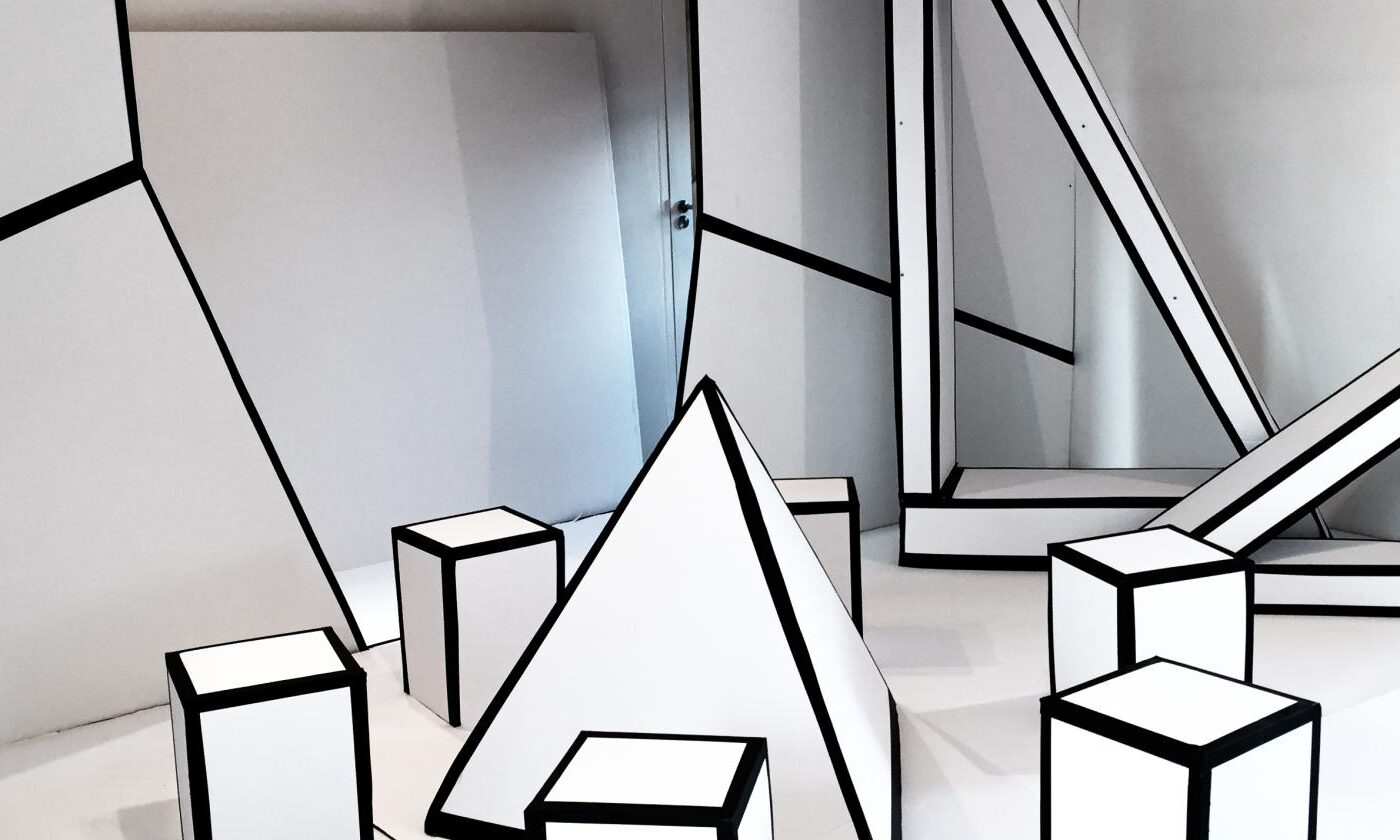
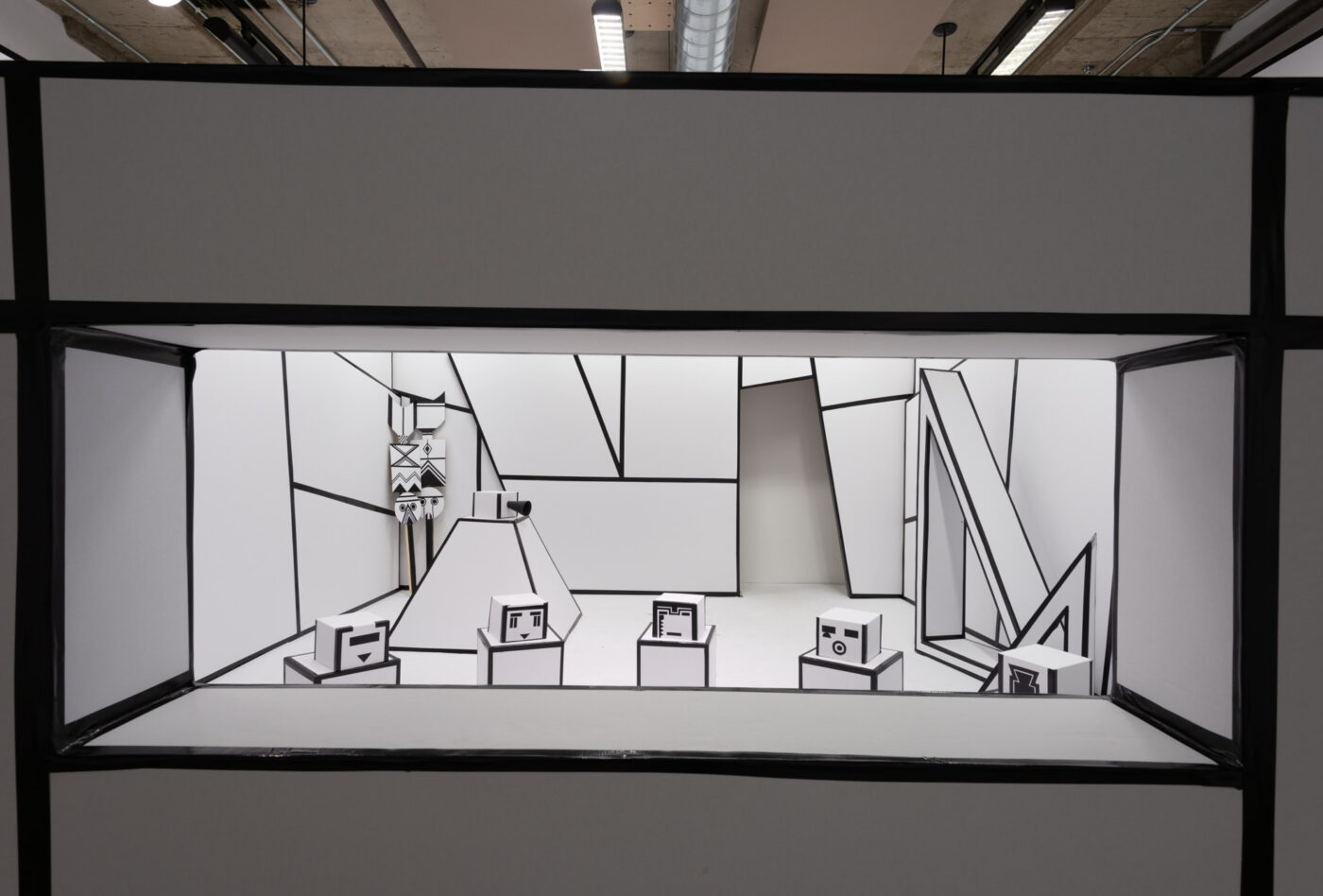
Pil and Galia Kollectiv, Progress Report from the Strategic Sanctuary for the Destruction of Free Will, 2016, installation view. Courtesy the artist and Pump House Gallery. Photo: Eoin Carey
Artist
Pil and Galia Kollectiv
“Why don’t we do a little exercise… Would anyone like to put themselves forward?”
–Masked voice from the performance in Second Annual Report from the Strategic Sanctuary for the Destruction of Free Will (2018)
In writing about architecture, Le Corbusier observed how things, over time, melt into primary shapes. Like Grecian ruins, great things become reduced to simple, formal arrangements: “I think that the flatness of the horizon, particularly at noon when it imposes a uniformity on everything about it, provides for each one of us a measure of the most humanly possible perception of the absolute”. An investigation into how we perceive the world around us, particularly the power structures that bind us, is the starting point for Pil and Galia Kollectiv’s Second Annual Report from the Strategic Sanctuary for the Destruction of the Free Will. In this site-specific installation by the London-based duo we experience an ineffable, white, total world where self-expression is in tension with over-arching regulating systems.
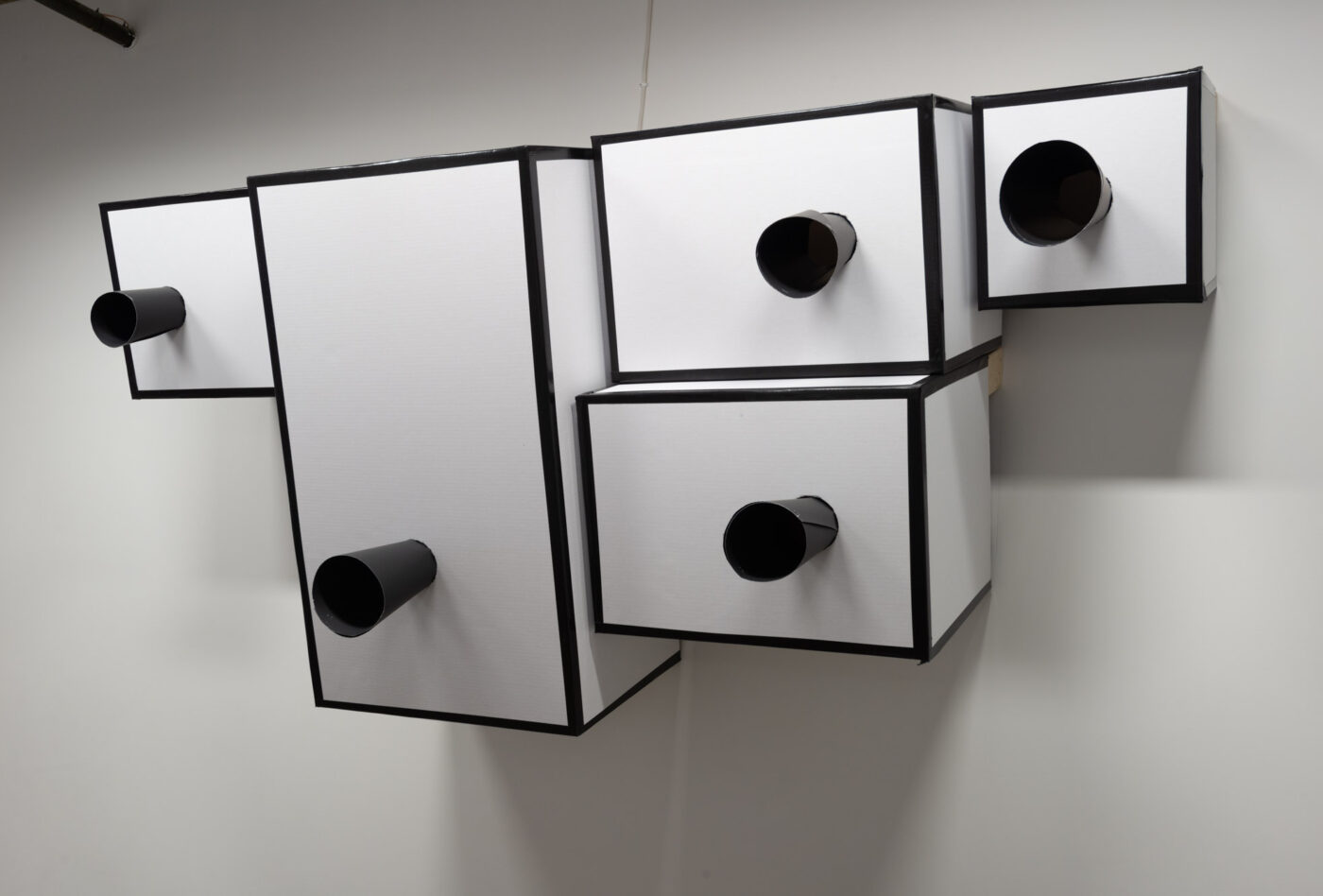
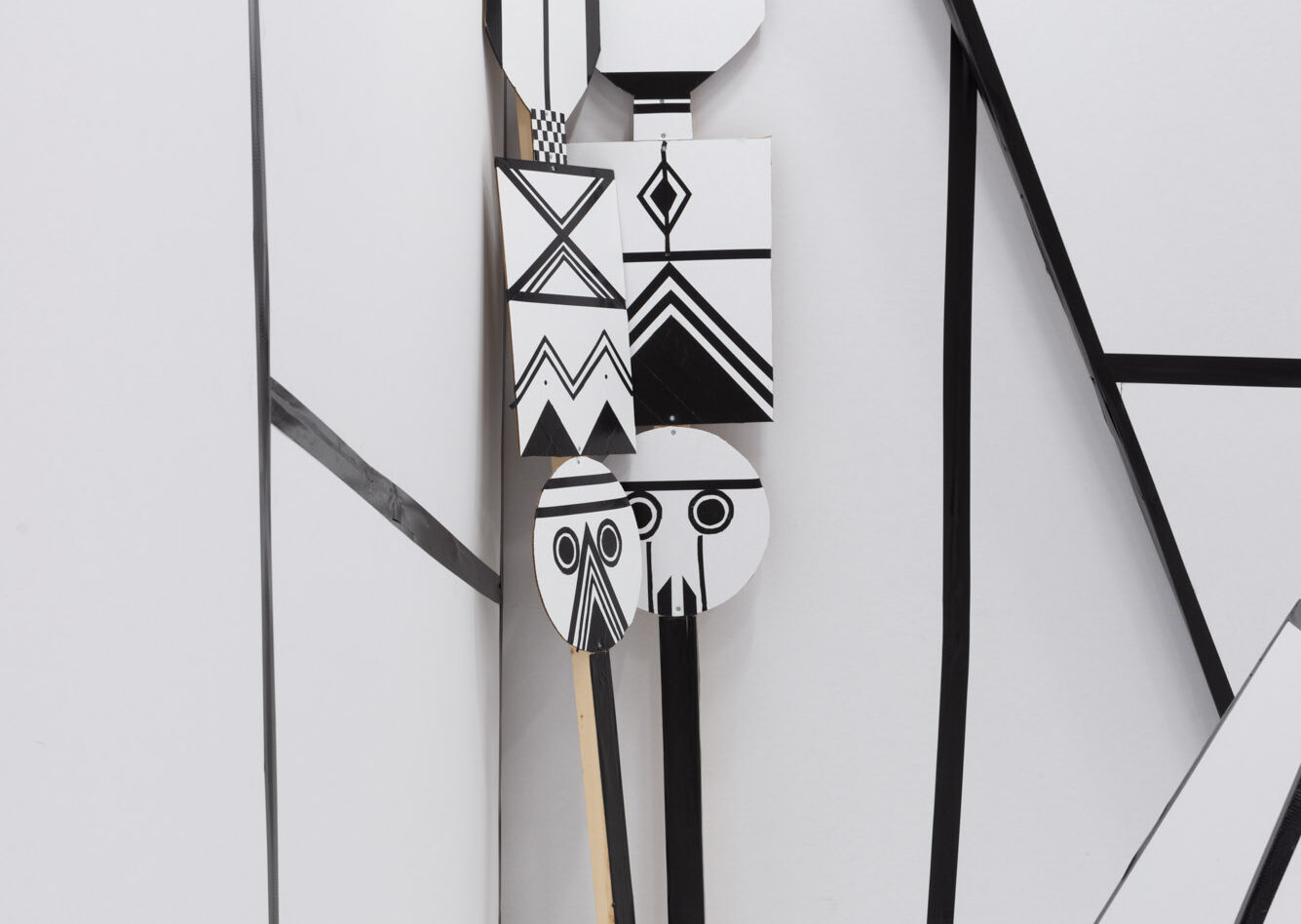
In Strategic Sanctuary we encounter a white, horizonless space. Clues to where we are, and what era we are in, provide both comfort and unnerving possibility. A ready-made cardboard Bauhaus room might be a prison cell, monk’s sanctuary, or padded therapy room. The uniform skin of whiteness is cut by swaths of black tape. Long, black lines describe wall hinges and life-sized triangles. They restrain form but also entice us toward ungraspable horizons. The title of the installation is derived from a pamphlet from the 1950s entitled SYNANON: STRATEGIC SANCTUARIES FOR THE DESTRUCTION OF FREE WILL written against Synanon, an offshoot AA cult whose mandate was to get people to stop drinking by using LSD instead. The space itself seems to make a parallel between the mechanisms of state control and regulation on the one hand, and the idea of self-expression and spiritual release, on the other. An audio soundtrack based on a Youtube group therapy session plays eerily in the background. We anticipate de-tox, absolution, or full ecstatic ritual.
Is chaos still chaos if we find ways to contain it? We may stand for or against the monitoring of our well-being and suitability for work, normalcy, and complicity with the whole, but we can’t help but notice how freely we express ourselves when masked. Or how we fall into the surreal gestures and choreology of cult rapture, metal band performances, and group therapy confession. In Strategic Sanctuary we are asked to let go and empathise. Placed under such voluntary house-arrest, the excessive generation of subjectivity (aka sharing) feels like the high of psychedelic drugs, the collective fire of shared justice, and the levelling fervour-to-belong that can bring us, willfully, to the point of worship, making us question the way such experiences are constructed.
— Text by Alisha Piercy
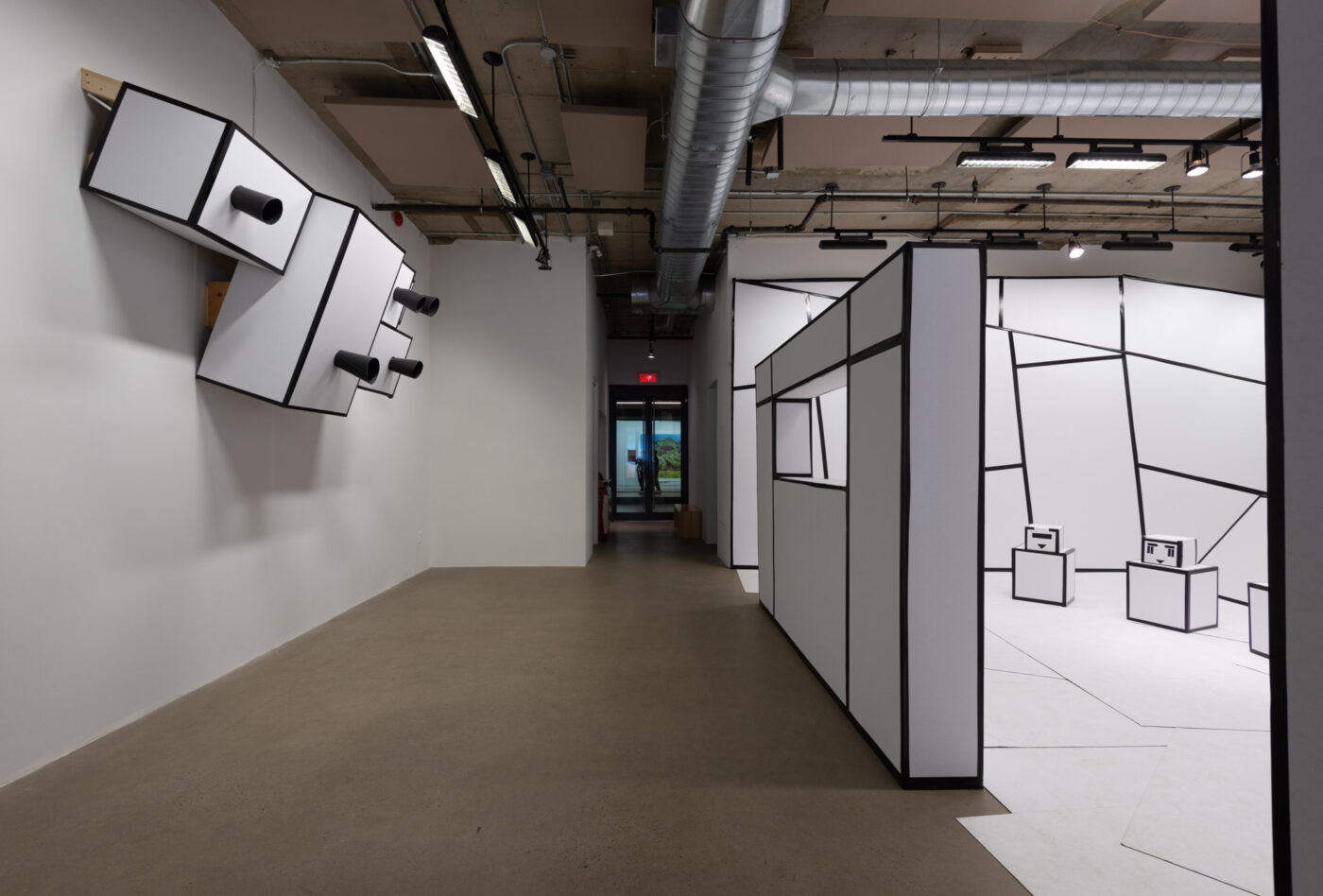
CRÉDIT PHOTO: PAUL LITHERLAND
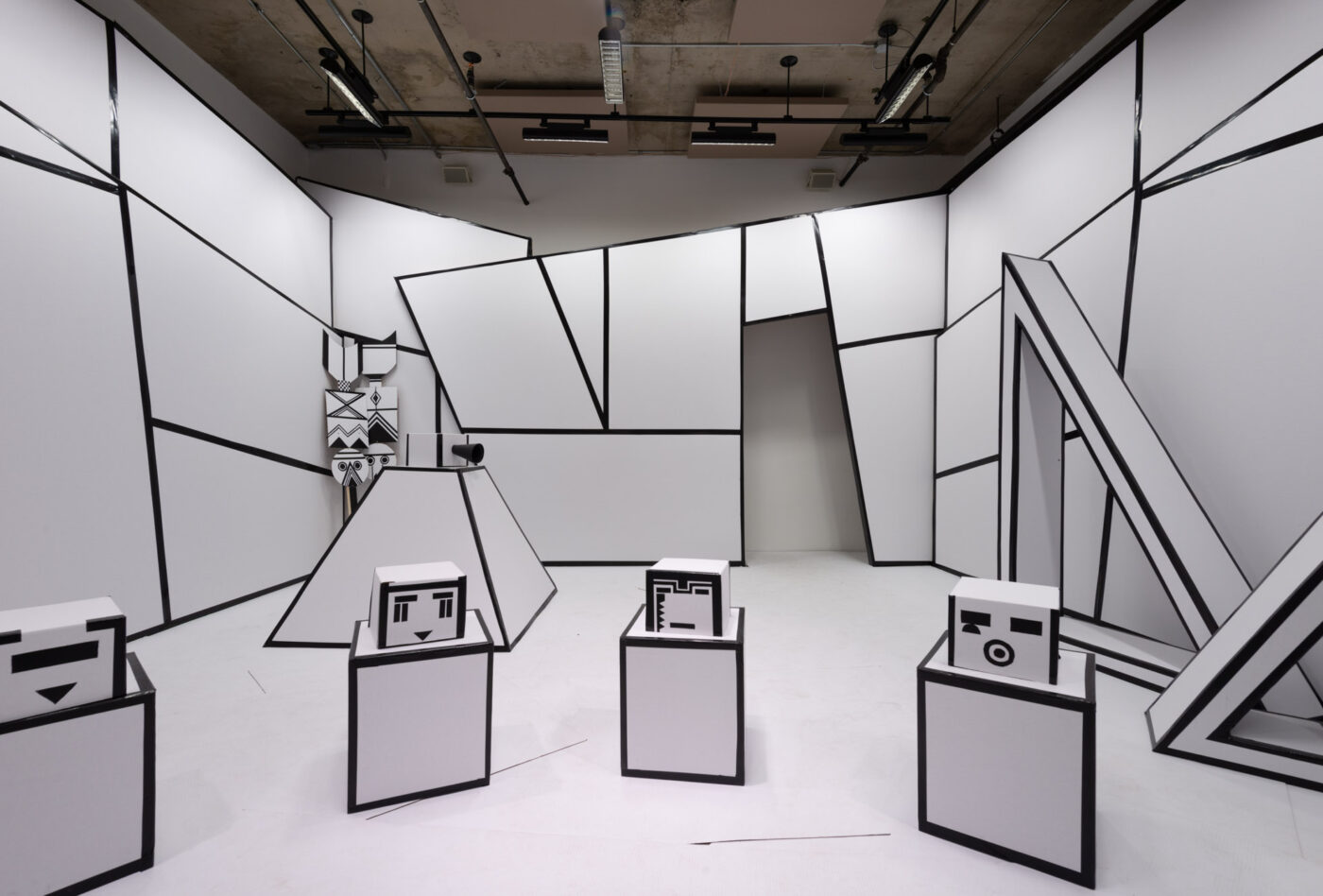
CRÉDIT PHOTO: PAUL LITHERLAND
CRÉDIT PHOTO: PAUL LITHERLAND
CRÉDIT PHOTO: PAUL LITHERLAND
CRÉDIT PHOTO: PAUL LITHERLAND
A crowdfunding campaign for emerging artists.