
Émile Riopel
S’il le faut, je me réduirai en cendres pour être sûr que le vent m’emporte
09.11–10.24.2026
Current

Writing the common
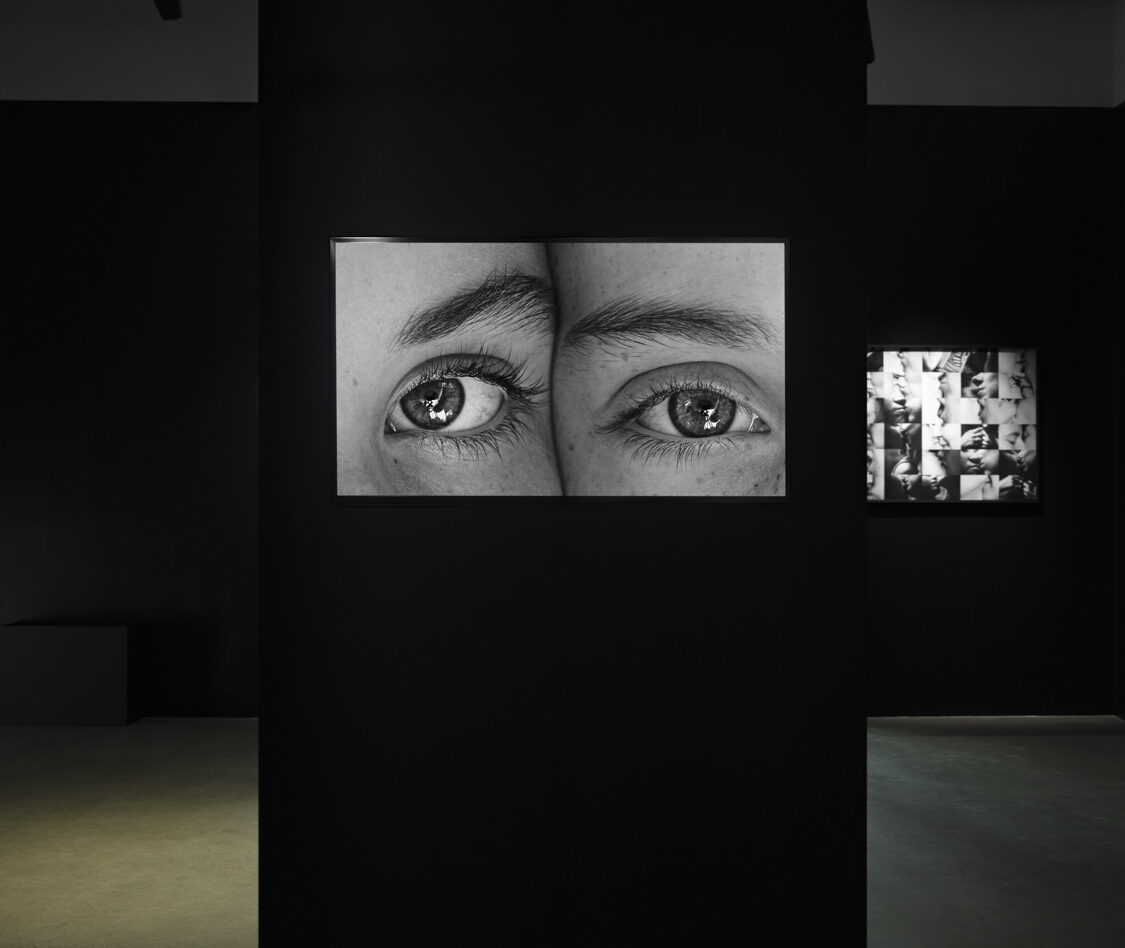
Gazing eyes
Two disconnected glances
A magnetic imbalance
Intimacy—protected yet shared
Her eye and that of the other
A twin gaze, resting upon you
With neither vanishing point nor evasion
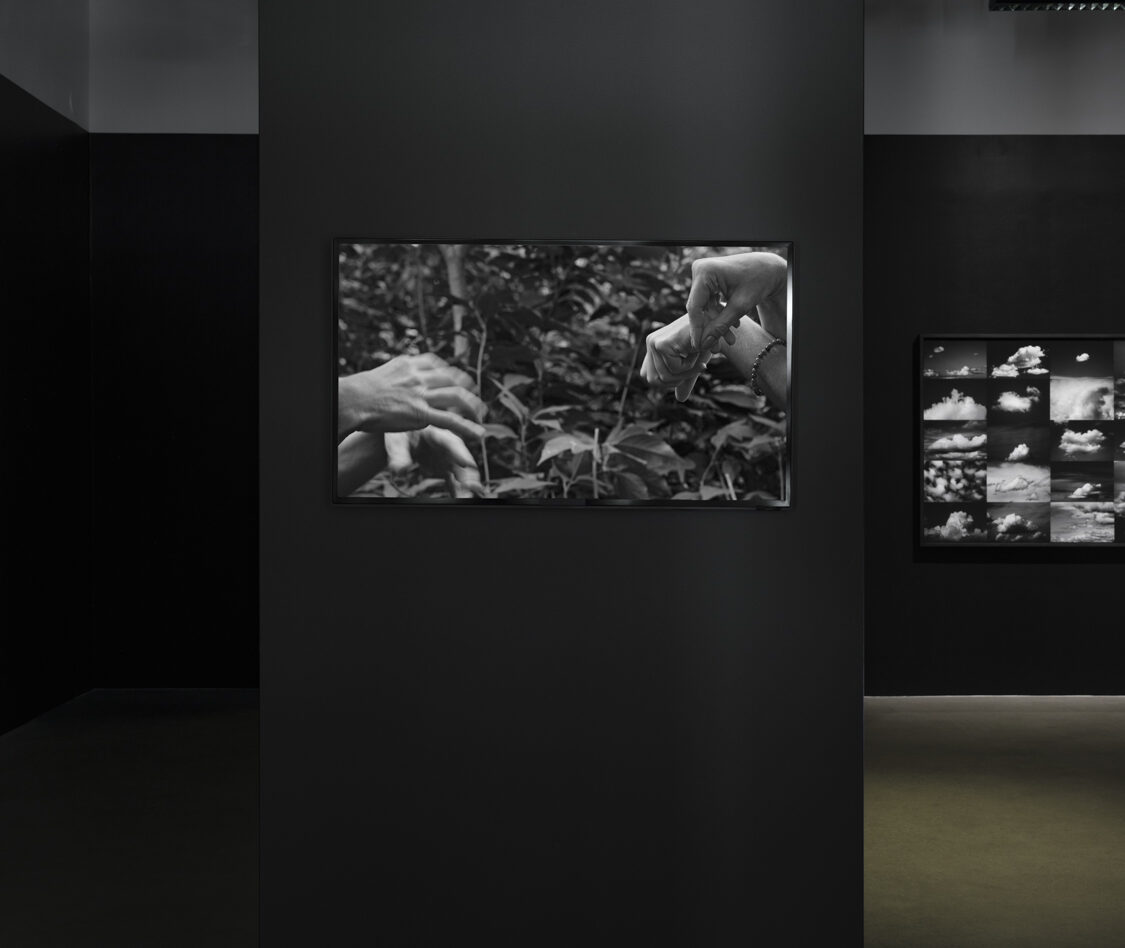
Hesitant hands
Folding, opening, slowing, rushing
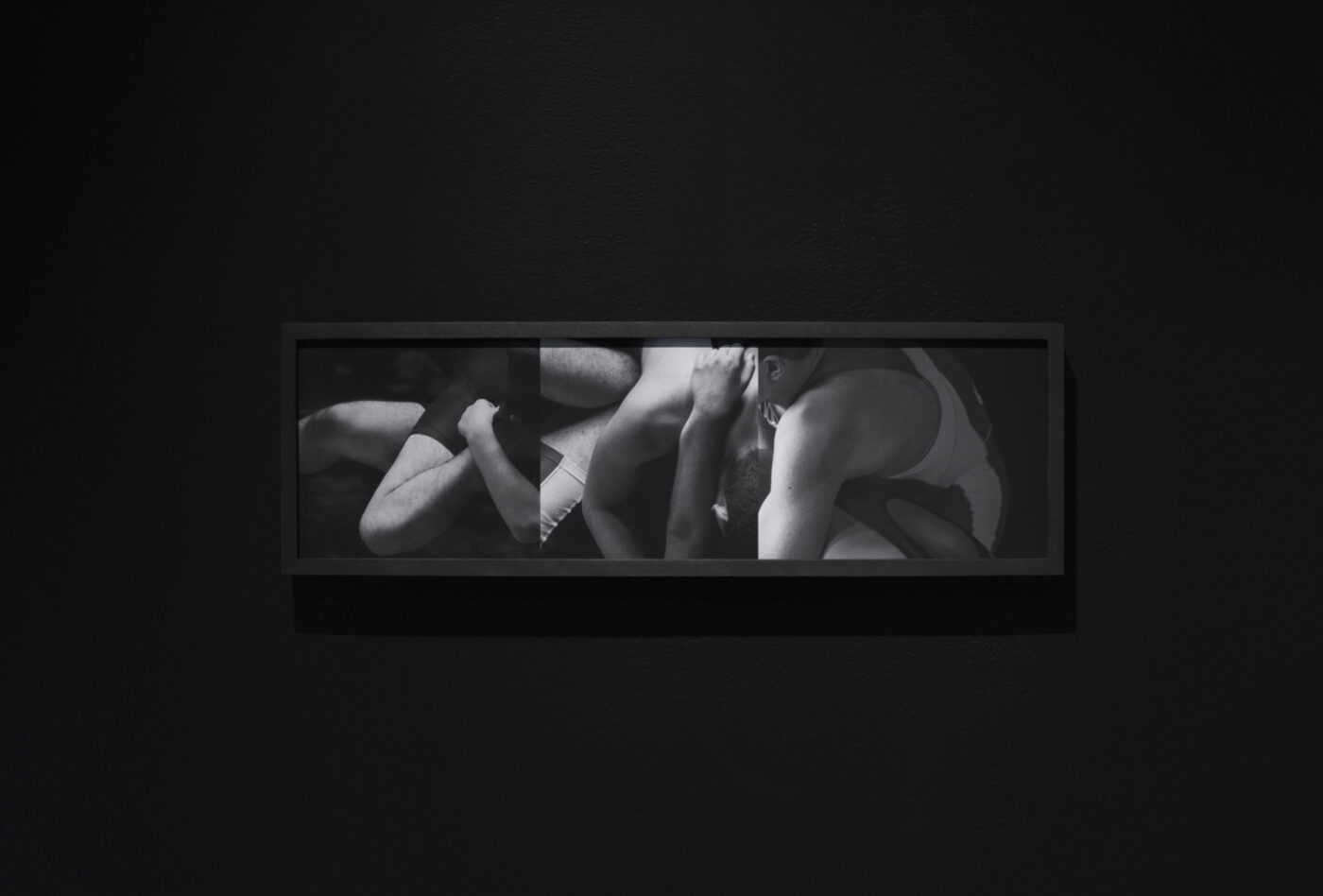
A restrained embrace
Touching the void
To reach the other
Sharing time, place, and subject so that action may unfold
Giving form to silence
Conceiving the interstices as added layers of meaning
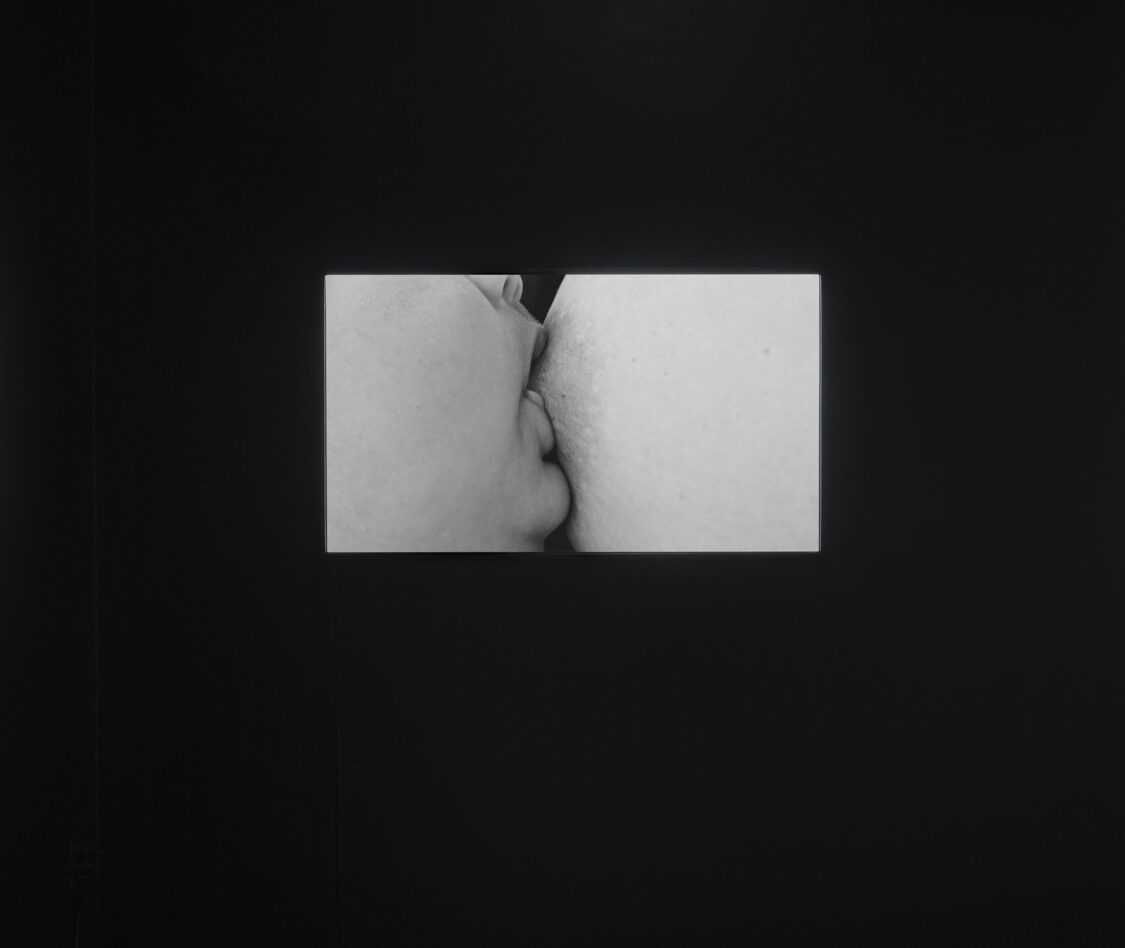
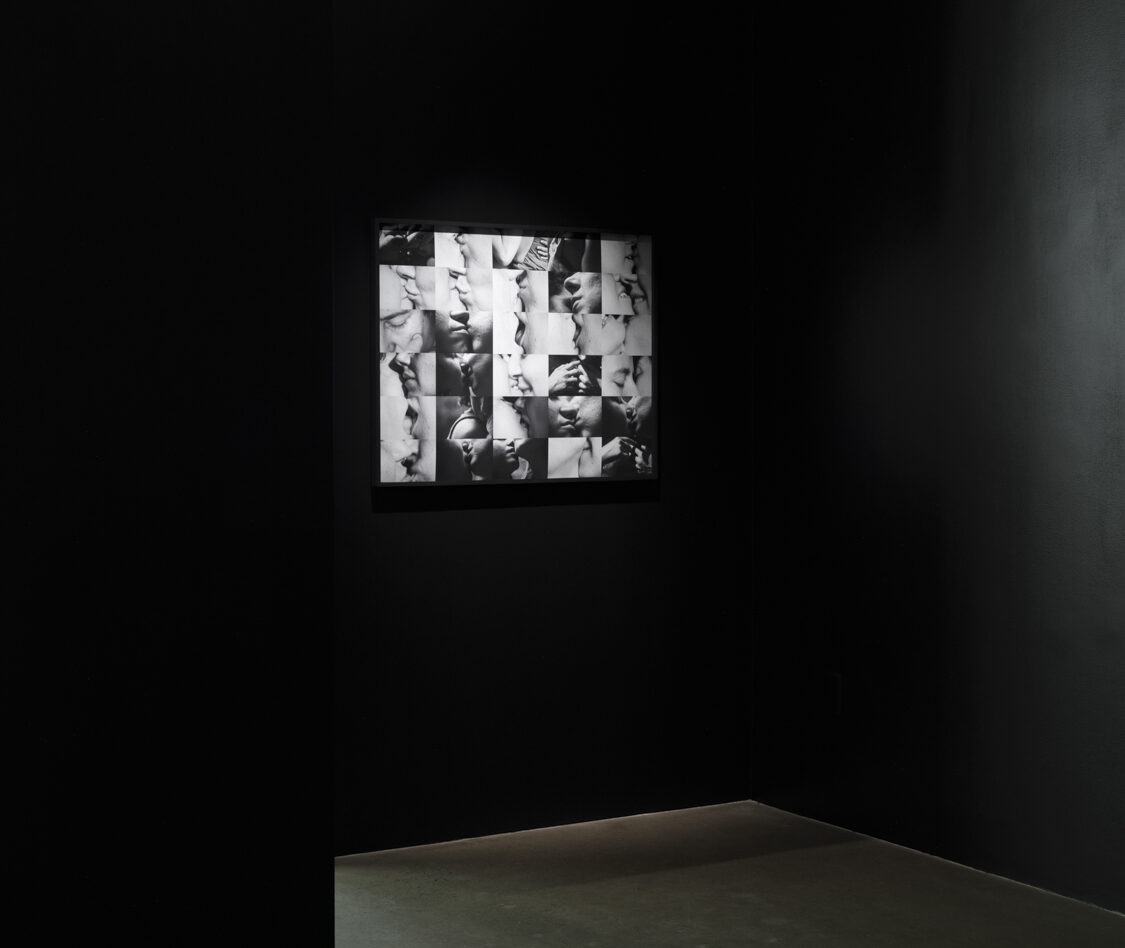
Lips melting into flesh
Remembrance of first pleasure
Where avidity meets satiety
Desire, the breadth of expectations
And hope, the synchronicity of breaths
Yielding, surrendering, allowing fusion to take place
And thus letting what must flow through
At the curve of your lips
A dream that works so well
It transcends reality
An allegory playable only in monochrome
From the black of solitude
To the liberating white
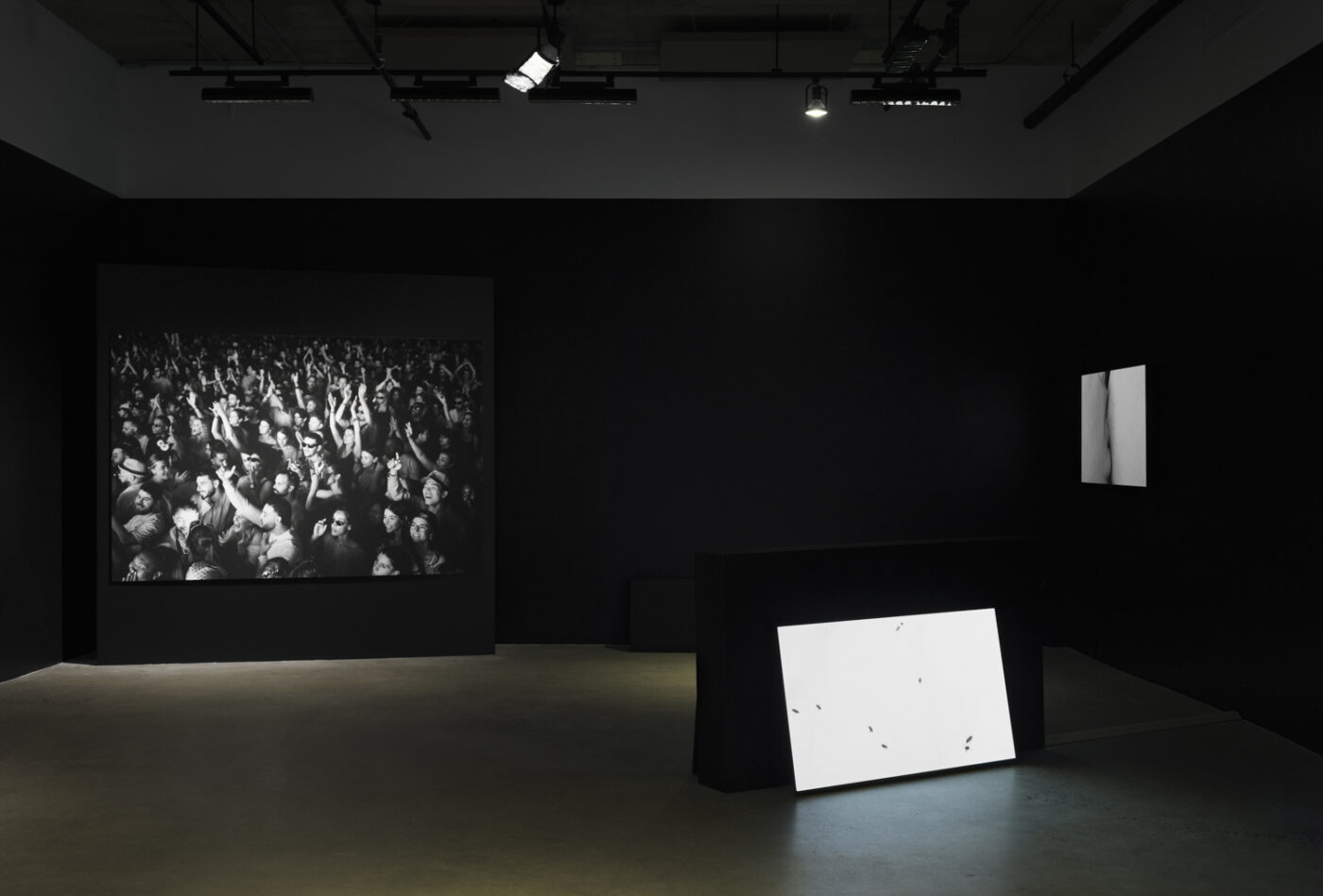
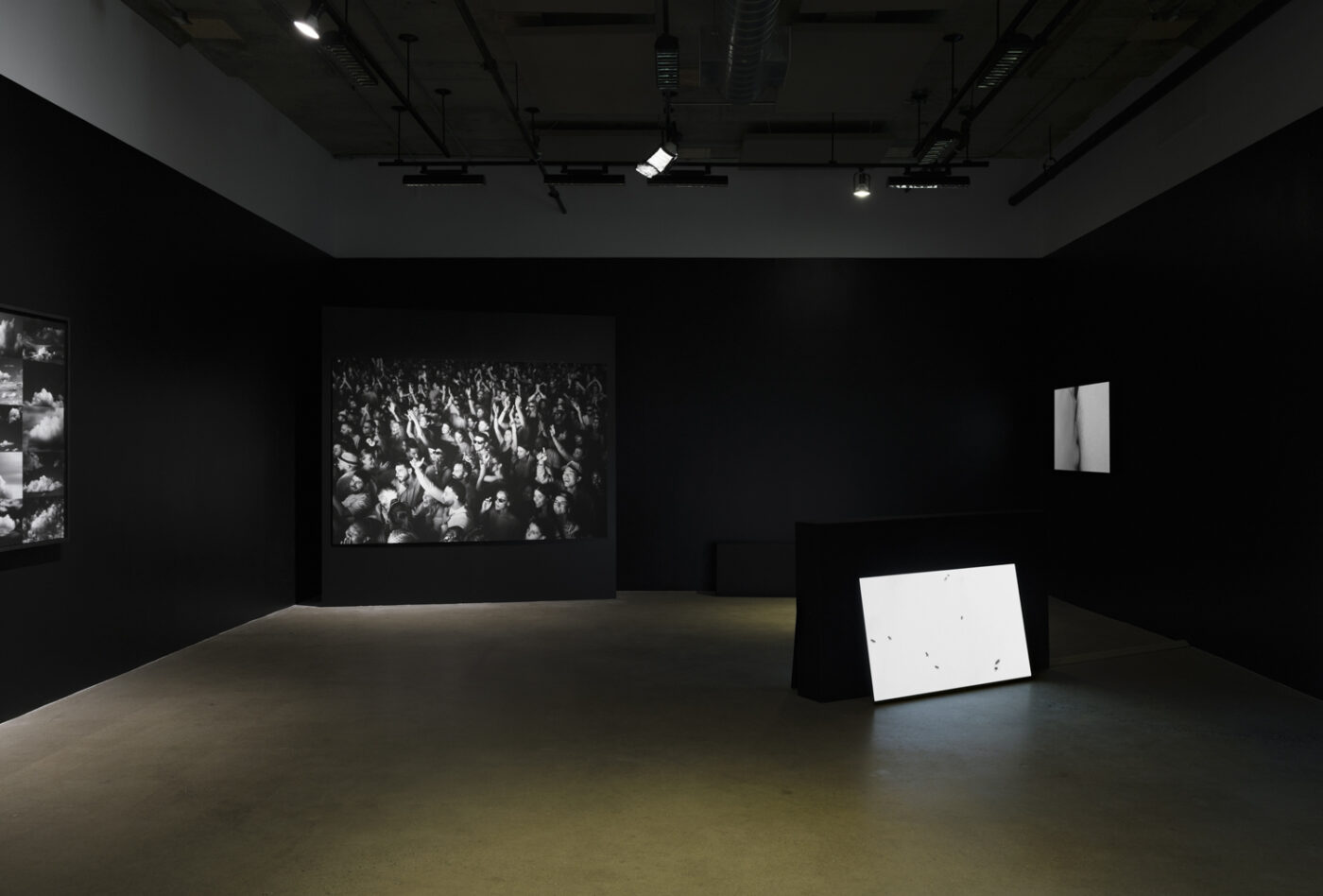
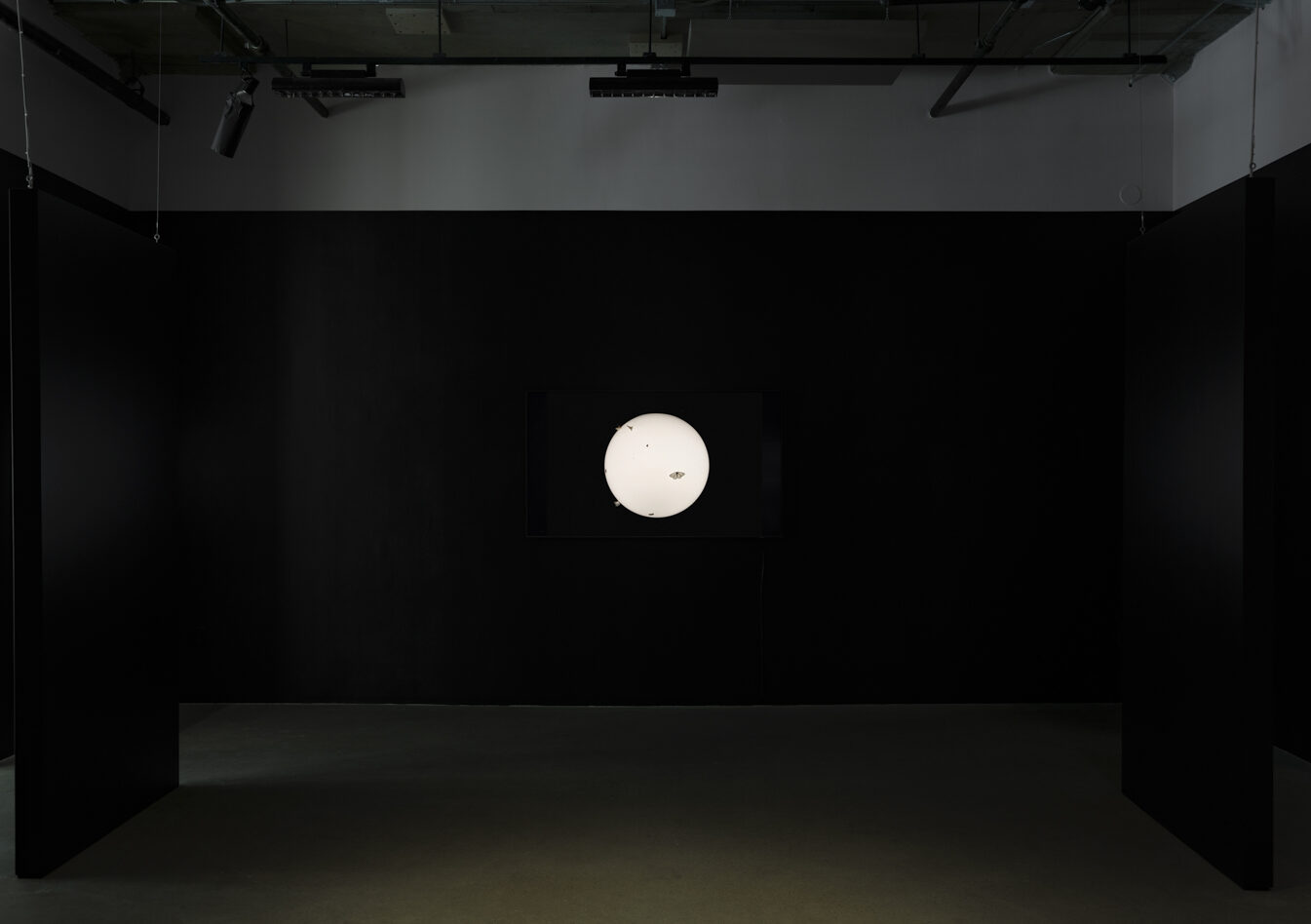
A cloud of insects suffused with half-tones
The dazzling brilliance of detail
Emerging from zones
Greyed with every possibility
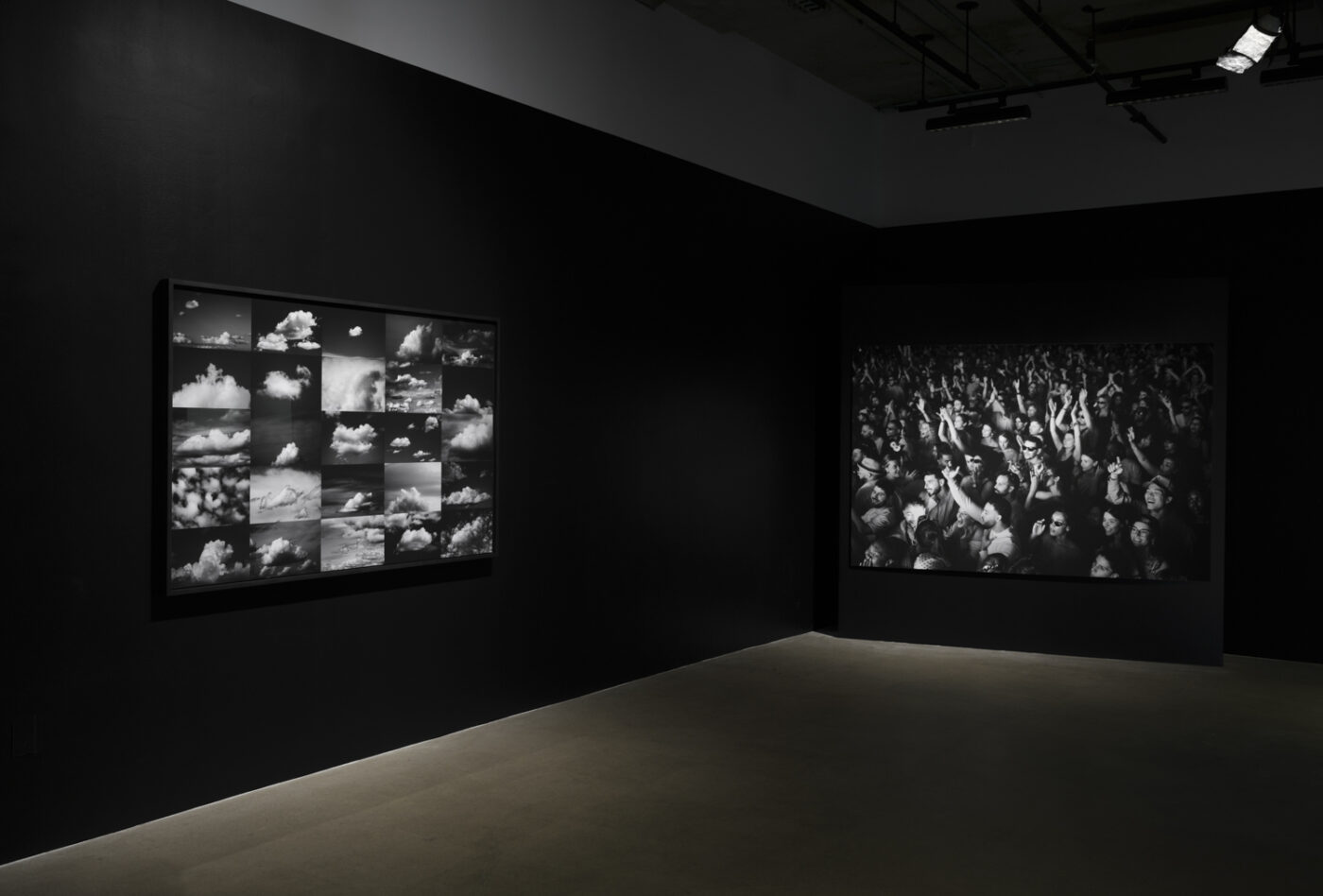
Murmuration of the living
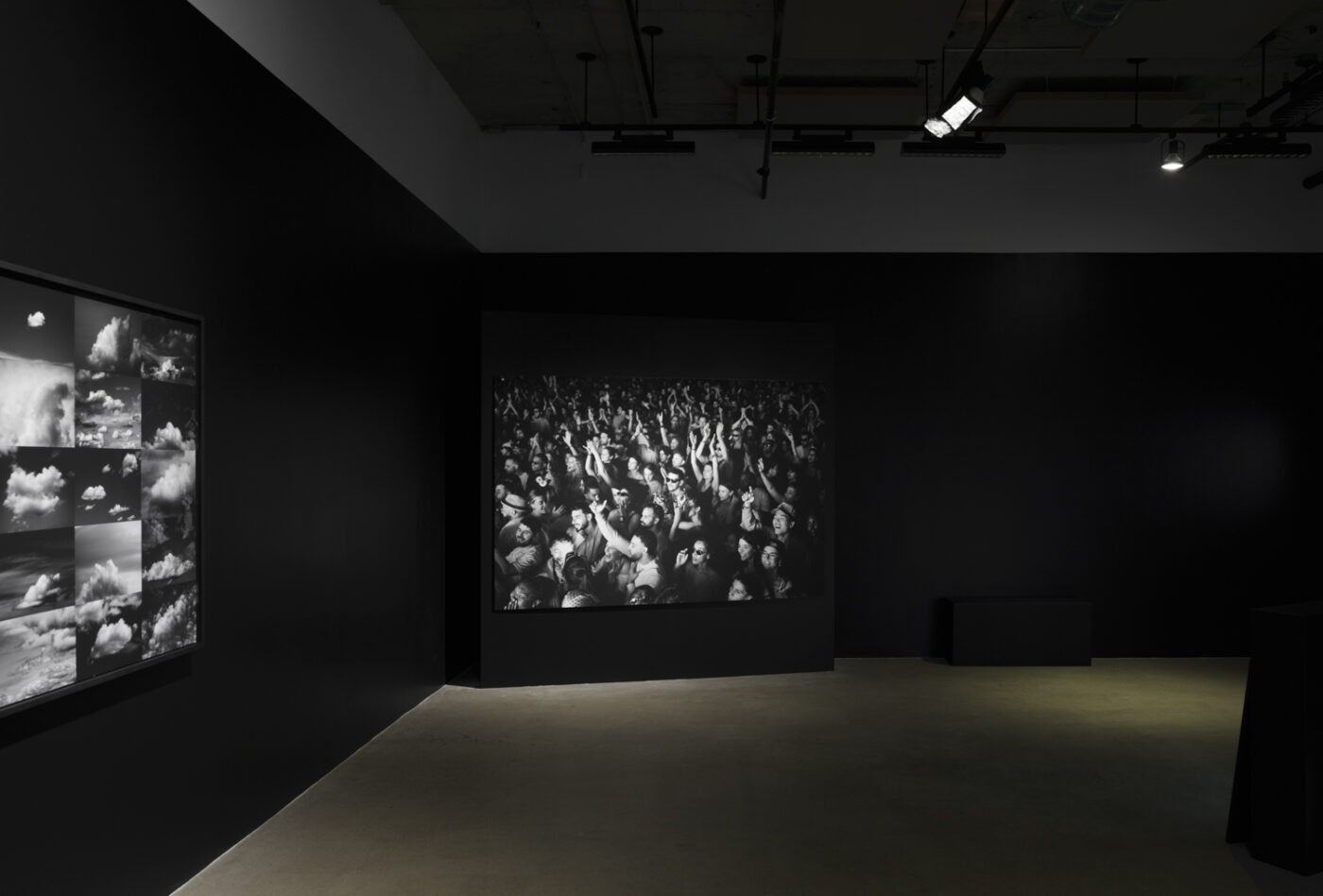
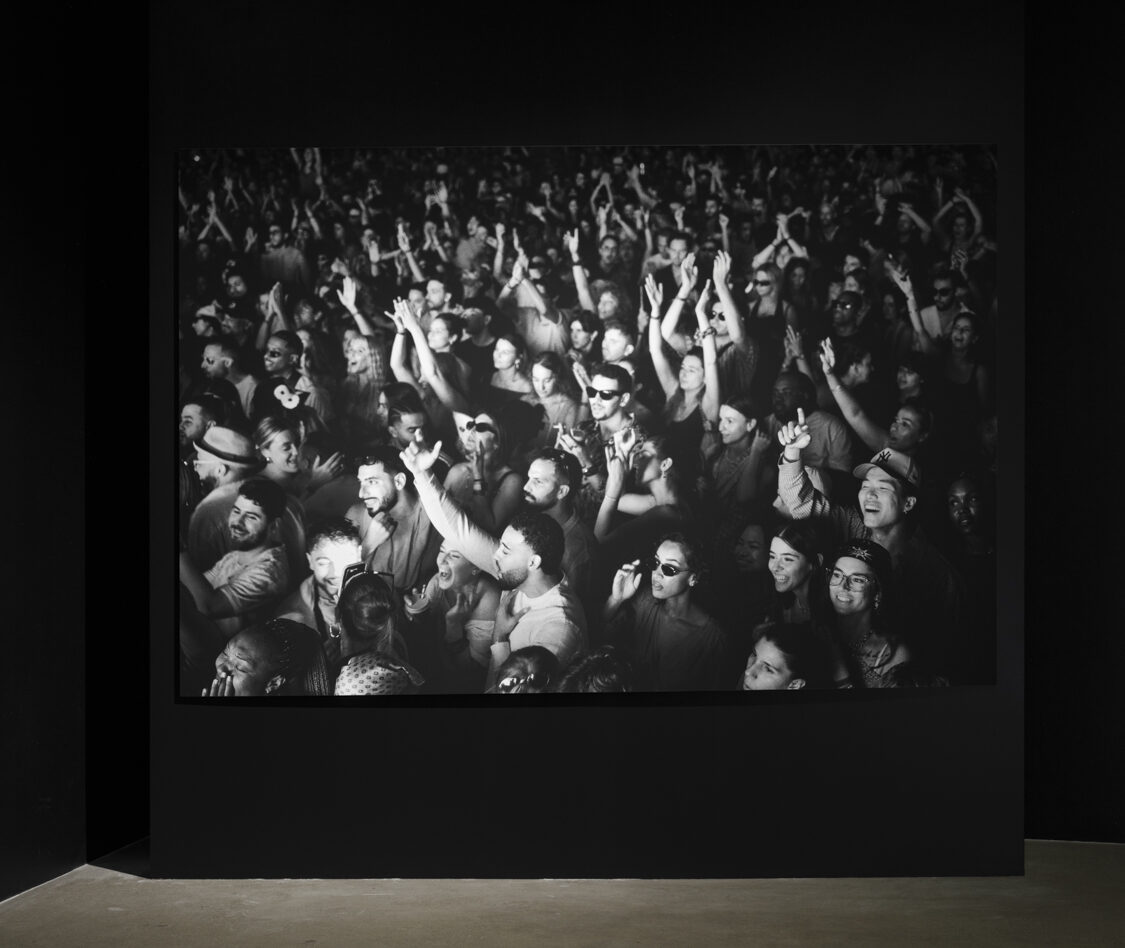
Amid a solitary crowd
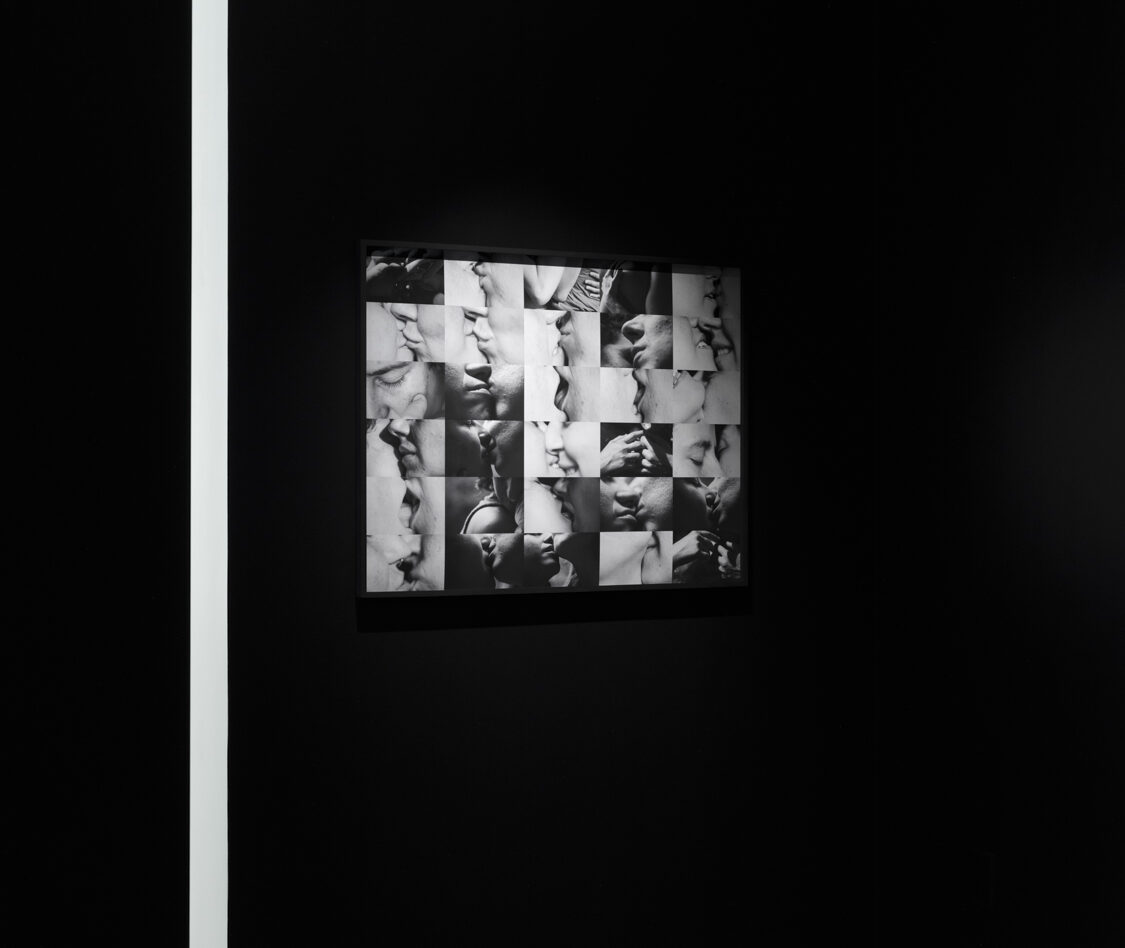
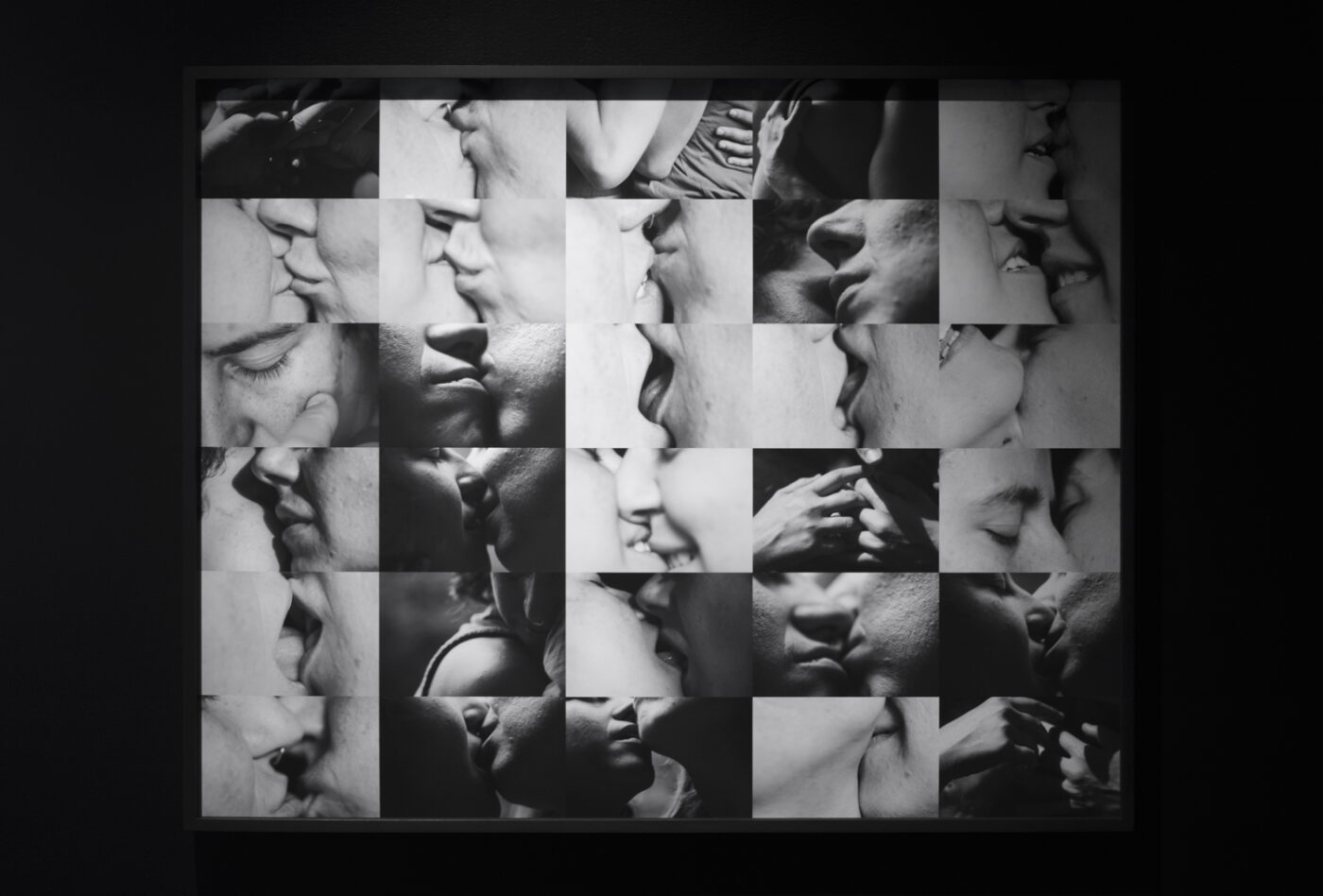
Keeping images silent so that they may be heard. In a silence that is not an absence, but rather a pause, an invitation to perceive the void as the needed breaths for a singular language to emerge. As if one were watching a film deliberately left unedited, allowing oneself to create their own cinema—with no beginning or end—amidst a whirlwind of fortuitous juxtapositions.
Les rencontres ne savent pas qu’elles ont lieu feels like the Kuleshov effect transposed into the exhibition space. Here, meaning arises from the interval—from those interstices between two images that must be connected—and from the silence to be filled. Through all these possible readings and re-readings, the very principle of montage becomes a metaphor for human beings in society drawing a parallel between the isolated image and its participation in the whole, the individual and its society. By extension, it also touches on that tipping point where our existence oscillates between the solitude of the moment—so dear to Bachelard—and the desire to belong to a collectivity that tends to erase irregularities in order to maintain the illusion of continuity, the narrative flow required for history to be written.
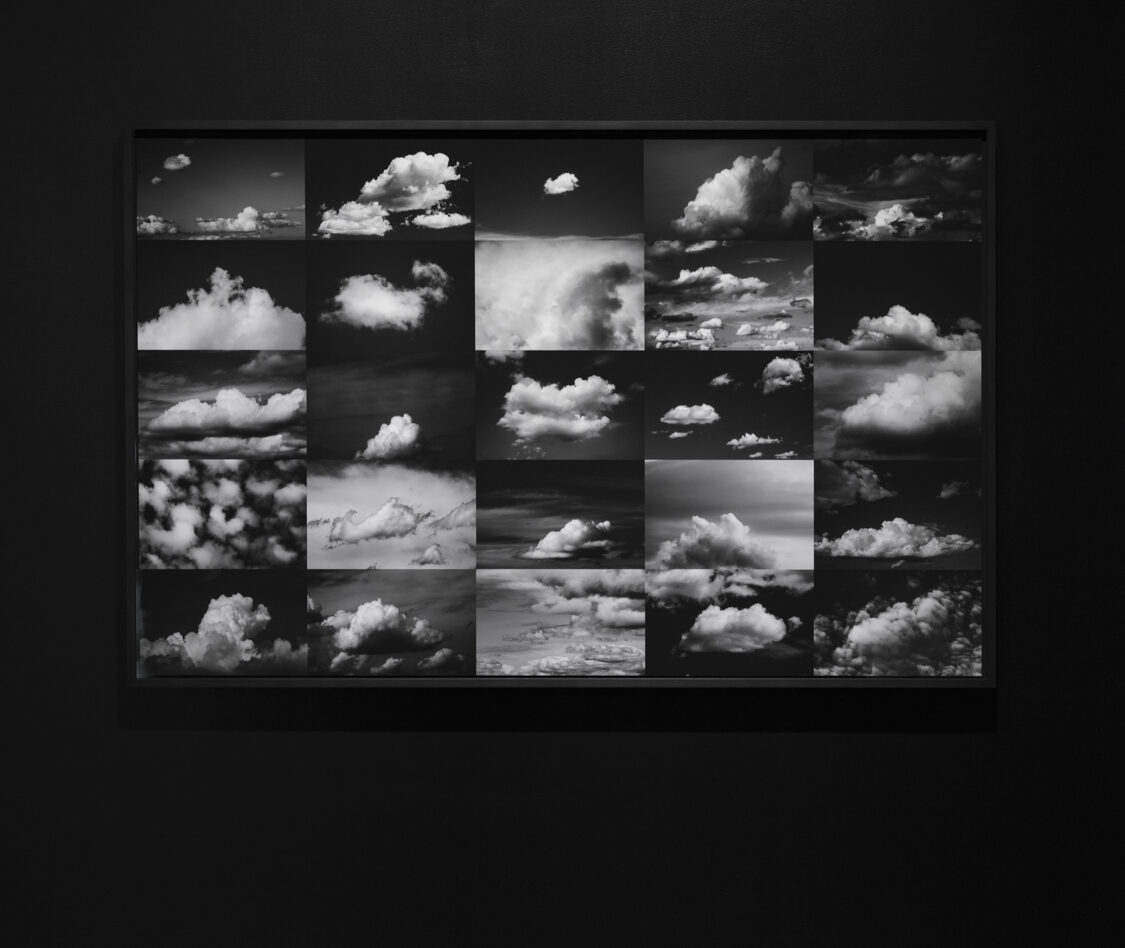
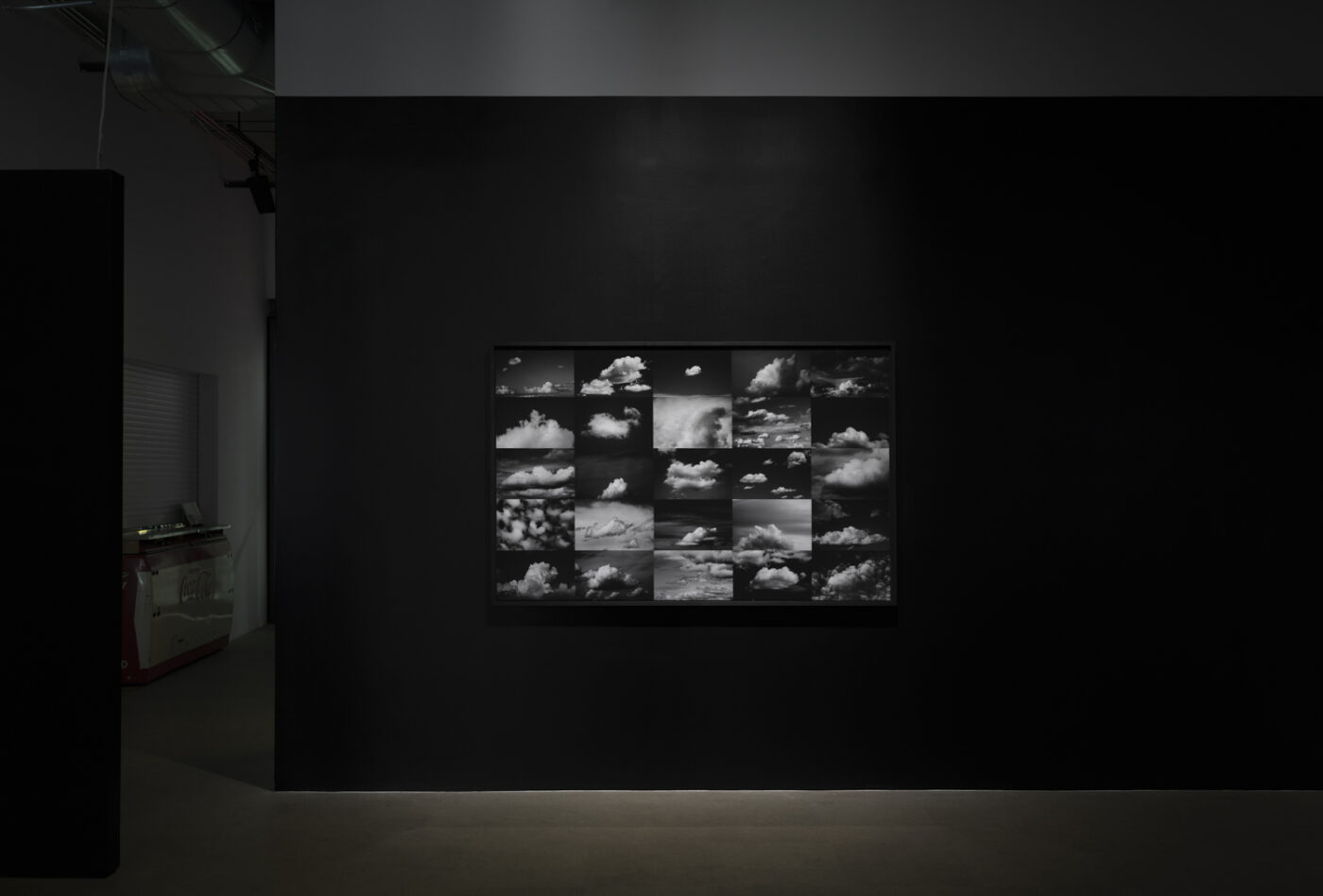
In a similar vein, while the use of black and white across all images might suggest a quest for uniformity—or even standardization—the broad disparity in scale, in turn, evokes a sense of fragile balance or a necessary recalibration of values. Bathed in a shared light and contained within the boundaries of an image—whether moving or still—the depiction of a couple in love, hands communicating in sign language, scattered clouds, a bustling crowd, or a swarm of insects potentially conveys the same quality of presence, and thus an equivalent power.
Beyond the surface of the images, the project highlights the power of things coming together—and uniting—in a kind of narrative of the common.
—France Choinière
France Choinière focuses her work on the evolution of image-based practices, the specific characteristics of their spatialization and dissemination, as well as the artistic, historical, and social issues they raise. Her unique perspective on what conceptually defines an image, along with her intellectual and ethical rigour, shaped the artistic direction of Dazibao, which she led for more than 25 years, until very recently. Having edited and/or contributed to more than sixty publications, she now pursues her research through a distinctive writing approach grounded in the incompleteness of the image to bear witness—to everything and nothing.

A crowdfunding campaign for emerging artists.