Anne-Renée Hotte
Les rencontres ne savent pas qu’elles ont lieu
09.11–10.24.2026
Current
Come, come one, come all!
Come, come, come!
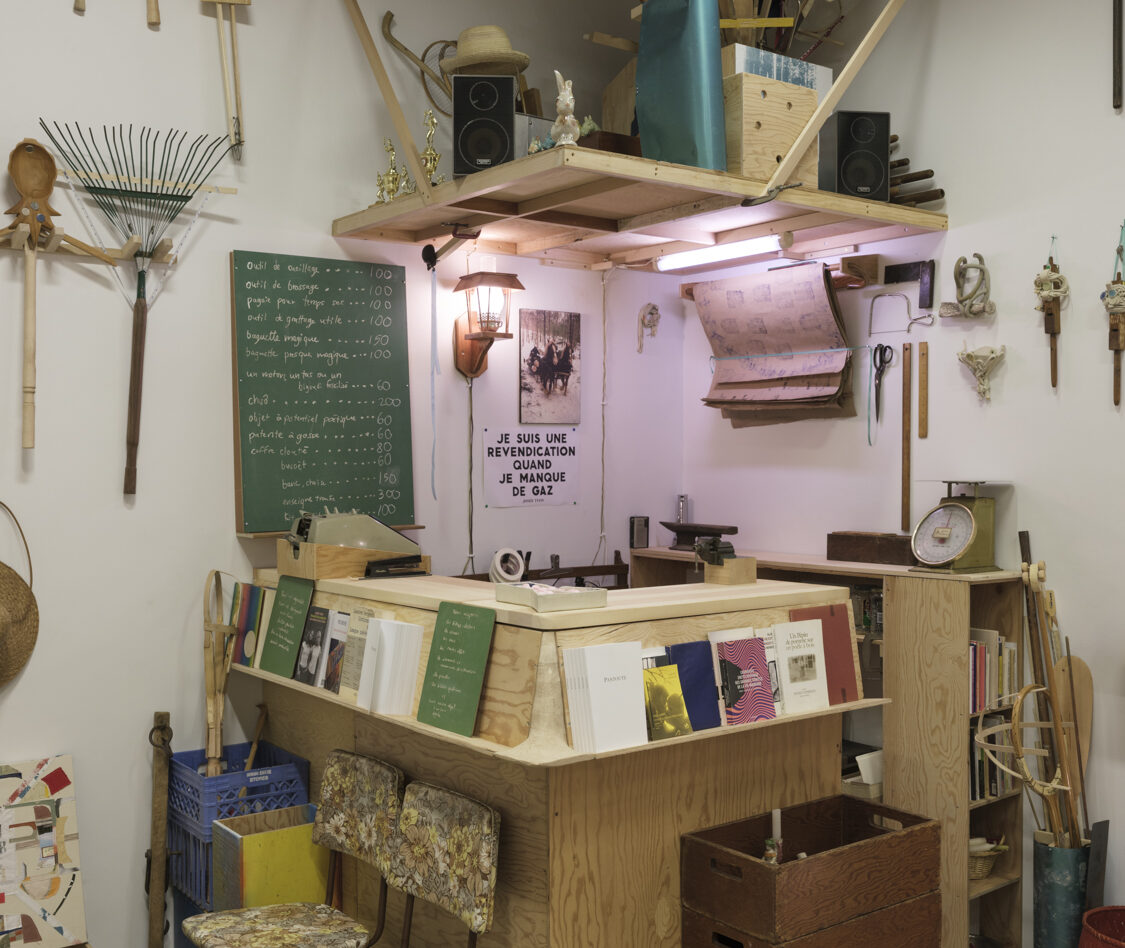
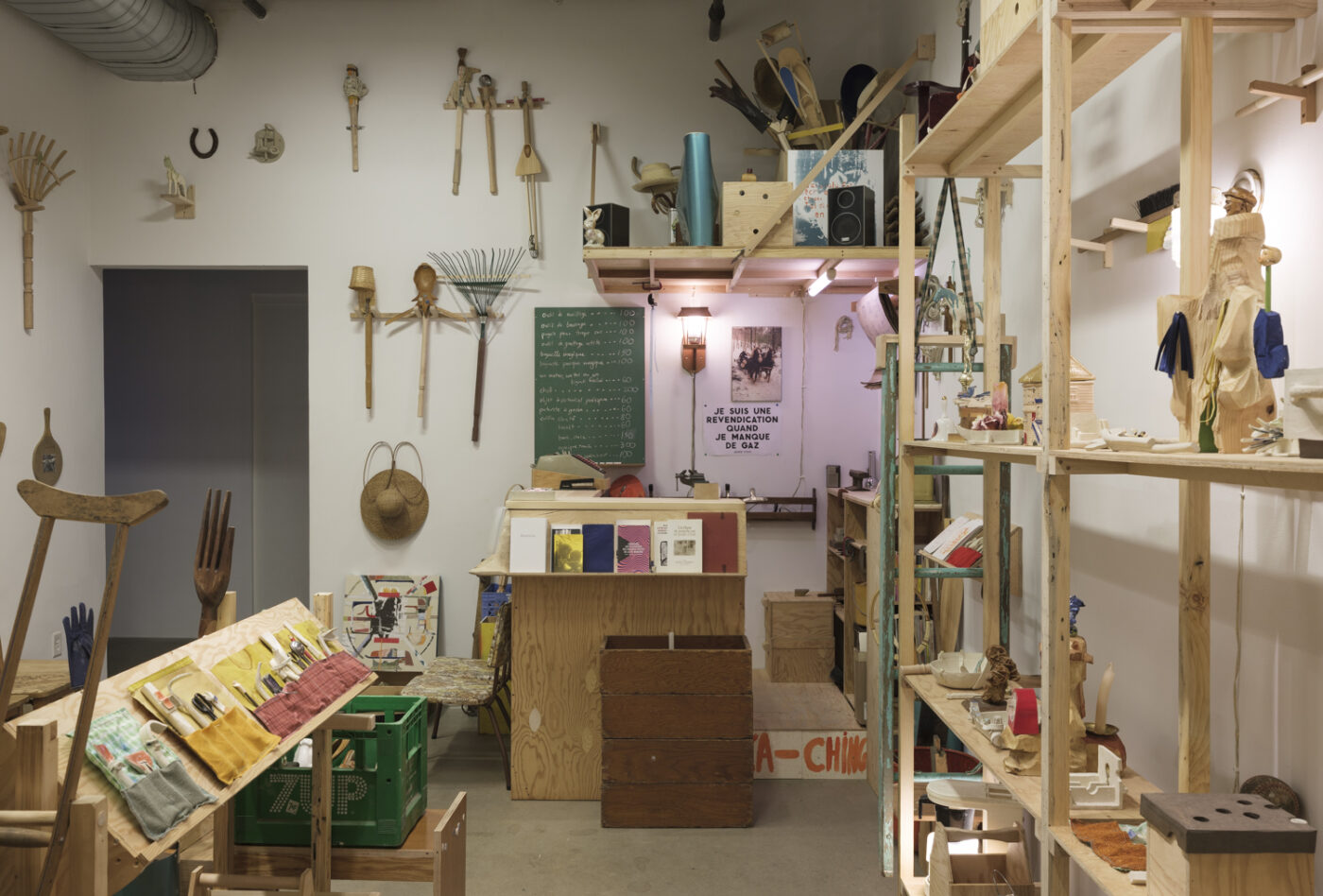
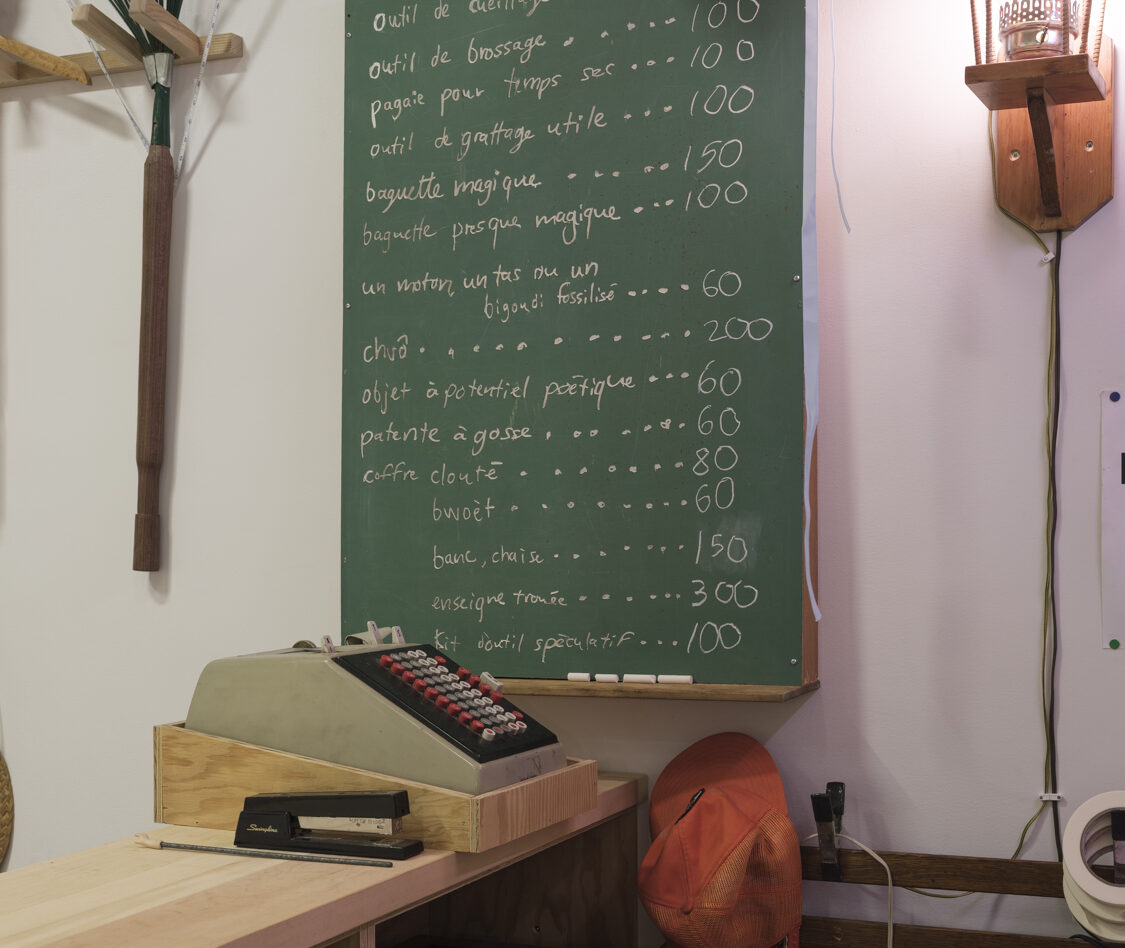
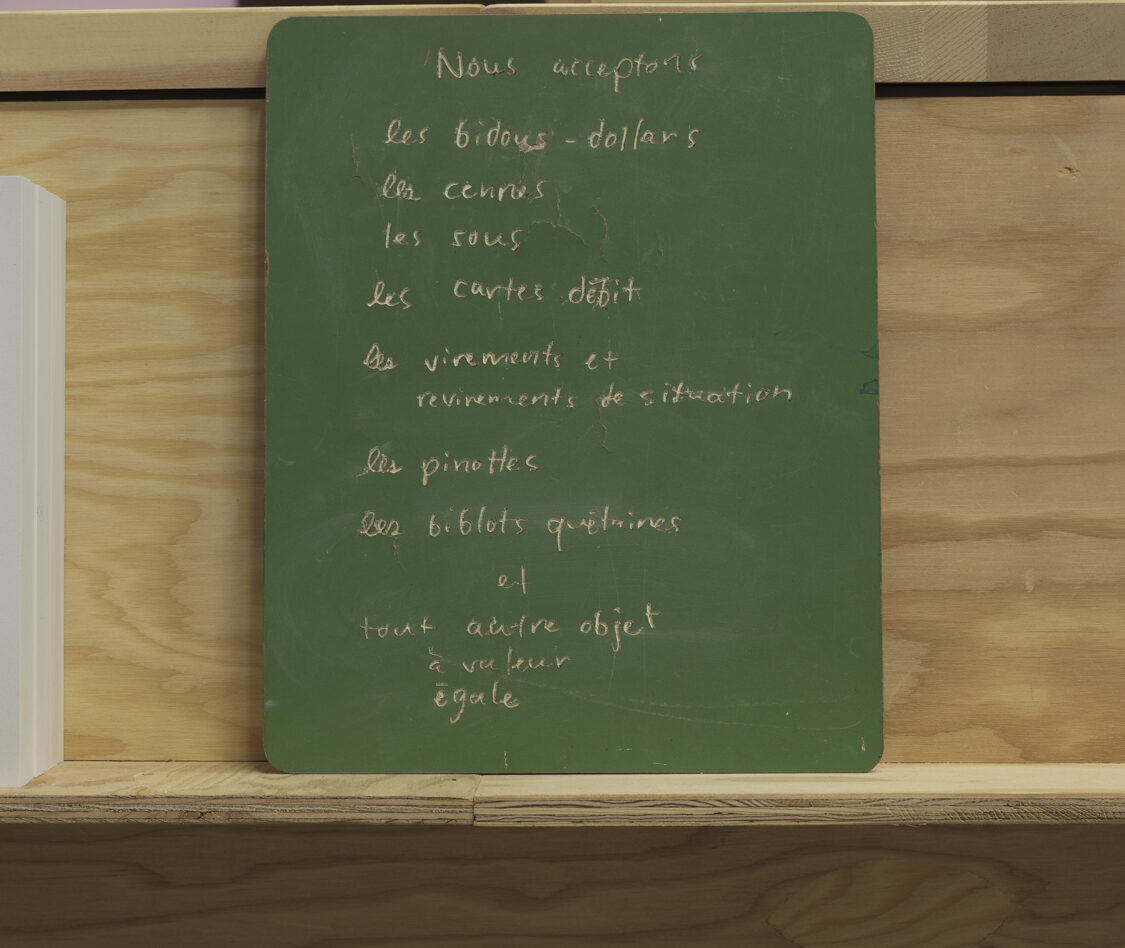
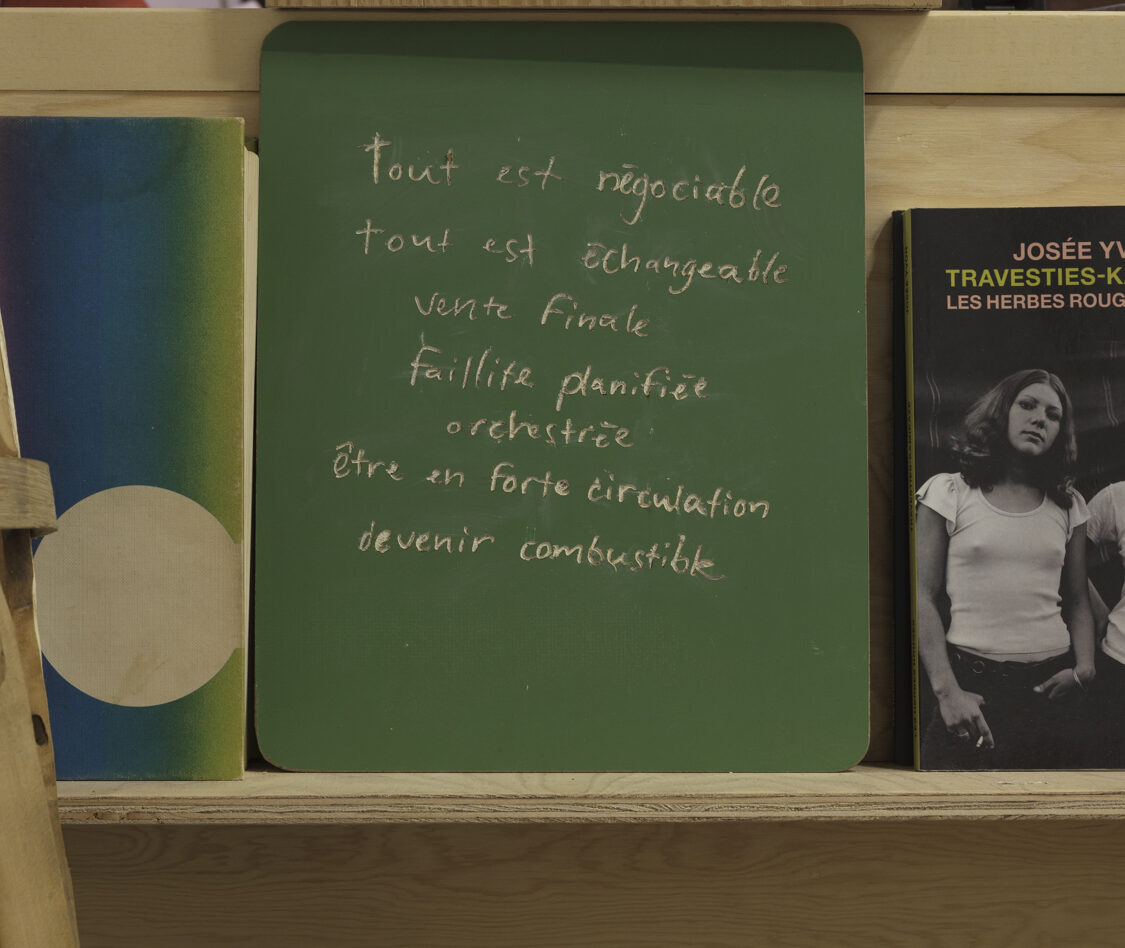
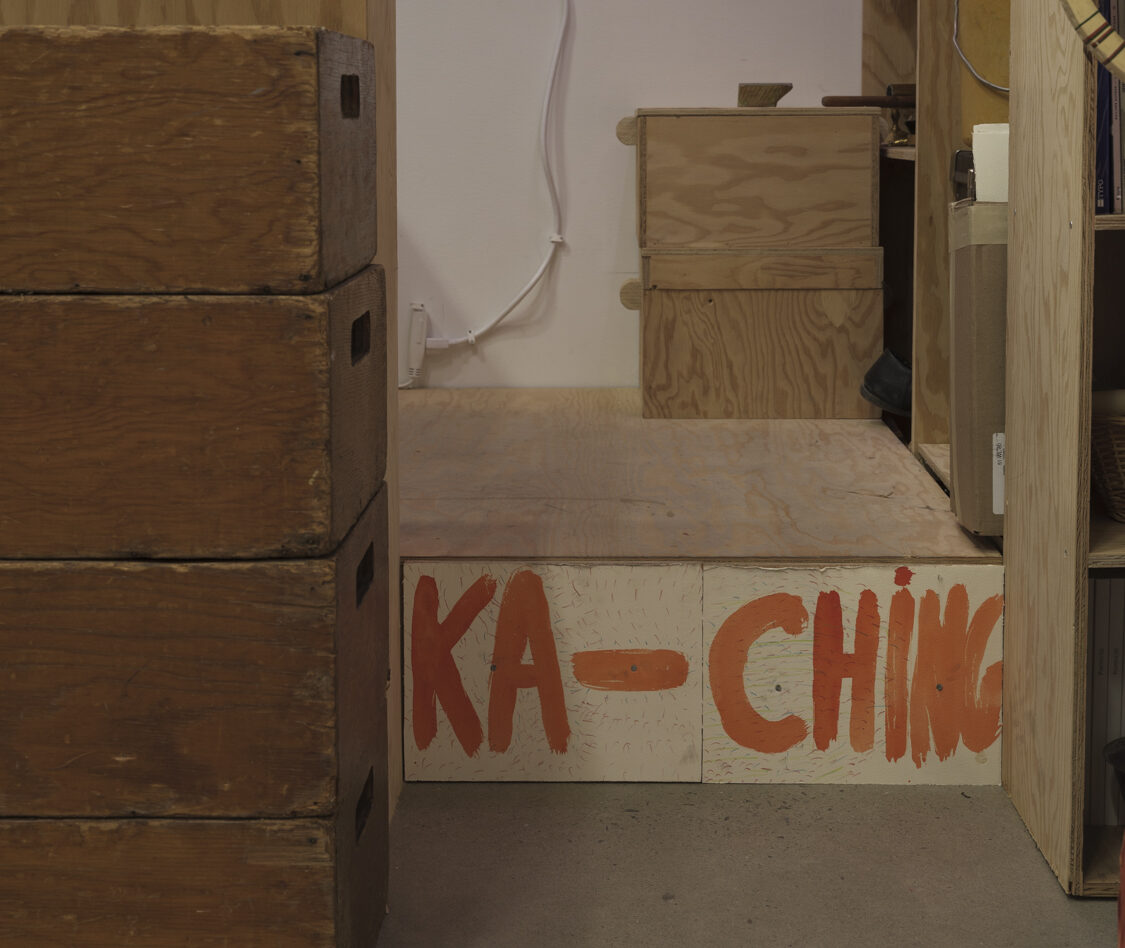
This is it! All sales final, vanquished prices, total liquidation¹! Everything must go!
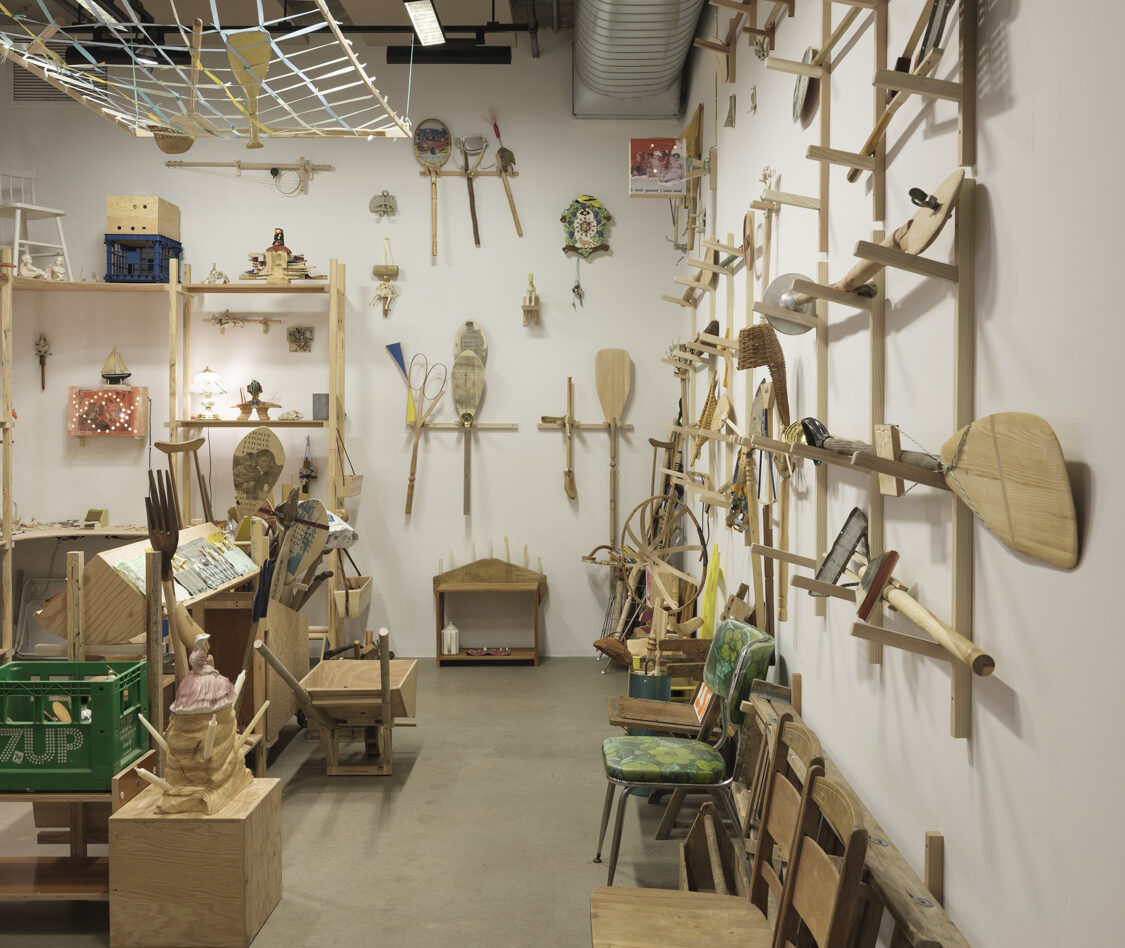
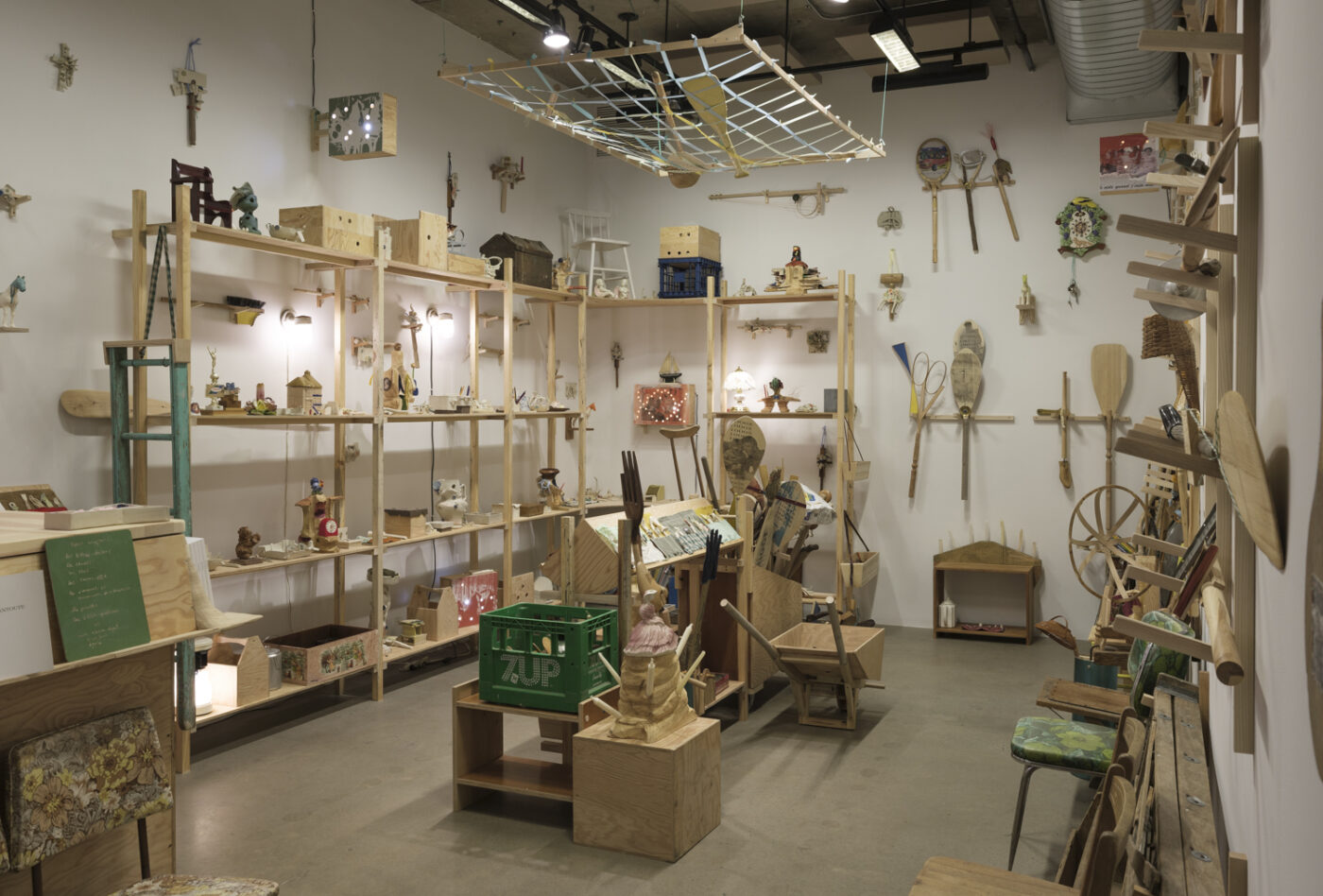
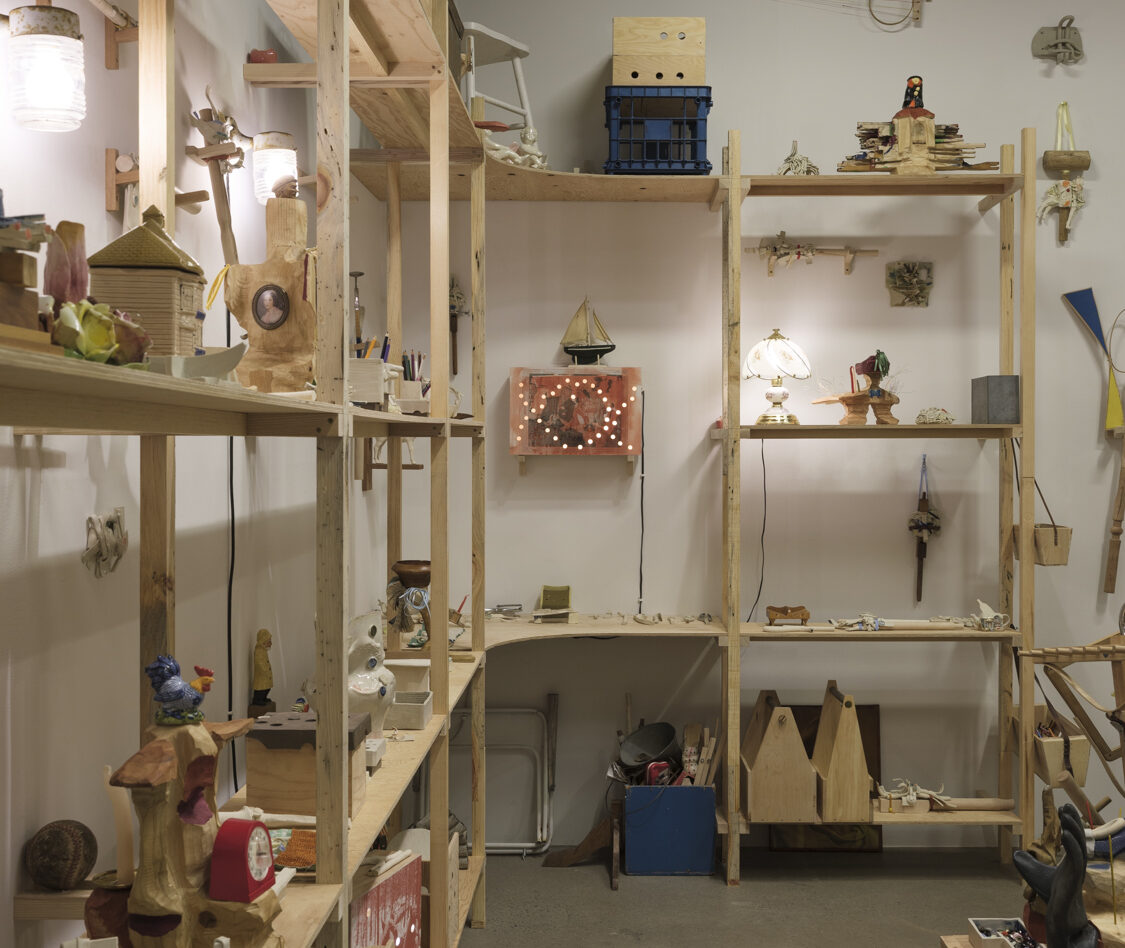
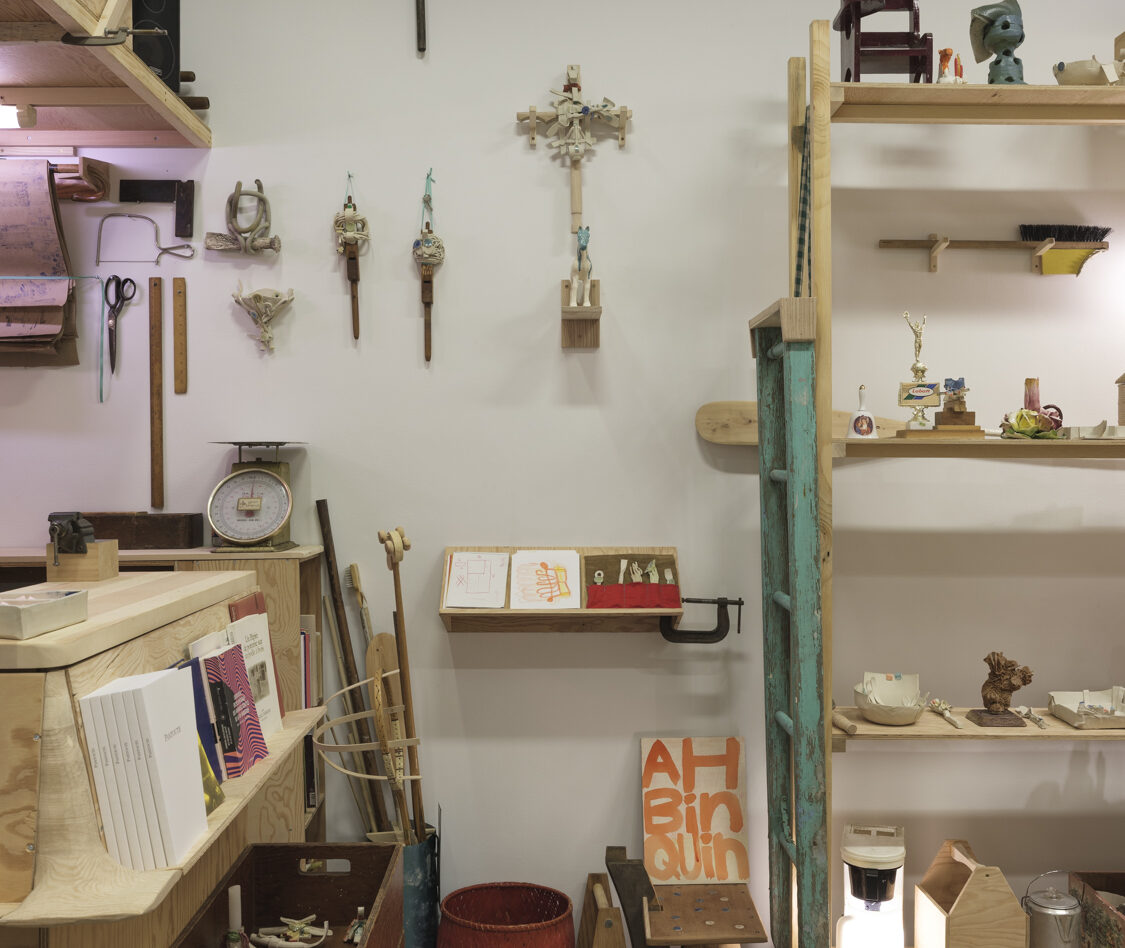
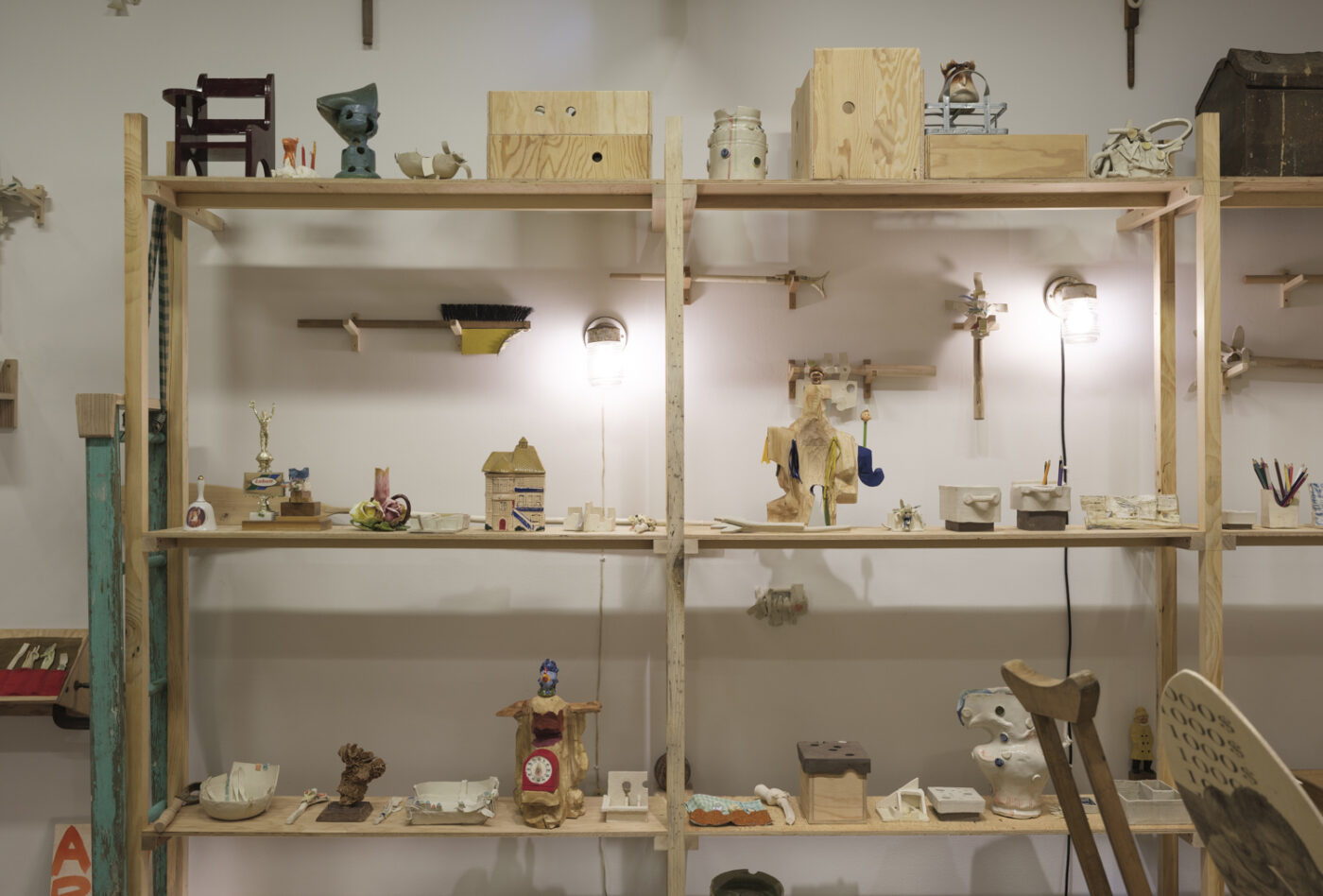
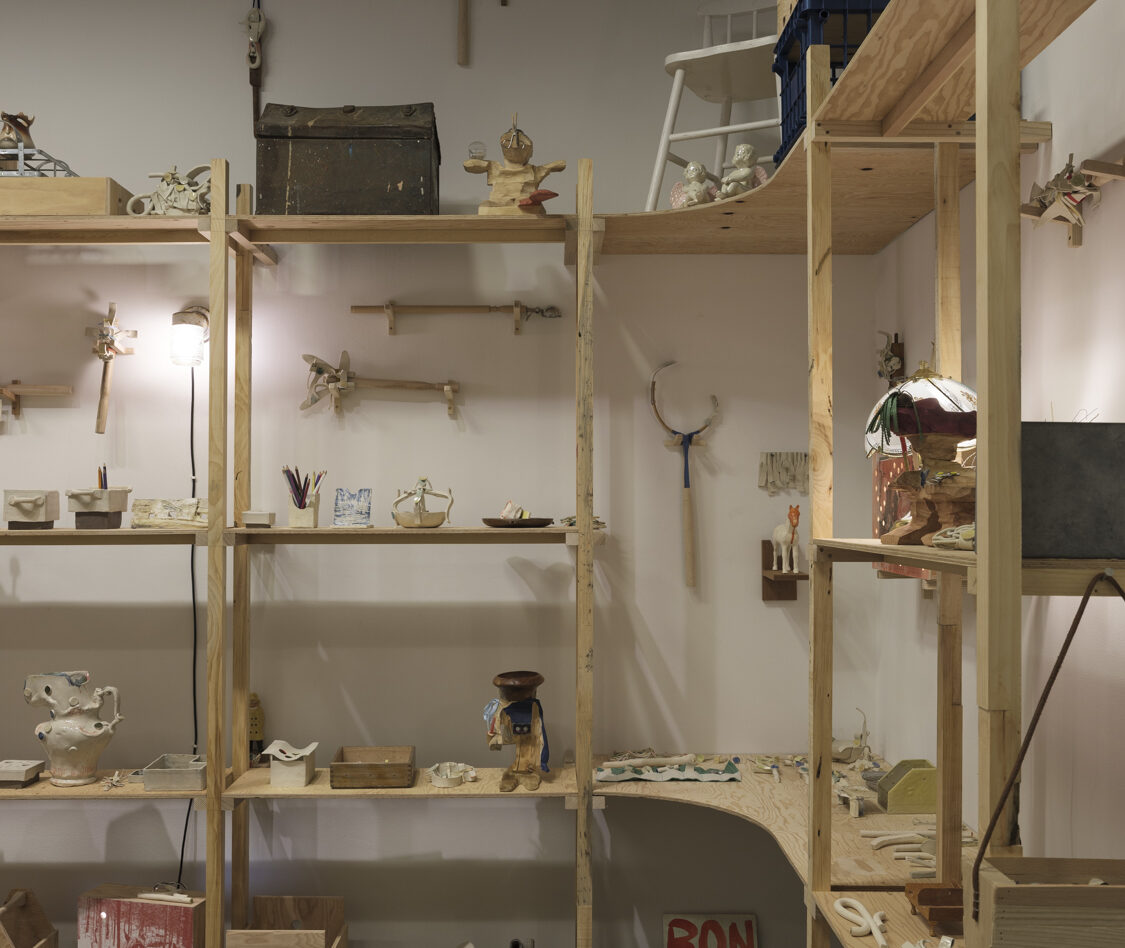
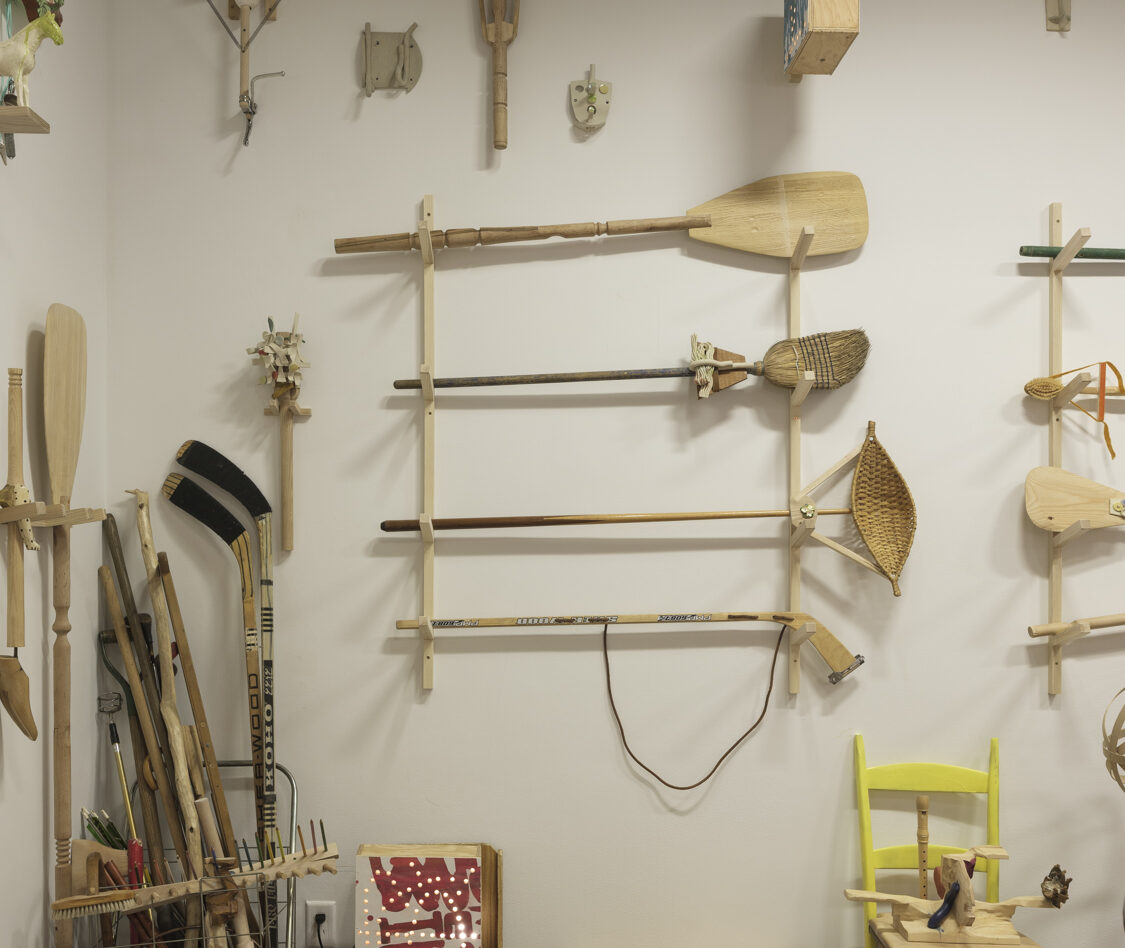
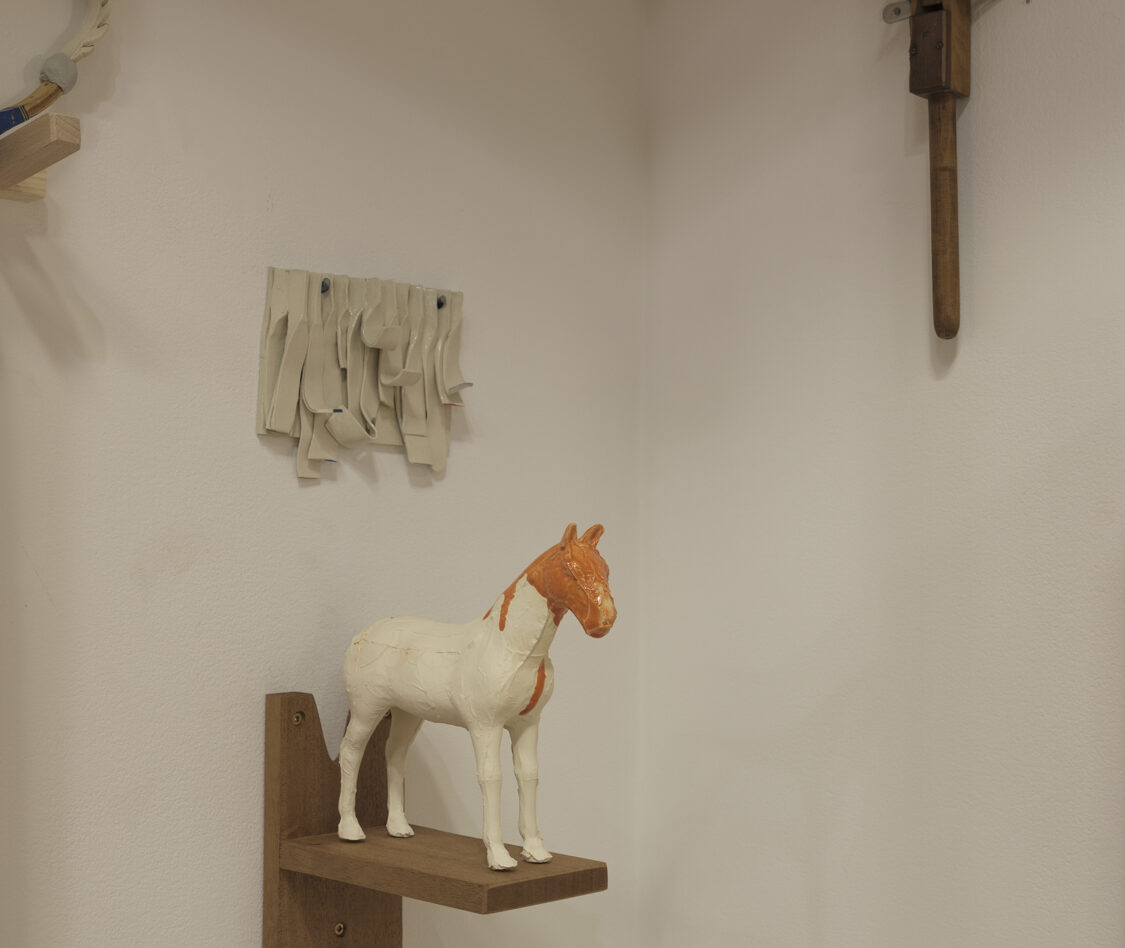
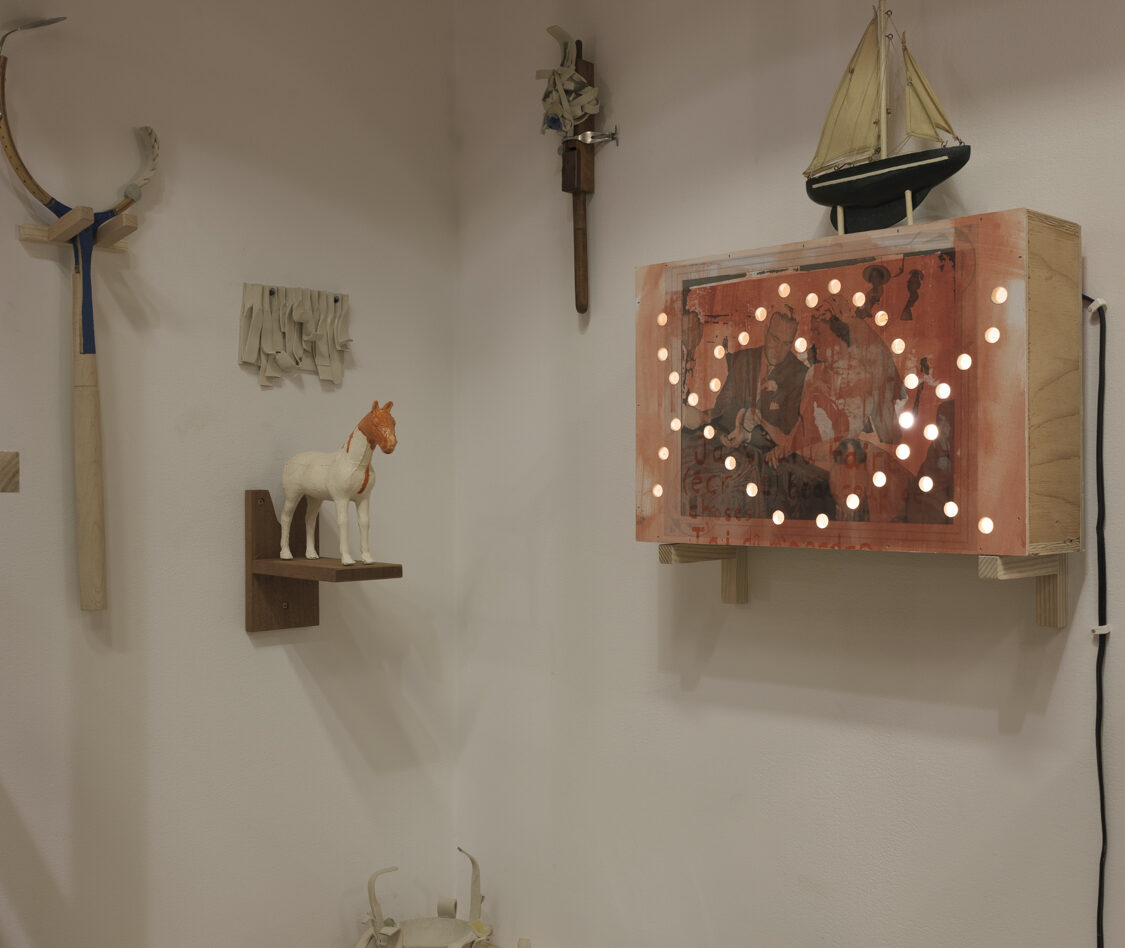
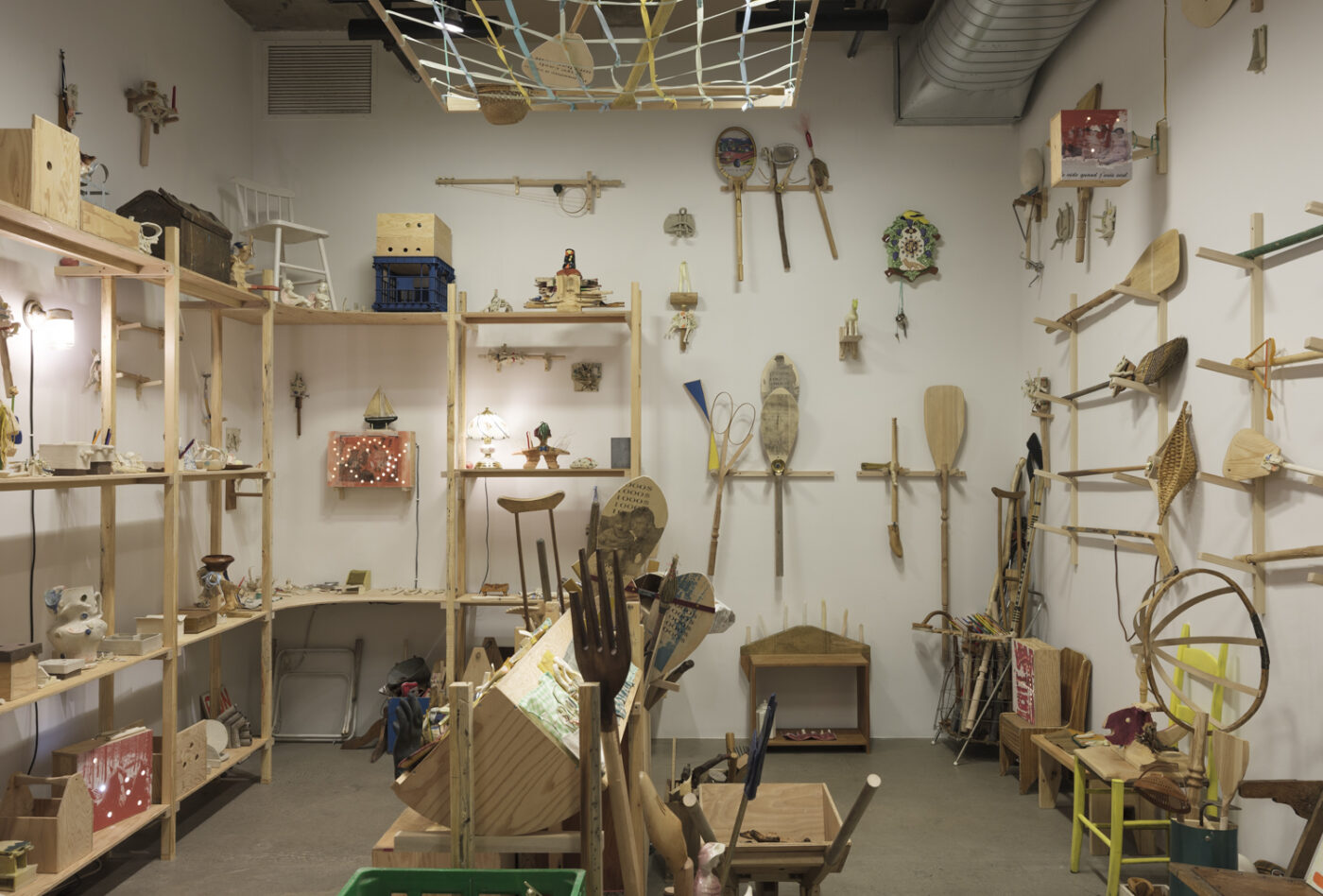
No wall labels, no post-mortal boredom, nothing but slews of supra-splendid splendour:
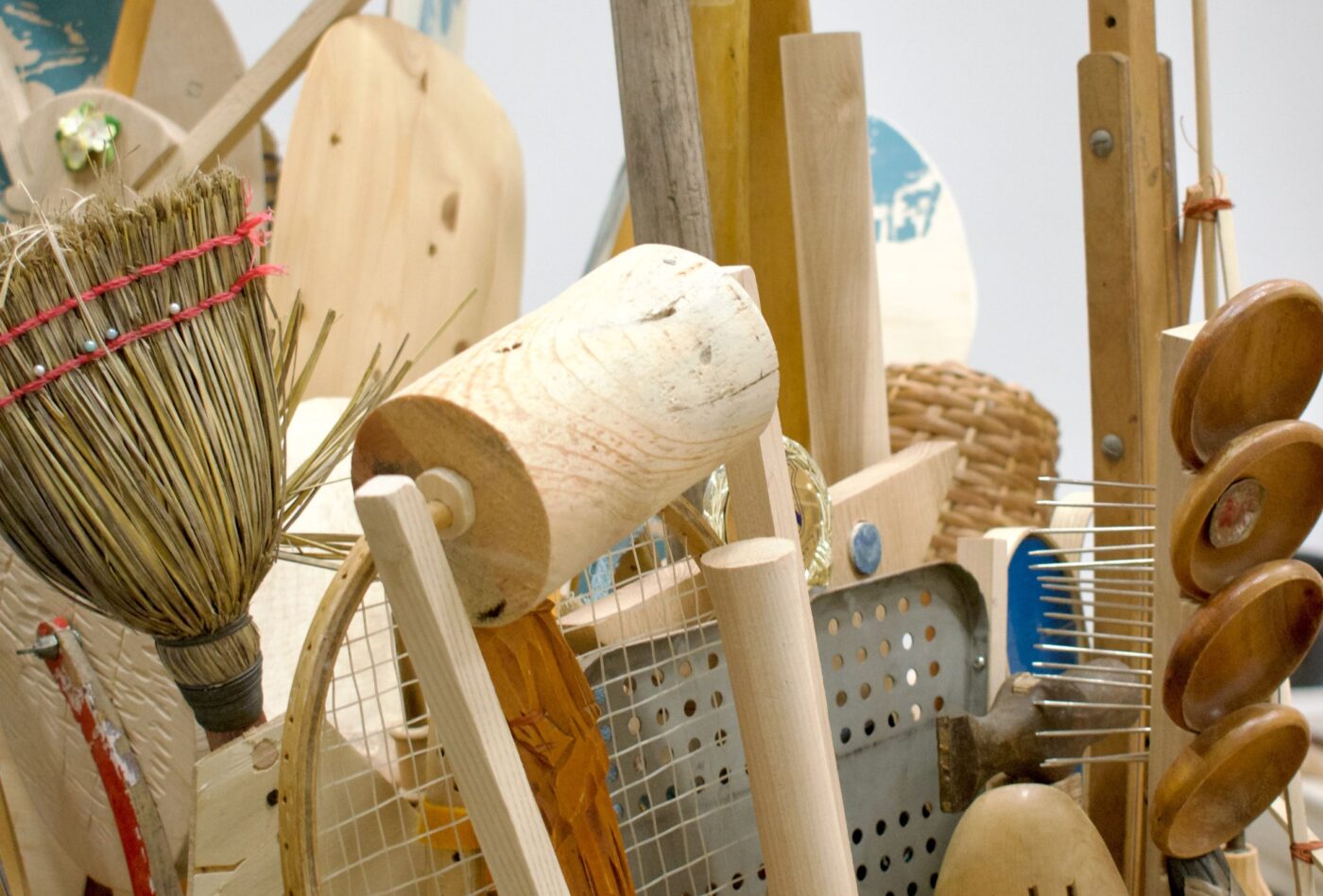
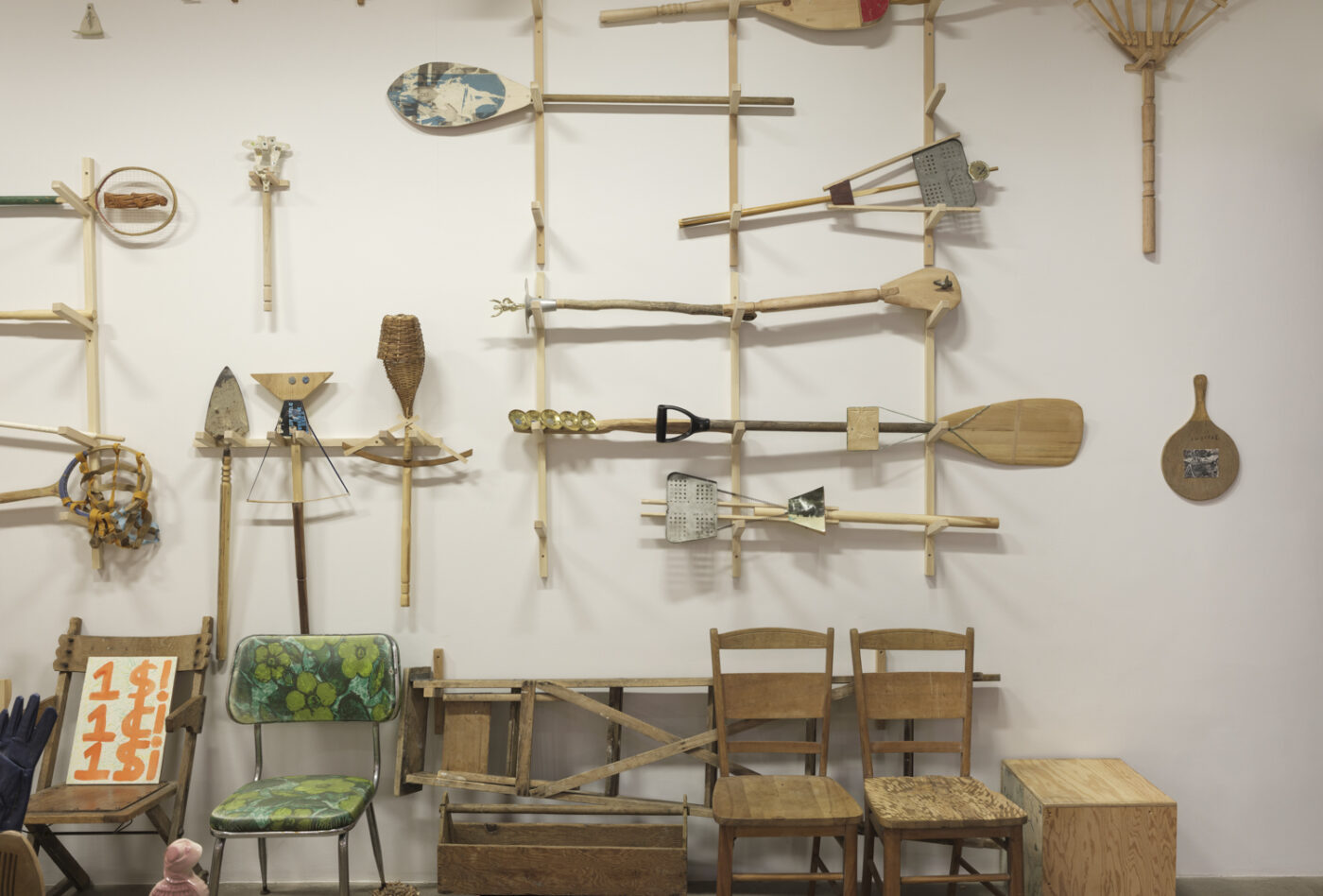
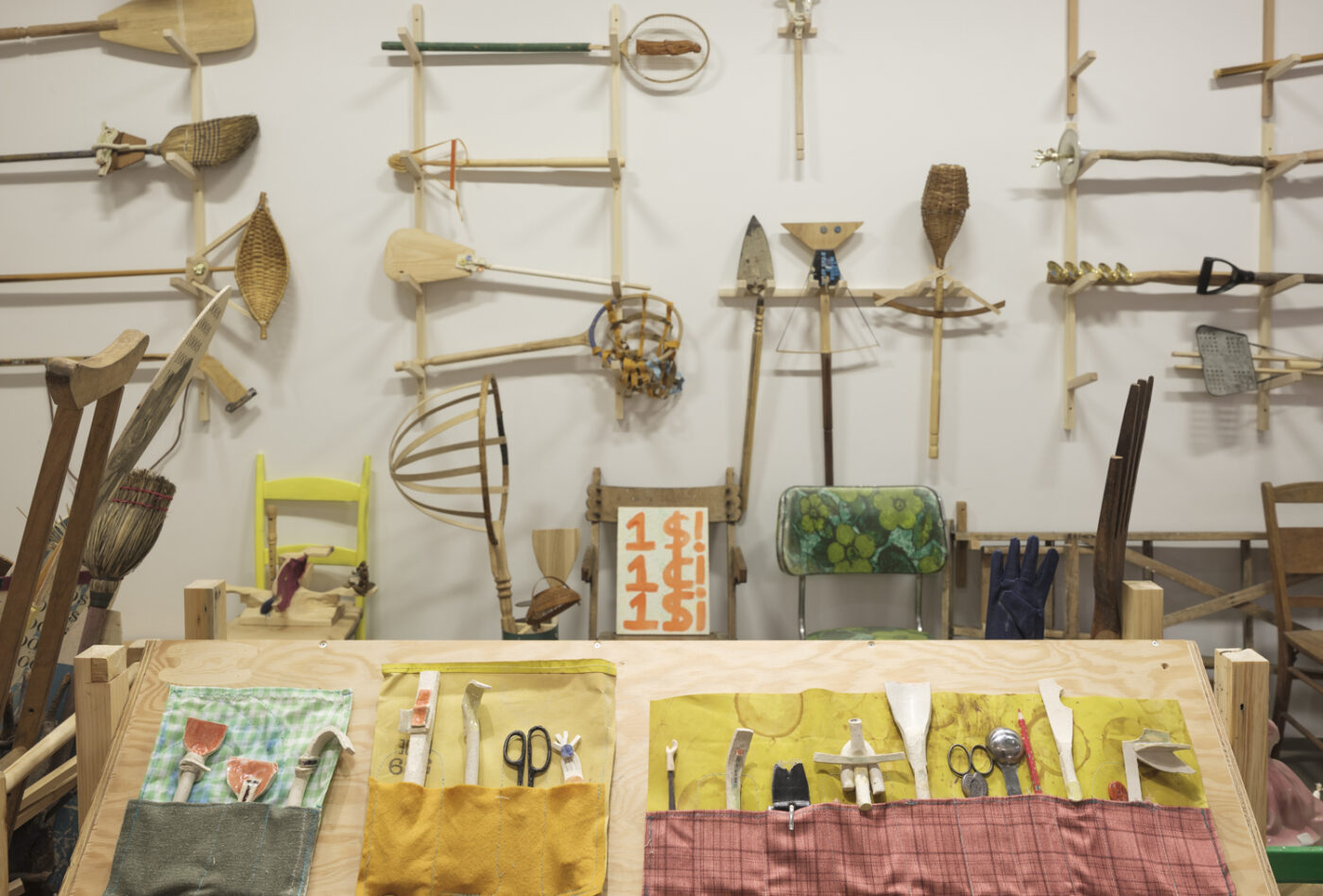
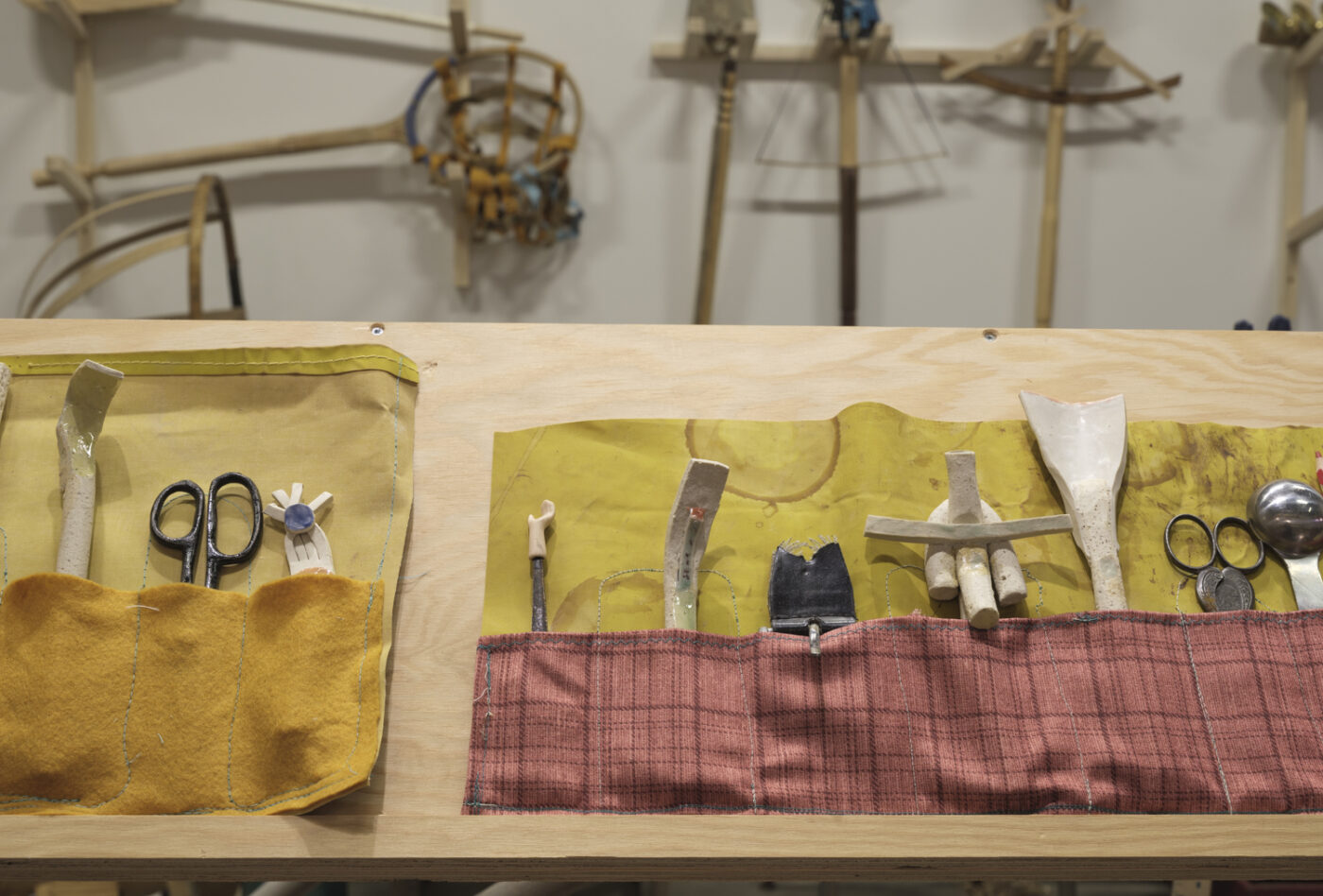
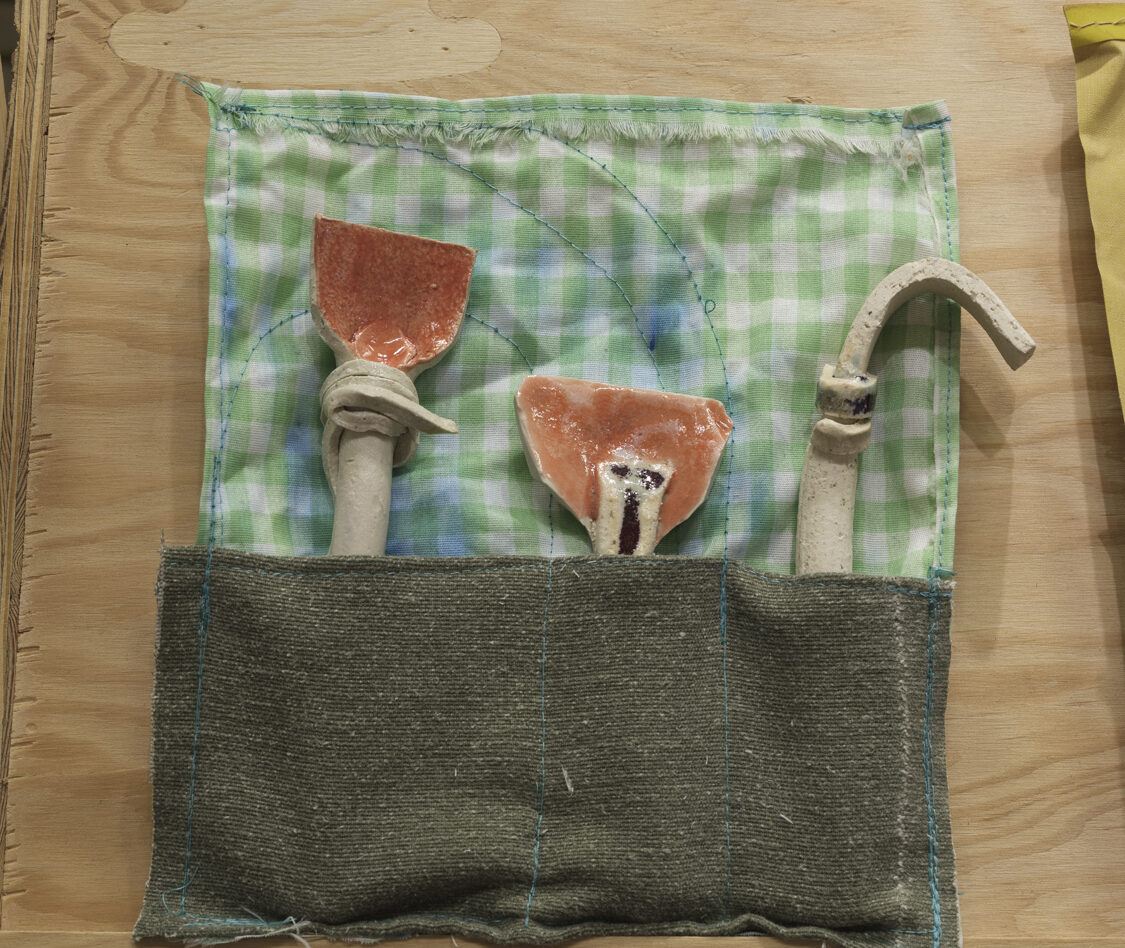
sweetly grippy stick grips
motley rakes with arthritic phalanges
blue-mauve ruffled rods that squeal on demand
fraying, falcated, three-prong batons
kinder mallets for cochlea-knocking
twisted bits from the first time tickling was said out loud
foldable dipsticks, multicoloured pompoms, bona fide cant-hooks, nielloed sextants, raggedy rags, stumpy crutch stumps
and so and so and so
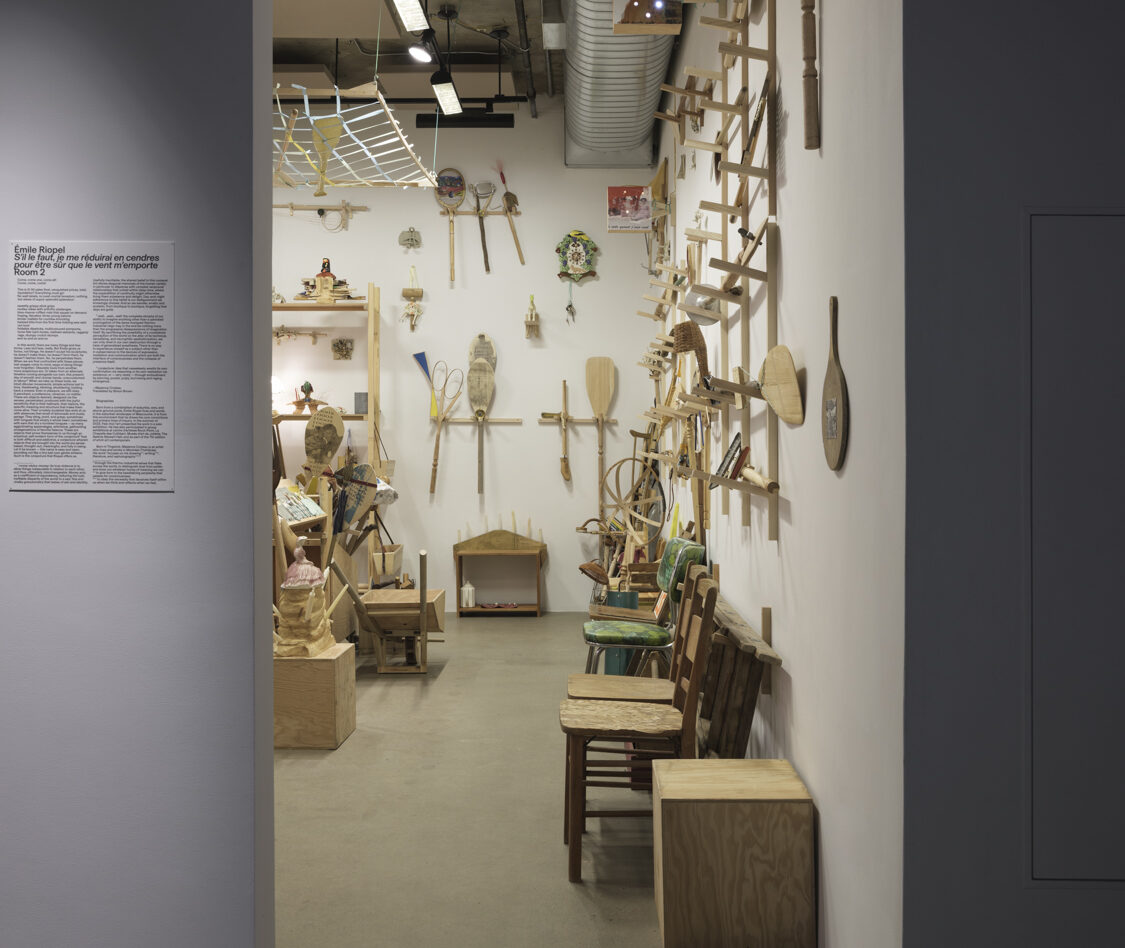
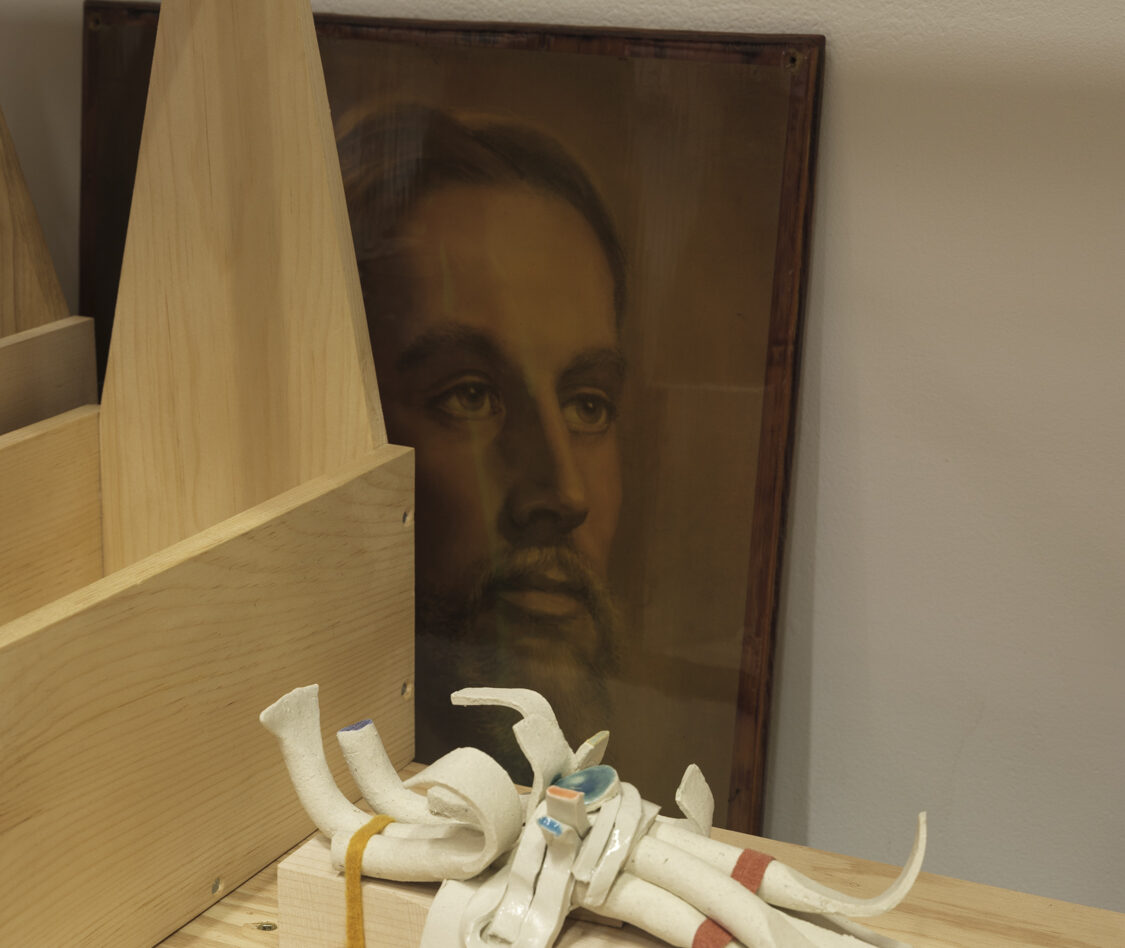
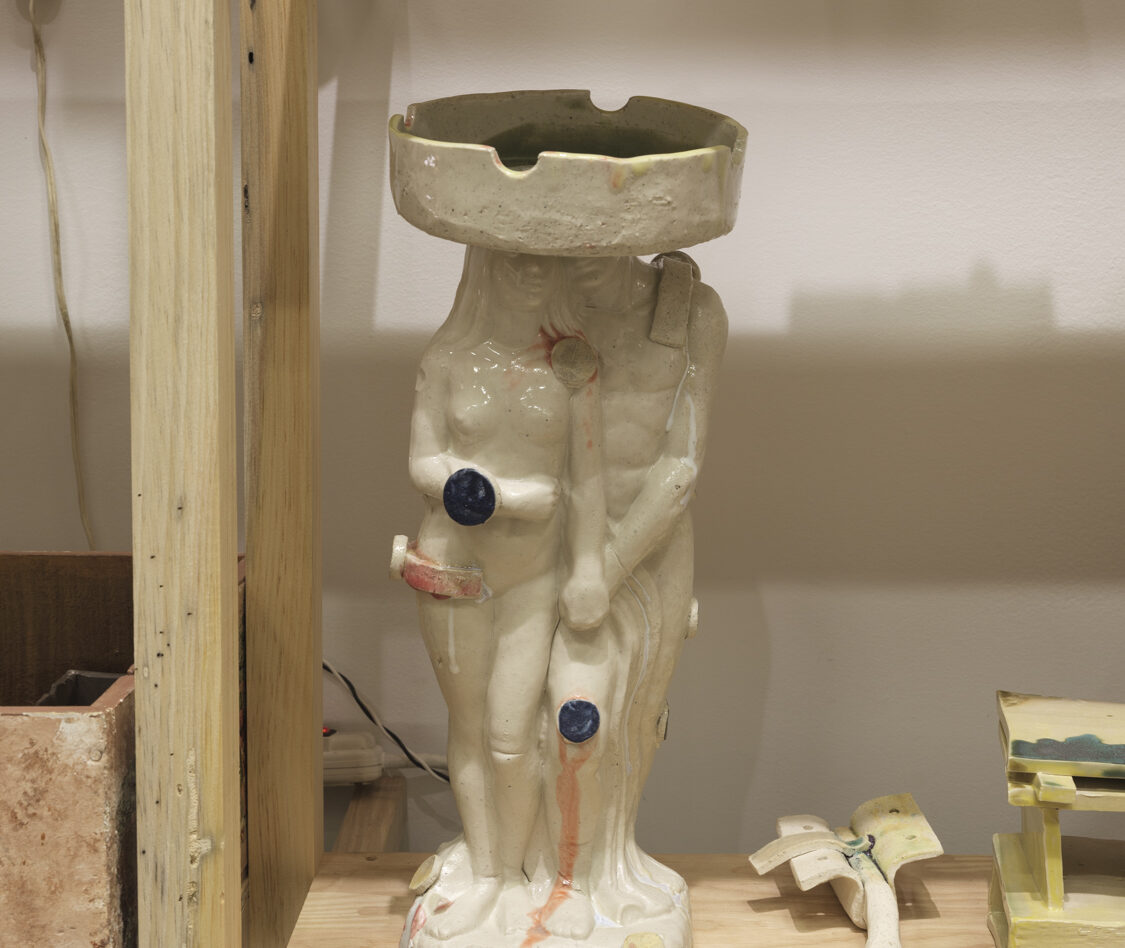
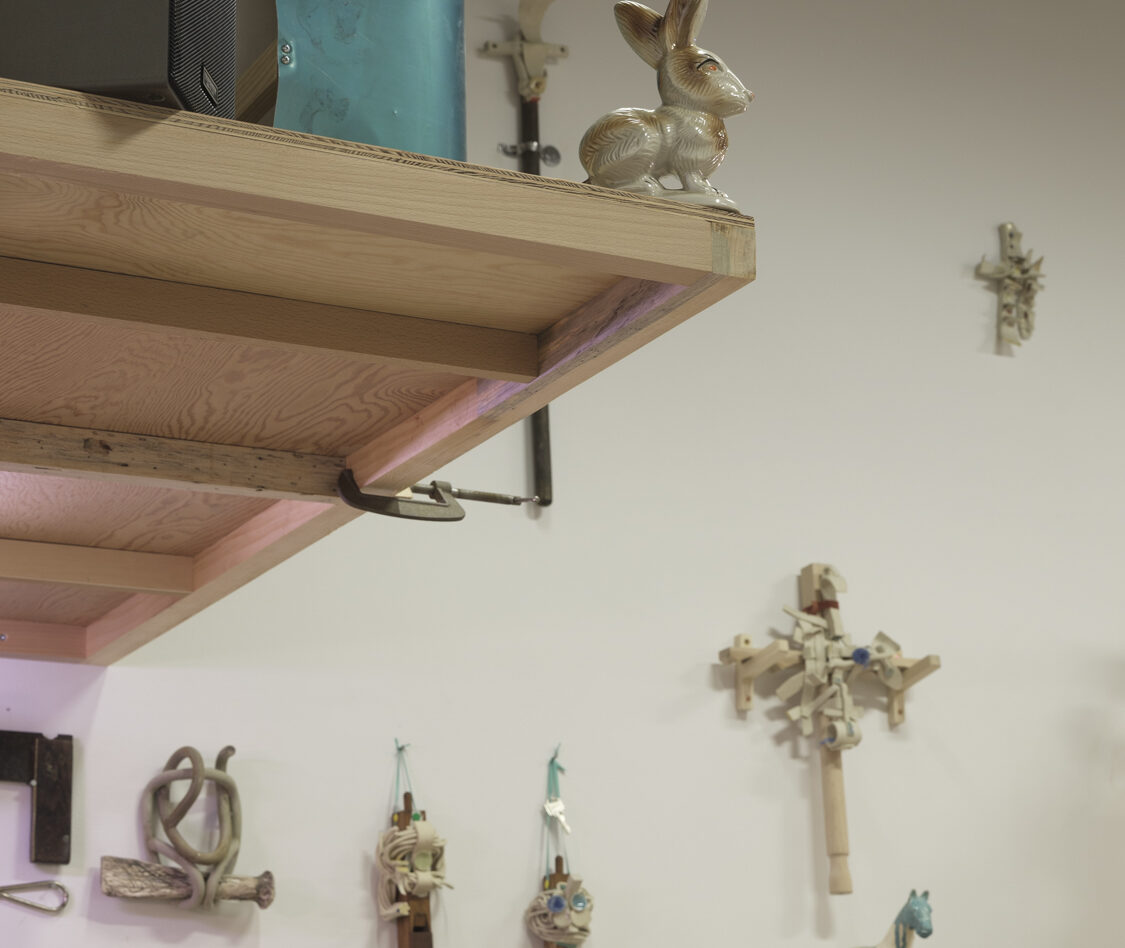
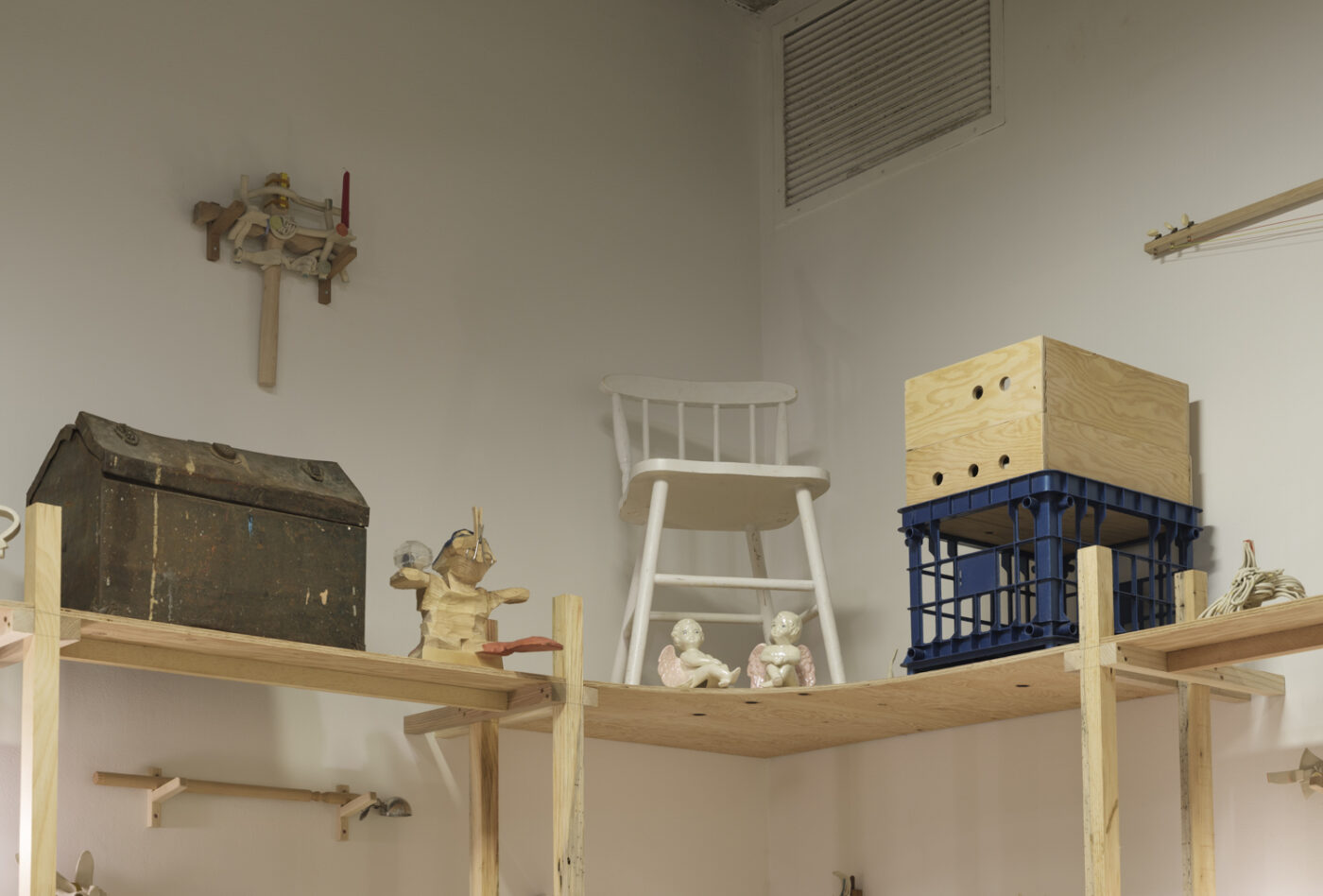
In this world, there are many things and few forms. Less and less, really. But Émile gives us forms, not things. He doesn’t sculpt his sculptures, he doesn’t make them, he doesn’t form them, he doesn’t fashion them. No, he perpetrates them. When we are first confronted with these pieces, lost usages come to mind, ways of doing things now forgotten. Obsolete tools from another, more auspicious era. Or taken from an alternate timeline running alongside our own, this present day of smooth and clumsy hands, unaccustomed to labour². When we take up these tools, we intuit diluvian movements, simple actions lost to time. Swallowing, blinking, shuddering, holding back a sneeze. Even in pleasure, we still obey. A penchant, a preference, clinamen, no matter. These are objects desired, designed via the senses, perpetrated, produced with the joyful sensitivity that is their hallmark, their texture, the specific meaning and structure that make them come alive. Their ornately sculpted tips wink at us with absences that smell of lemonade and musty garage. They sting, point, and grasp, sometimes with tongues that empty a whole heart, sometimes with ears that dry a hundred tongues — so many agglutinating appendages, whimsical, gallivanting amalgamations of fanciful faience. These are objects that prove themselves to us through an empirical, self-evident form of the conjecture³ that is both difficult and addictive, a conjecture wherein objects that are brought into the world are sense-based, thought-out, meaningful, and fully in being. Let it be known — this name is easy and open, sounding out like a tiny bell over gentle embers. Such is the conjecture that Riopel offers us.
1. coony-sluicy-money: its true violence is to allow things measurable in relation to each other, and thus, ultimately, interchangeable. Money acts as a coefficient of equivalency, reducing the lush, ineffable disparity of the world to a sad, fine and chalky granulometry that tastes of ash and identity. Usefully inevitable, the shared belief in this numeral lint allows diagonal mammals of the human variety in particular to dispense with complex reciprocal relationships that unfold within deep time, where the superstition of continuity might otherwise bring them substance and delight. Day-and-night adherence to this belief is our disfigurement we knowingly choose. And so we wander, erratic and ecstatic, from boutique to boutique, forgetting that days are gods.
2. well… well… well: the complete atrophy of our ability to imagine anything other than a panicked prolongation of the same moneyed thermo-industrial reign may in the end be nothing more than the progressive disappearance of imagination itself. By sacrificing the possibility of a considered perception of the world on the altar of its technical, derealizing, and necrophilic aestheticization, we can only revel in our own destruction through a haze of generalized anesthesia. There is no way to experience oneself as a subject other than in subservience to the devices of expression, mediation and communication which are both the interface of consciousness and the collapse of presence itself.
3. conjecture: idea that ceaselessly awaits its own confirmation via reasoning or its own realization via existence, or — very rarely — through embodiment by piercing, purple, pulpy, burrowing and raging emergence.
—Maxence Croteau
Translated by Simon Brown
Born in Tingwick, Maxence Croteau is an artist who lives and works in Montréal (Tiohtià:ke).
His work* focuses on ink drawing**, writing***, literature, and rephotography****.
__
* through the thermo-industrial ashes that flake across the world, to distinguish dust from pollen and draw out whatever honey of meaning we can
** to give form to the bewildering perplexity that passes for consciousness
*** to obey the necessity that deceives itself within us when we think and reflects when we feel
**** images prevent us from seeing


A crowdfunding campaign for emerging artists.