Anne-Renée Hotte
Les rencontres ne savent pas qu’elles ont lieu
09.11–10.24.2026
Past
STÉPHANIE CHABOT | BASEMENT LANDSCAPE (PAYSAGE EN SOUS SOL)
Artist
Stéphanie Chabot
In her new exhibition Basement Landscape, Stephanie Chabot sets out to explore those ominous spaces – physical and psychic – whose vertiginous ambiguity is so great that they provoke fear and laughter all at once.
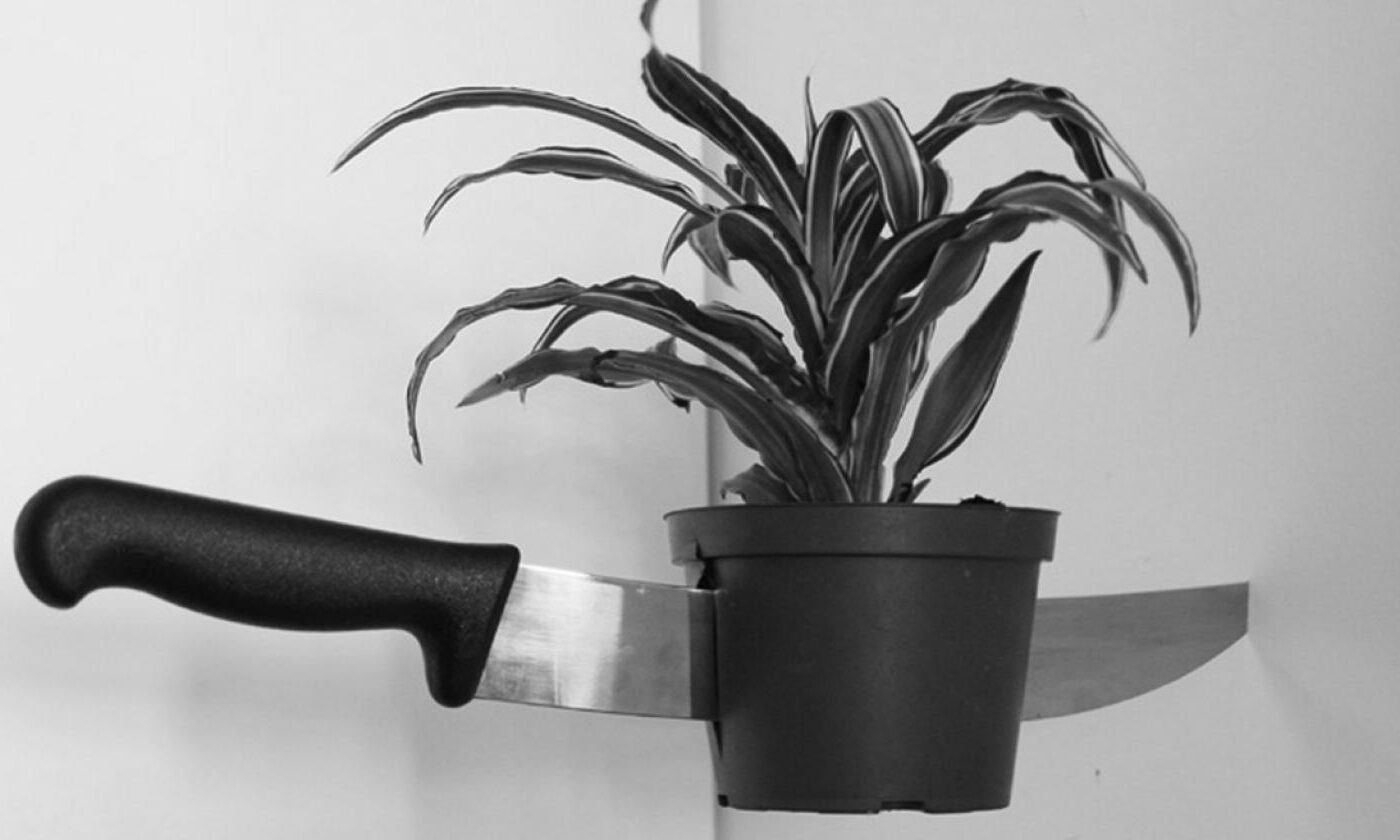
The show combines broad pop cultural references and a pointed playing with psychoanalytical conceits in order to tease out the investment both have made in the uncanny. Garishly green hands, furred, tipped with claw-like scarlet nails protrude from the gallery’s walls and floors, gripping or overturning furniture. A potted plant is impaled by a butcher’s knife. Sinister black masks seem to preside over the scene. They call to mind zombies, ghouls, werewolves, the denizens of thousands of kitsch horror films. This tense artifice is set against a mural that – while reminding one of a peculiar uncle’s rec room – stands in for the “natural” amid all this invocation of the “supernatural.”
The exhibit gets its most powerful frissons from the fraught relationship between this grotesque esthetic and the dull esthetic of the safest place for all: The ordinary suburban home. The visuals of standard domesticity are entangled with visions from our worst nightmares, leaving us nowhere to hide. That tension teases at the buried roots of terror in the awed relationship our forebears shared to the primeval landscape and the indifference of natural forces; the same fright that animated the enchanted forests of our childhood fairytales and now haunts the flux of scary movies, comic books and television.
In this new work Chabot takes us back and forth between some of the oldest and some of the most contemporary incarnations of the perpetually renewedother. She takes us – and our nervous laughter – down a telling and rickety stairway to the basement of our mind and our culture, to the place where we store all of the things we tell ourselves we’ve outgrown.
Text by Peter Dubé
A crowdfunding campaign for emerging artists.
