Anne-Renée Hotte
Les rencontres ne savent pas qu’elles ont lieu
09.11–10.24.2026
Current
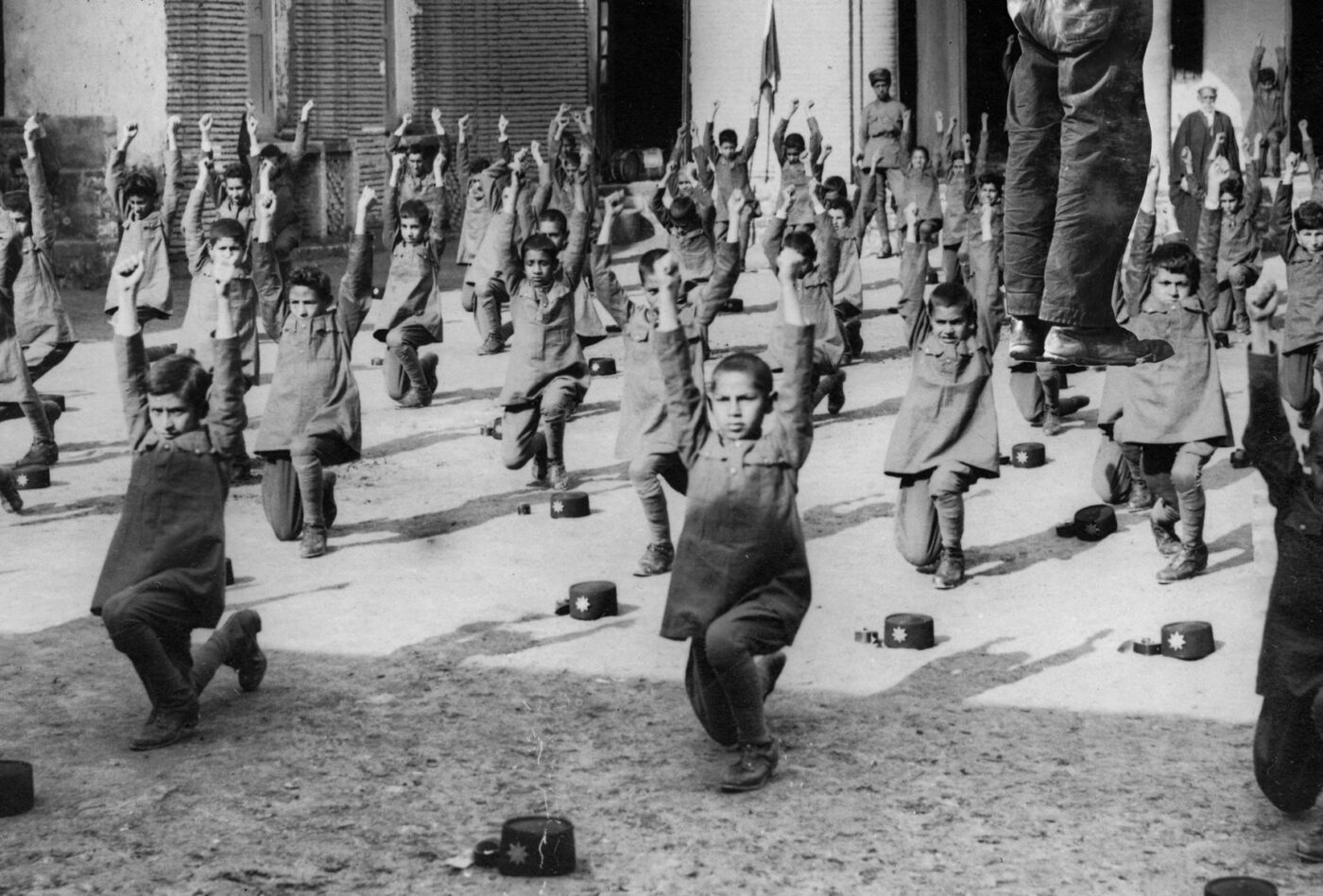
Image sourced from the British Petroleum Archives, U.K.
In this exhibition by Iranian artist Sanaz Sohrabi, we are presented with a series of personal photos, collages, archival images and ephemera. Together, these works speak to the ways in which the fight for natural resources (oil, gas, water) and the history and legacy of colonialism will always be intertwined. The irony is that, for most oil-producing countries seeking to break from the oppression of their colonizer, their only chance for leverage came from oil. Freedom meant that domestic oil corporations took root, nationalizing oil in the Middle East at a moment of radical change and shifting borders.
The British Petroleum (BP) Archives contain primary and secondary materials from the more than 100-year long history of the company, which began as the Anglo-Persian Oil Company (APOC), only changing its name in 1954. When Sohrabi visited the archives, she found that the company picture albums, which contained official and non-official documentation of various BP sites, had been reshuffled multiple times, as if someone, at some point, had wanted to rewrite the narrative. What Sohrabi has extracted from the BP Archives acts as a counter-narrative to BP and APOC’s celebratory tone. Yes, there were swimming pools, but they came at the expense of the rivers. Yes, there were movie theatres, but they came with a caste system, reinforcing one’s place within the colonial hierarchy. And of course, there was oil; the cause and solution to these issues, the raison-d’être for foreign interest in the Middle East. With this work, Sohrabi refuses to let the colonial narrative have the upper hand. Hers is a “wilding” of the narrative rather than a taming of it.
We know that the nationalization of oil (or any commodifiable resource) does not equate to decolonization or freedom from the colonizer. Rather, the very reliance on these resources is a colonial construct. During the decolonization of the 1950s-70s, we witnessed a shift from direct imperialism towards neo-colonial capitalism. The colonizer merely changed roles in the exchange of resources. The extraction, control, distribution, and dissemination of natural resources is so clearly linked to the concept of nationhood. What is at stake here is the very notion that resource extraction is necessary for the success of a people and their territory. Sohrabi’s exhibition is built on layers of narratives—personal, national, and colonial—each one disrupting and challenging any possible authority over these histories.
– Amber Berson
Research and production of this exhibition have been supported by:
Fonds de Recherche du Québec Société et Culture Doctoral Fellowship (FRQSC), Forum Transregionale Studien (Berlin, Germany), Skowhegan School of Painting and Sculpture (Maine, United States), Illinois State University visiting Artist Program (United States), as well as Concordia University’s Global Emergent Media Lab, School of Graduate Studies, Fine Arts Academic and Research Facilities, and Post-Image cluster at Milieux Research Institute.
The artist would like to thank friends and loved ones whose critical feedback, ongoing conversation and support have been instrumental for this exhibition and the research project since 2017: Patrick Lewis, Mico Mazza, Thomas Kneubühler, Velibor Bozovic, Ala Younis, PENG Zuqiang, Amber Berson, Chih-Chien Wang, Nima Esmailpour, George Khalil, Dr. Kaveh Ehsani, Dr. Krista Genevieve Lynes, Dr. Alice Jim, Chitra Ganesh, Dr. Svati Shah, Sondra Perry, Fadi Abu’Nemeh, Giuseppe Fidotta, Sima Kokotovic, as well as Joanne, Beth and Ian at the BP Archives. Sanaz would also like to extend her love and gratitude to CLARK’s incredible team for making this project a possibility.

PHOTO CREDIT : PAUL LITHERLAND

PHOTO CREDIT : PAUL LITHERLAND

PHOTO CREDIT : PAUL LITHERLAND

PHOTO CREDIT : PAUL LITHERLAND

PHOTO CREDIT : PAUL LITHERLAND

PHOTO CREDIT : PAUL LITHERLAND
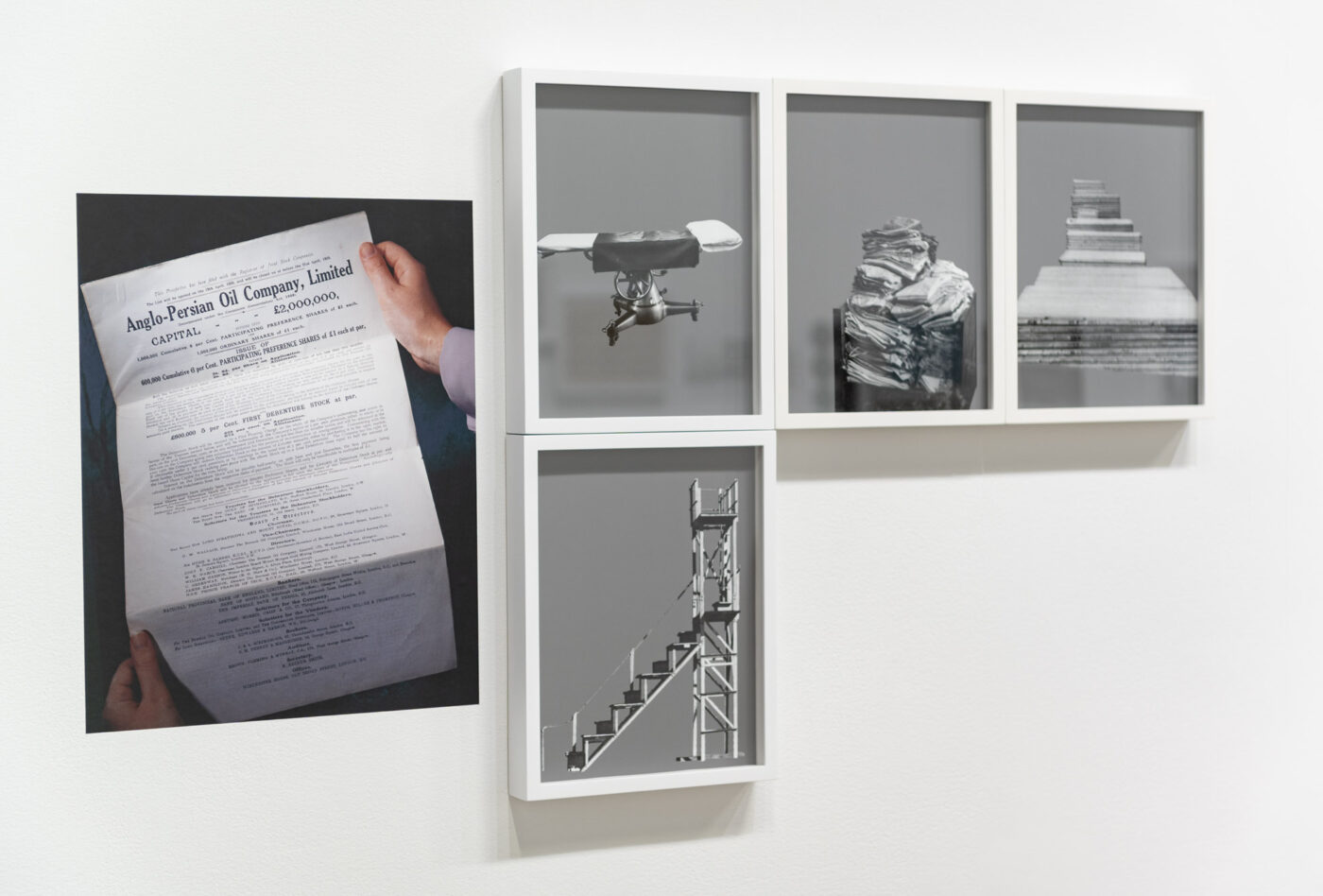
PHOTO CREDIT : PAUL LITHERLAND

PHOTO CREDIT : PAUL LITHERLAND

PHOTO CREDIT : PAUL LITHERLAND
A crowdfunding campaign for emerging artists.
