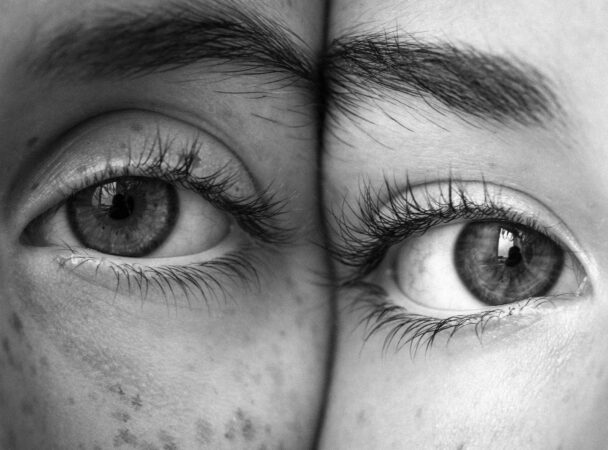
Émile Riopel
S’il le faut, je me réduirai en cendres pour être sûr que le vent m’emporte
09.11–10.24.2026
Current

Anna Hawkins
Anna Hawkins’ overall practice is based on re-enactment, that is, the replication or repetition of historical elements or scenes derived from the Internet. In her video work, she re-appropriates images found on the Internet to (re)construct various tableaux. The artist points to the astounding proliferation of images and videos available on different platforms that in effect create a new information paradigm, whether it be to learn about serious subjects like art history, or banal ones like how to fold a table napkin. For example, in 2014 Hawkins created a video titled With Outthrust Arm, which appropriates video images of the sculpture Laocoön captured by tourists and posted on YouTube. Here, she isolates different parts of the sculpture as shown in the videos, and then reassembles them to recreate the entire piece, as with a collage or a puzzle. In this digital rejoinder, the different image qualities from each clip intertwine to transform the original work. The artist is also interested in the numerous tutorials available on the Internet, which guide viewers in learning everyday skills and tasks. In her video Ham-Handed (2014), the artist composes a face from found images of painted portraits as well as original images she herself has shot (a pair of hands imitating the act of painting or drawing on a surface). This work prefigures her presentation at CLARK.
Visually, Hawkins works through chroma keying, a technique used in video and filmmaking that allows several images to be inserted into a single composite image. In the history of recent video, this technique was used most notably in the 1970s by artists such as Gary Hill, Nam June Paik, and David Cort. The end result is similar in effect to the idea of bricolage or collage, which allows the creation of multiple combinations of forms or image associations. Today, chroma keying often involves the use of “green screen”, which allows chosen elements to be filmed in isolation for later integration into the final film. The artist makes direct reference to the use of this particular green in her video How to Chop an Onion. Here, she pushes the experience of mise en abime a bit further by inserting herself into the scene, imitating the same gestures that appear on screen in an attempt to interact with or create a dialogue with the other. These interactions are sometimes clearly visible since the images from YouTube are occasionally in black and white, while her own superimposed images are in colour.
While Hawkins puts herself on display, her isolated gestures, rather than herself, become the subject of her work. The demonstration is visually deconstructed and reduced to its essential core. What’s left is a precise action, like cutting an onion or blow-drying one’s hair. Despite our quick and easy access to information on the Internet, our knowledge – and our recall – remains fragmented nonetheless.

CRÉDIT PHOTO: PAUL LITHERLAND

CRÉDIT PHOTO: PAUL LITHERLAND

CRÉDIT PHOTO: PAUL LITHERLAND

CRÉDIT PHOTO: PAUL LITHERLAND
A crowdfunding campaign for emerging artists.