Anne-Renée Hotte
Les rencontres ne savent pas qu’elles ont lieu
09.11–10.24.2026
Current
DIANE MORIN | LE GRAND CALCULATEUR I (APPRENDRE À COMPTER)
Artist
Diane Morin
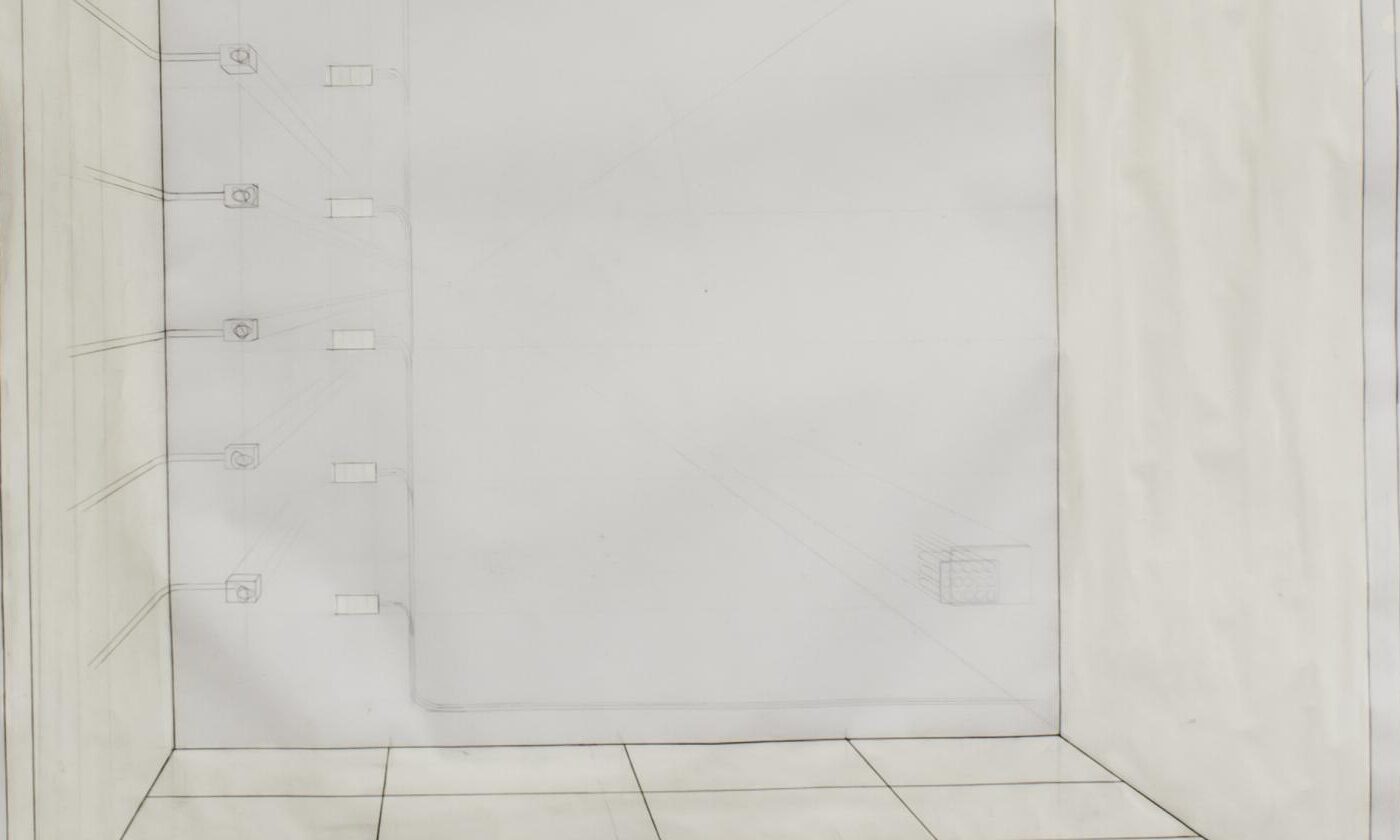
For its final exhibition of the season, Centre CLARK focuses on drawing with works by two artists who explore its relationship to space. Le grand calculateur I (apprendre à compter) 2013, a new kinetic installation by Diane Morin, occupies the main gallery. Consisting of an arrangement of basic electronic components called electromechanical relays, the work reveals the apparatus of a logic system based on binary calculus, the basis of computing. As Morin explains: “The electromechanical relay is composed of two elements: a copper wire coil, and a series of mechanical switches. When an electric current is fed through the coil, it becomes magnetized. The switches react to this magnetization and change position when the coil receives an electrical current. By plugging the coils and switches to several electromechanical relays, it becomes possible to build a logical network.”
Within a white environment, switches are connected by wires to relays fixed to plates aligned on the wall, each one attached to the next. The relays signal their activity through mechanical clicks and blinking lights, while numbers appear at random intervals on the modules. The placement of variously sized elements on the wall, referencing the title of the work, renders the process of simple addition visible before our eyes. This spatialized calculating process, enabled by the mechanisms at work in the installation, lends itself visually to drawing. Stretched between opposing walls, wires become lines drawn in space. Ultimately, the whole system indicates, in real time, the number of active or inactive switches within a section of the installation. This roundabout way of “proving” the logic of a system aptly illustrates the fascination Morin has not for the acquired result, but for the process of achieving it.
Morin, an autodidact, designed the architecture of this system through the use of relays – basic, now obsolete components that demonstrate the evolution and history of computing – to explore the logic governing developments in this field. Morin is enticed by low tech and its power to inspire and astonish, and frequently chooses to use simple mechanisms in her work – small motors, force transfer mechanisms based on the action of rods and levers, contact microphones, electronic circuitry, etc. By using techniques and devices that demystify these mechanisms, she re-establishes the human element at the origin of these systems, which for most of us remain abstract, while also questioning our dependant relationship to technology.
Anne-Marie St-Jean Aubre
Translated by Jo-Anne Balcaen
Diane Morin would like to thank the Canada Council for the Arts for its support, and Éloi Désjardins, Claudette Lemay, Thierry Lachapelle and Patrick Bérubé for their help. She also thanks Steeve Lebrasseur, who contributed to her first forays into relay systems, over ten years ago.
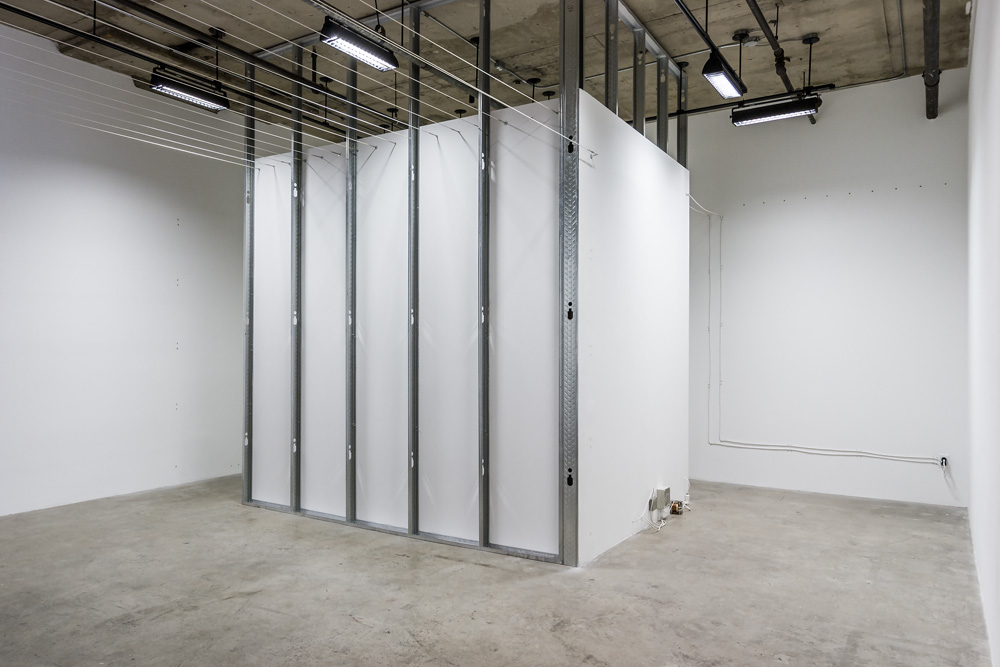
Artiste: Diane Morin. Photo Credit: Paul Litherland
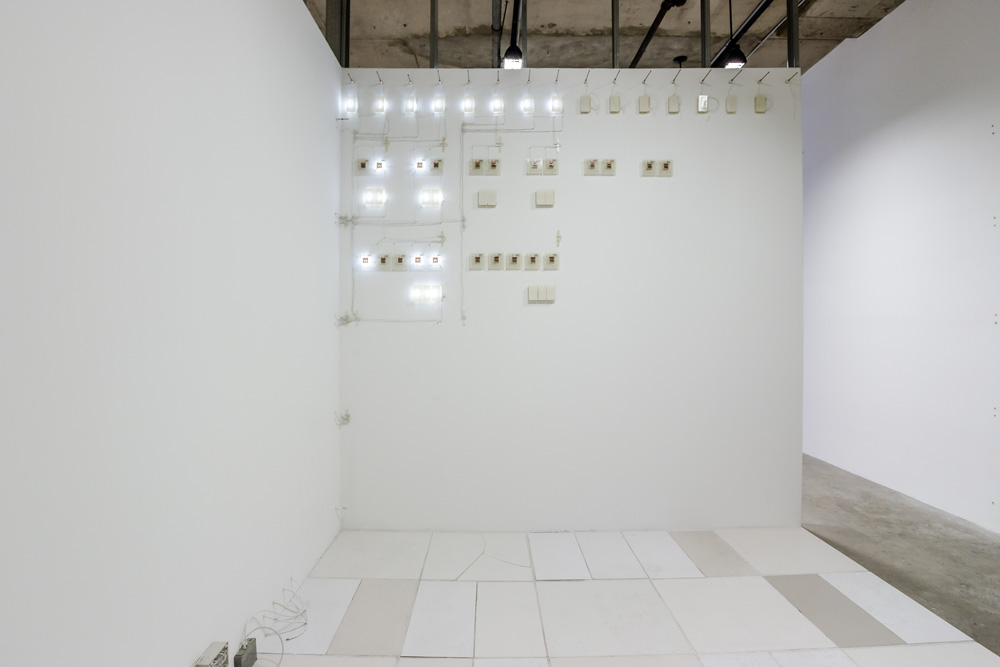
Artiste: Diane Morin. Photo Credit: Paul Litherland
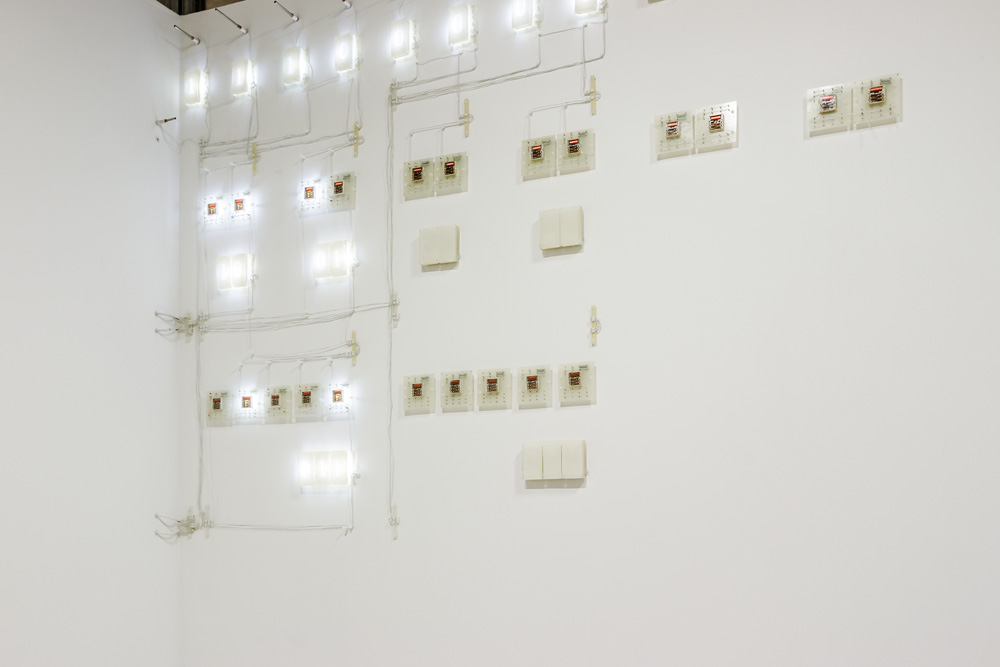
Artiste: Diane Morin. Photo Credit: Paul Litherland
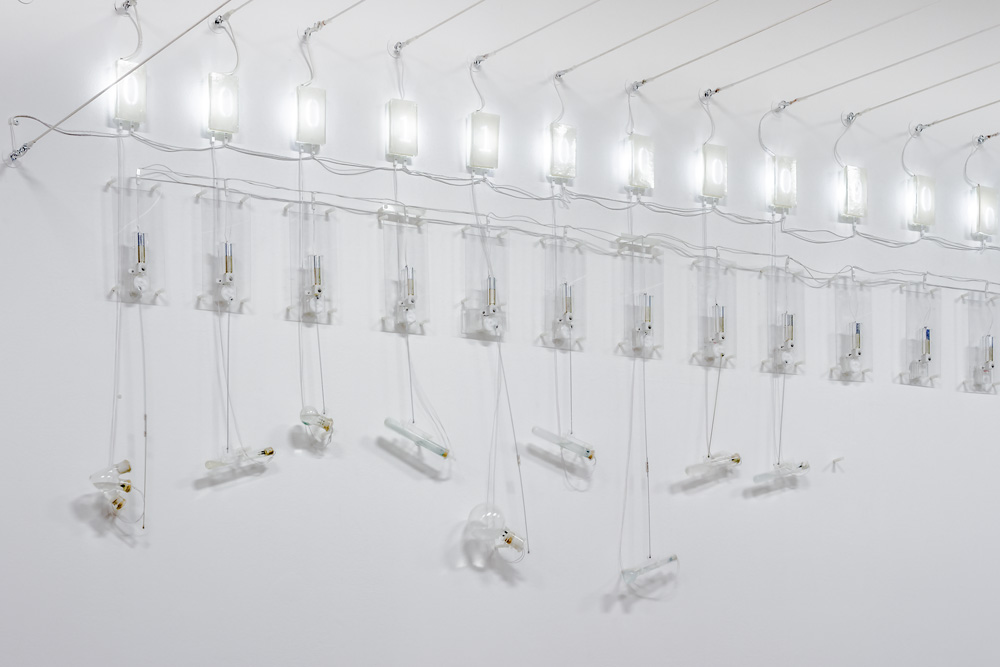
Artiste: Diane Morin. Photo Credit: Paul Litherland
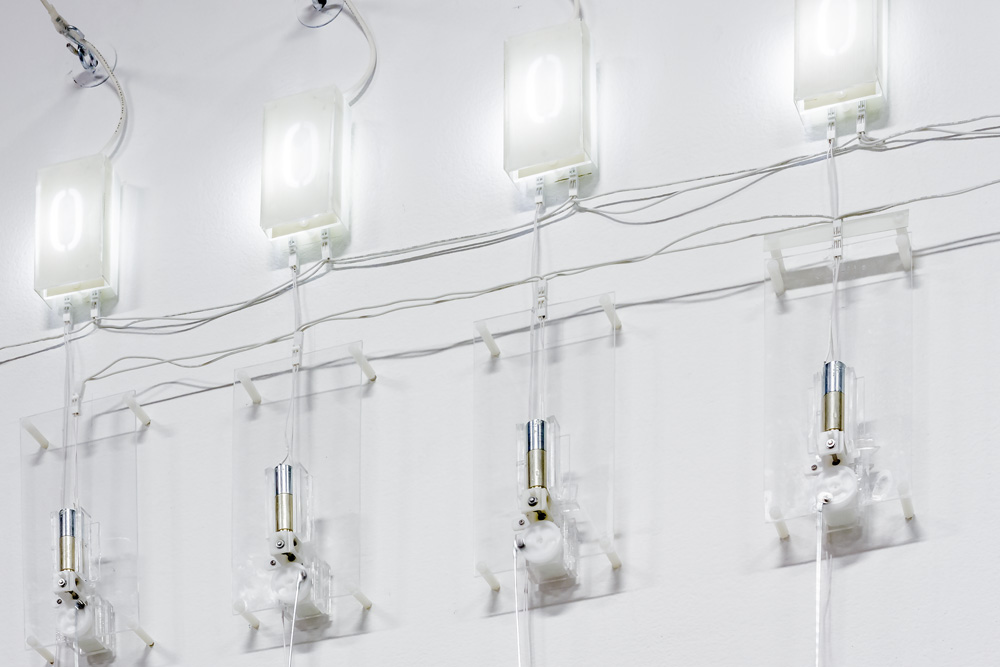
Artiste: Diane Morin. Photo Credit: Paul Litherland
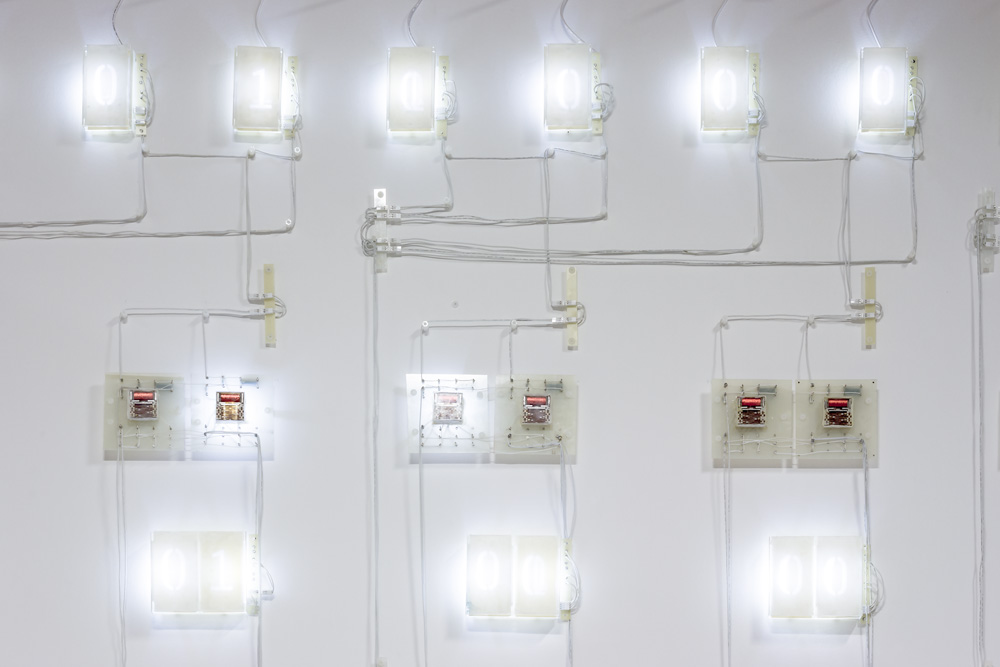
Artiste: Diane Morin. Photo Credit: Paul Litherland
A crowdfunding campaign for emerging artists.
