Émile Riopel
S’il le faut, je me réduirai en cendres pour être sûr que le vent m’emporte
09.11–10.24.2026
Current
MARTIN LORD | PERO, YO CREO QUE SI !
Artist
Martin Lord
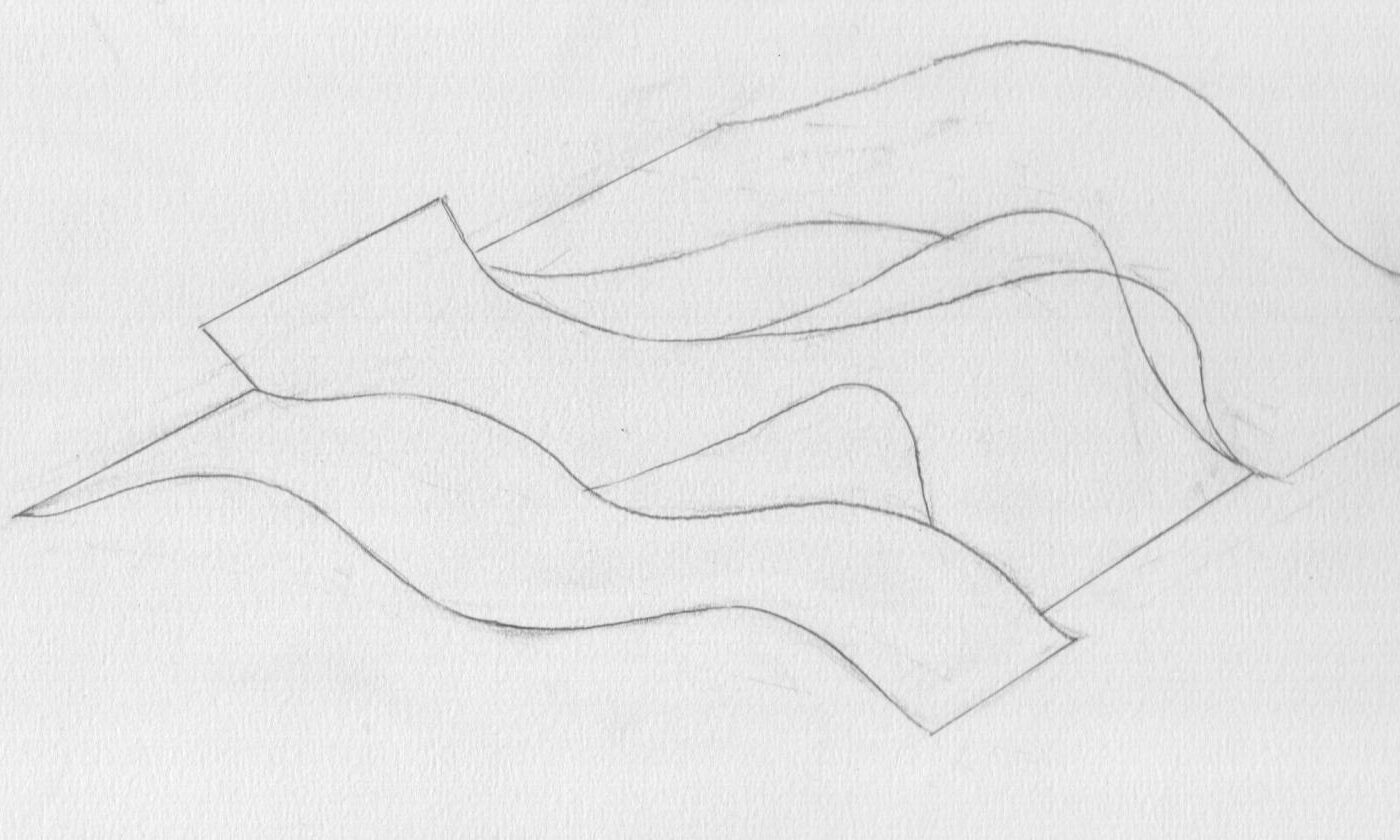
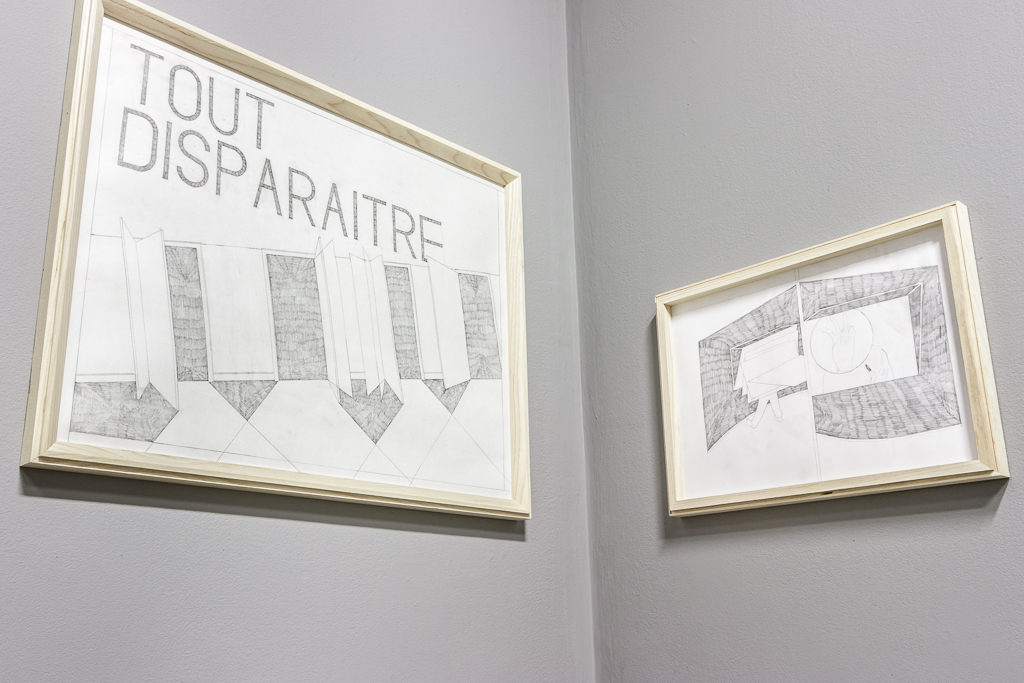
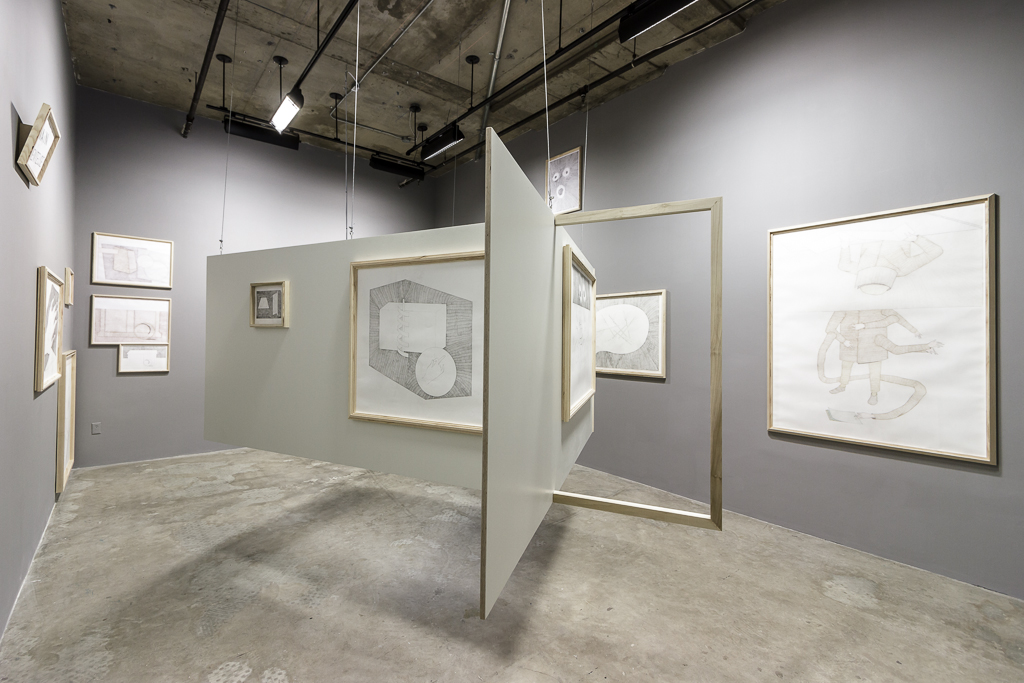
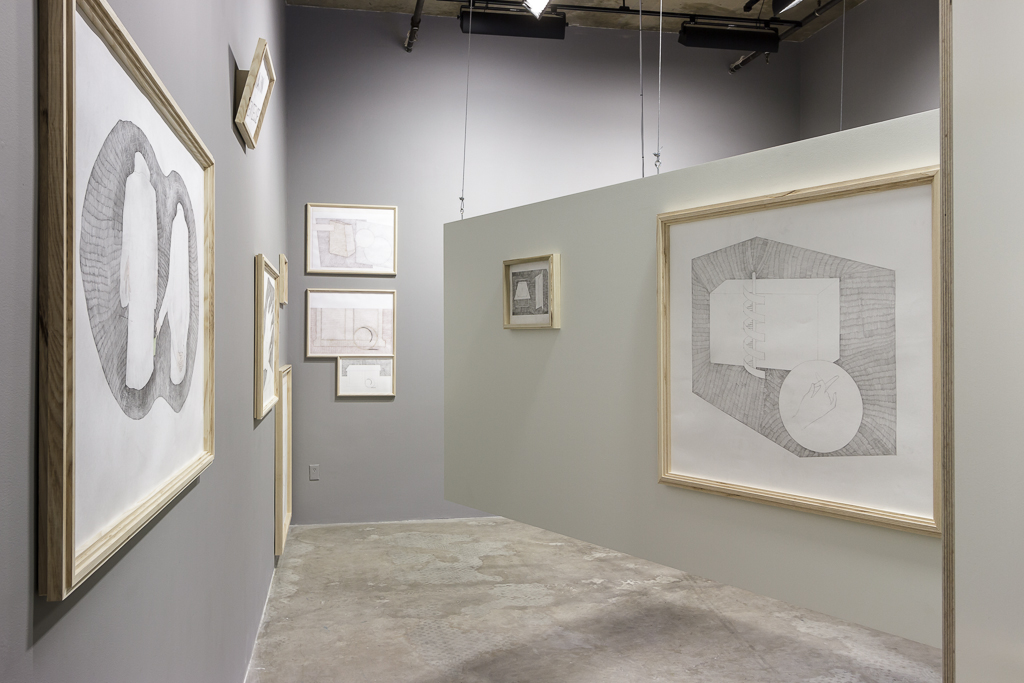
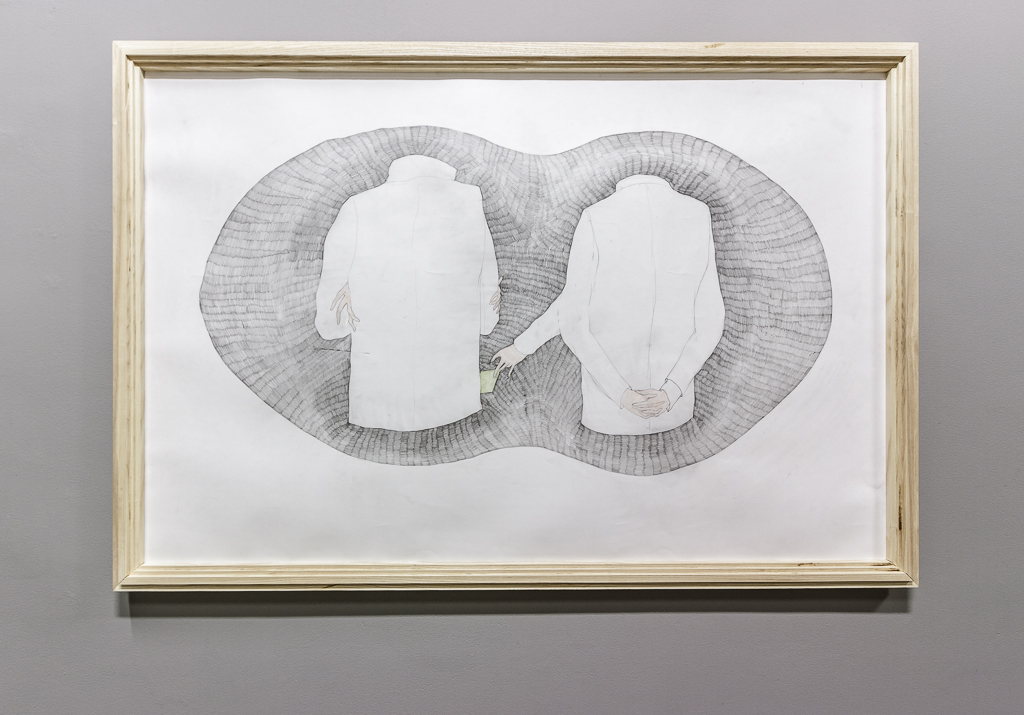
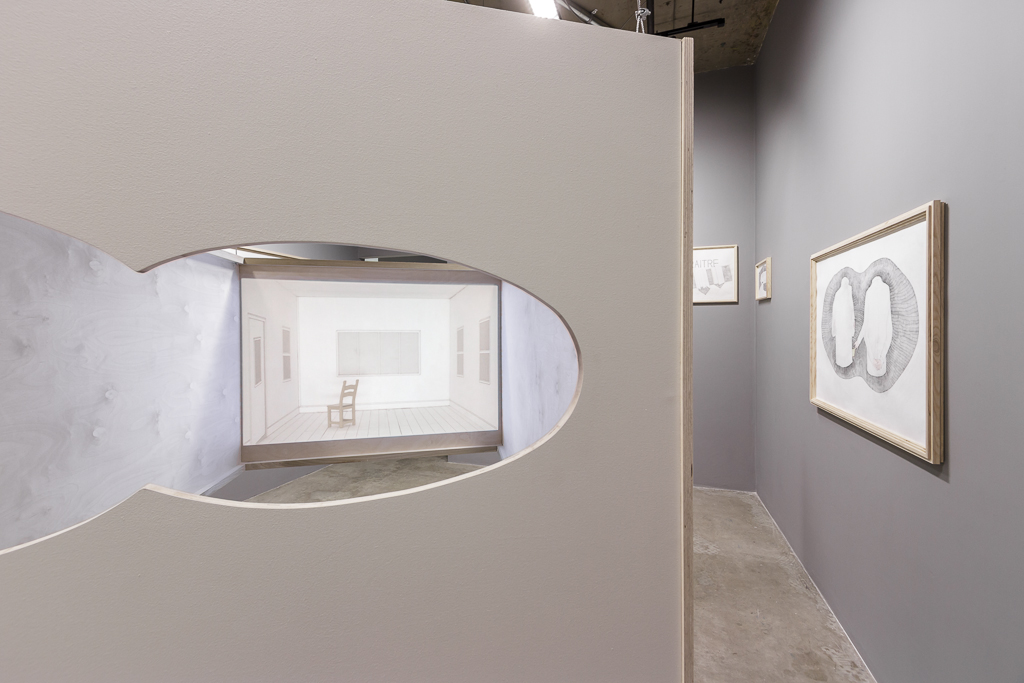
CLARK’s small gallery features the largest installation of drawings to date by the artist Martin Lord, who pushes the relationship between drawing and set design, as explored in his recent exhibition at AXENÉO7 in the fall of 2011. Entitled Pero, yo creo que si! [ But I think it is ! ] 2013, the installation includes a video and roughly twenty, mostly graphite drawings which focus on themes of trickery, illusions and games of perception that shape the world of characters such as magicians and pickpockets. Gloved hands and guarded glances abound in these images, building an open narrative into these sleight of hand professions. A link can be made between these drawings and cinematic illusions – which also seek to make us believe the unbelievable – with the video titled La chaise d’Houdini, 2013, wherein a miniature replica of the chair used by the famous illusionist moves of its own accord, magically, within a domestic space drawn in pencil. A mystical theme also transpires through drawings where the line work creates a radiating effect, or a circulation of energy, contributing to the otherworldly quality of the whole. And yet, the drawings also recall didactic pictograms, technical drawings, and architectural plans or models that feature a very practical aesthetic. Even though their craftsmanship is realistic, subtle shifts in perspective or scale distort the overall effect and reveal the illusion, simultaneously collapsing the three-dimensional space represented two-dimensionally in the drawing. The technique, the making of it, also contributes to the content of the work, and provokes reflection on the moment when our faith in the illusion has been broken.
Arranged in the space on a suspended, diamond-shaped structure, the works play off each other not in order to illustrate a pre-determined story, but rather to define an event without ever revealing what came before or after it. The use of words, rendered as drawings that are equally compelling, impart the notion that the series can be read as a chronicle. Because of their semantic nature, these word drawings should guide our understanding of the project, but in the end reveal only one possible point of entry among many others, having neither an explanatory nor illustrative rapport with the images. The structure directs our path, proposing an order to the reading while offering insights into the space and framing our view. Clever is the viewer who manages to truly seize the crux of the story, as the drawn images and words only skim the surface, circling the issue without ever addressing it directly.
Anne-Marie St-Jean Aubre
Translated by Jo-Anne Balcaen
Martin Lord wishes to thank the Canada Council for the Arts.
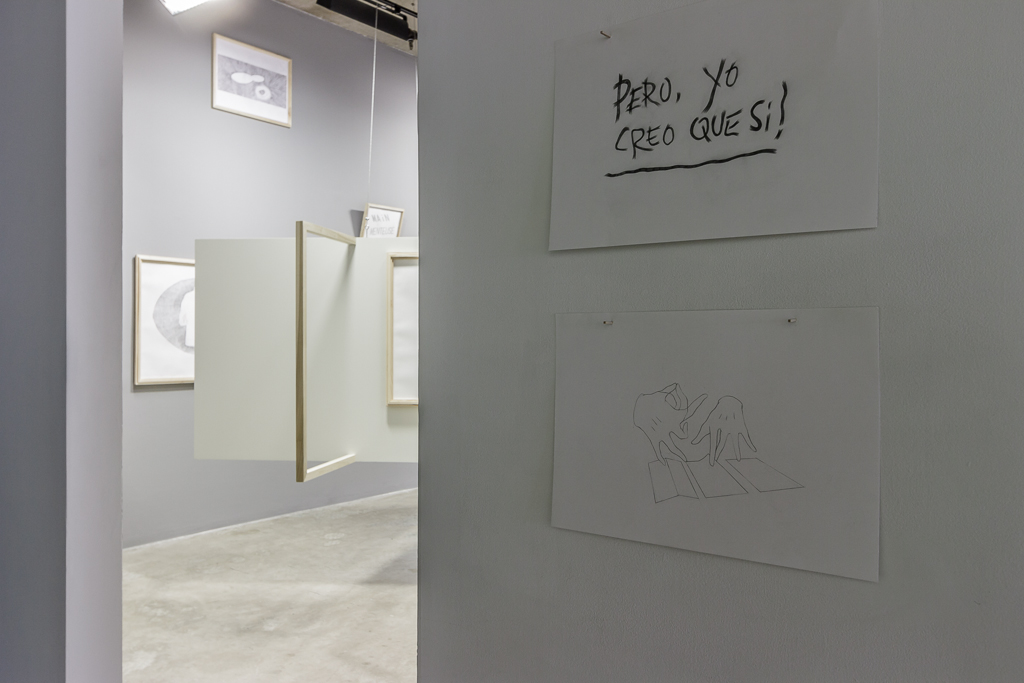
CRÉDIT PHOTO : SÉBASTIEN LAPOINTE
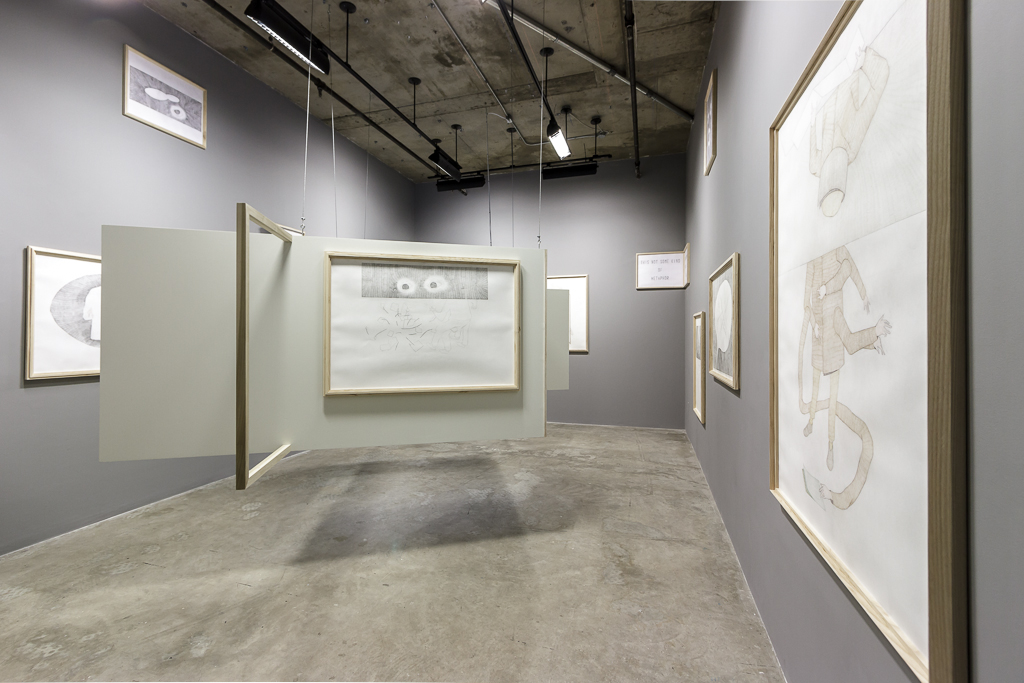
CRÉDIT PHOTO : SÉBASTIEN LAPOINTE
CRÉDIT PHOTO : SÉBASTIEN LAPOINTE
CRÉDIT PHOTO : SÉBASTIEN LAPOINTE
CRÉDIT PHOTO : SÉBASTIEN LAPOINTE
CRÉDIT PHOTO : SÉBASTIEN LAPOINTE
A crowdfunding campaign for emerging artists.