Émile Riopel
S’il le faut, je me réduirai en cendres pour être sûr que le vent m’emporte
09.11–10.24.2026
Current
Artist
Sophie Bélair Clément
Our tour will take roughly half an hour. Later, if you have more time to spend, you’ll be able to access further information. But do take this guided tour first. Otherwise you might miss something important.
(Lyre, syrinx)
Right here in this first room you have in front of you the most famous. What you actually see here is only about a third of the western side. Please approach. We don’t know much about why.
(End of the flute)
As you can see, they are several gaps. Let’s take a closer look now. Turn your back and look at the right hand section. Opposite to you. If you move a little closer you’ll be able to make out the names.
(Salpinx and Echo)
On the left, if you follow the line of his body. His death is inevitable. If you look up, you’ll see the gaps have been left to accommodate. If you look more closely, you’ll see. Further to the right you can read the name of. The colour. Now please turn back toward. At the end of our tour, you’ll have the opportunity to climb. But while we are still here.
(Lyre, aulos)
Let’s move away for a moment. Please walk past the flight of steps on the left hand side and go on through into the room straight ahead. Please mind the steps as you enter the next room. [1]
Track 107
(Without musical soundtrack)
Feel free to walk up a few steps to get a better view. Now, walk across to the opposite, the one on the right. With whom only fragments have survived.
Originally, were depicted. Possibly. Now, please walk back down the stairs, and turn to your left, to look at, from the front of. In a quilted robe. A little of survives. On the right. Now, would you like to go on to see the south section ? You’ll find it along the side wall, to your right. [1]
[1] Antenna Audio GmbH Germany, Pergamonmuseum, Berlin: Permanent Collection, Highlights Tour, Pergamon Altar. Partial transcription of the soundtrack.
PERGAMONMUSEUM
The Pergamon Museum which was designed by Alfred Messel, is among the museums on Museum Island in Berlin and houses original-sized reconstructed monumental buildings such as the Pergamon Altar, consisting of parts transported from the original excavation sites. With 850,000 visitors a year, the Pergamon is Berlin’s most visited museum and takes its name from its main attraction, the Altar of Zeus from Pergamon. Considered a masterpiece of the Hellenistic Age, this ancient Greek structure was shipped to Berlin in 1910, and the museum was built, in part, to house it. You may choose from an extensive programme of public guided tours including audio guide systems to explore this fantastic museum..[2].
[2]. Description sourced from Audiogids Ltd, Expositions and Zoos section
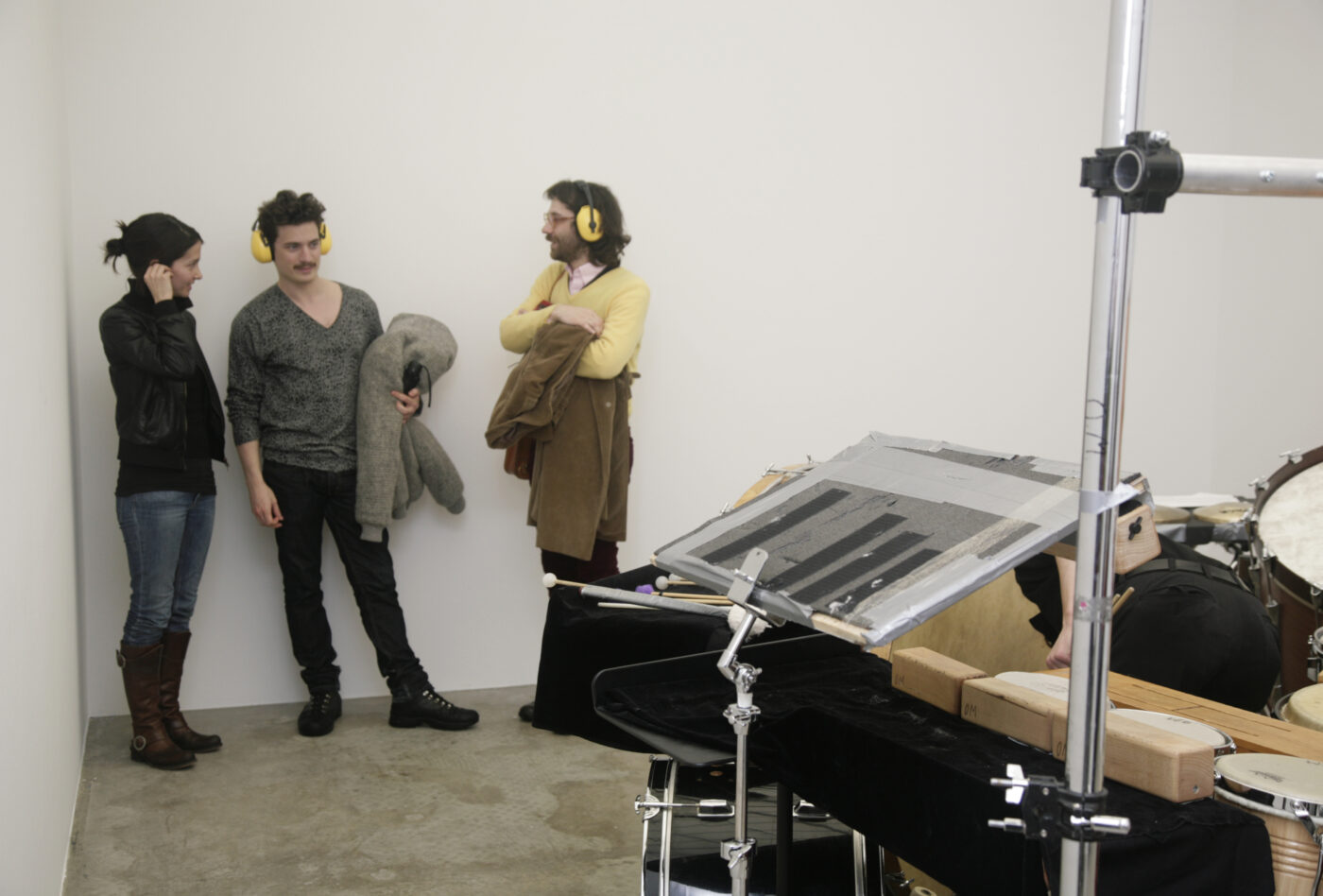
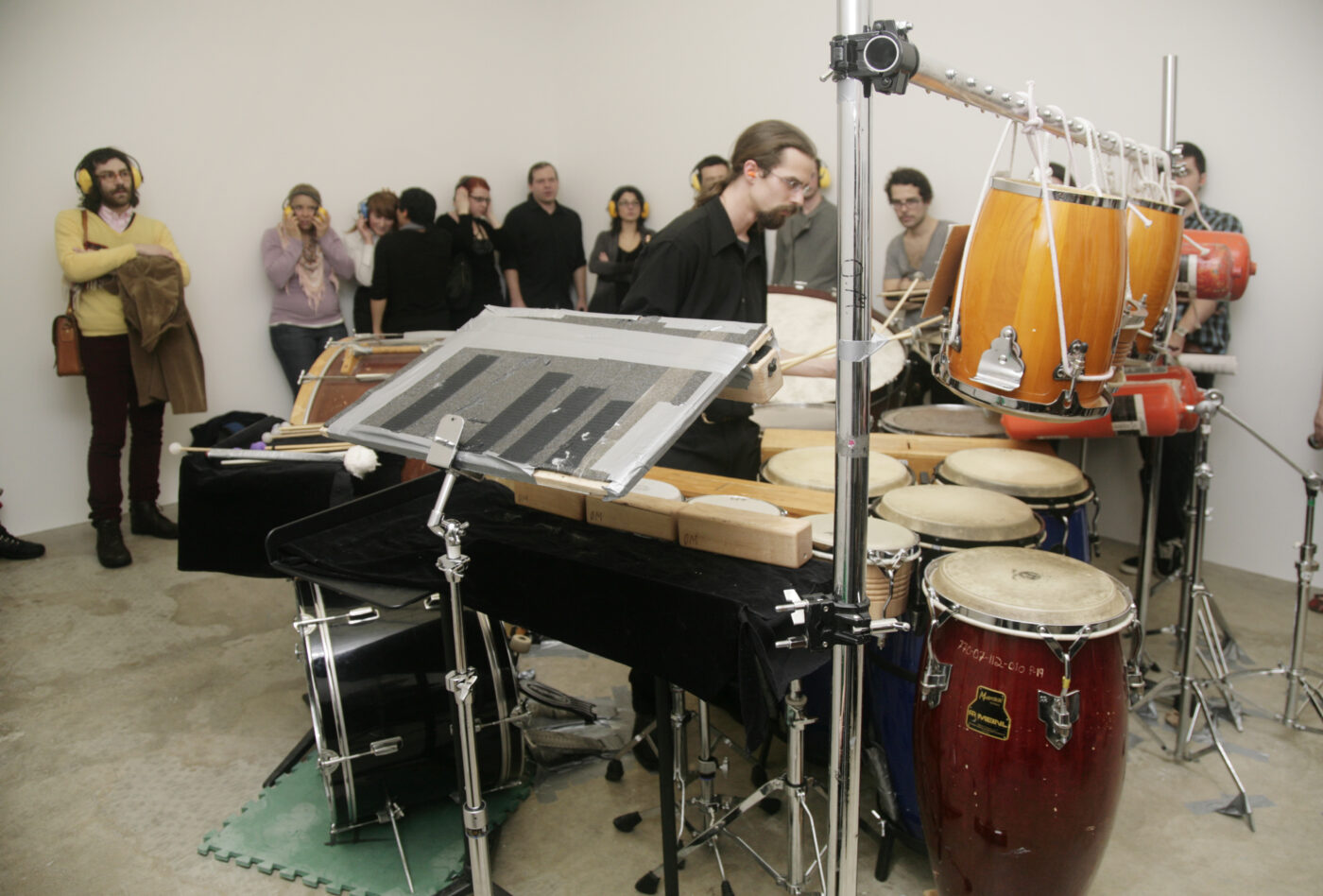
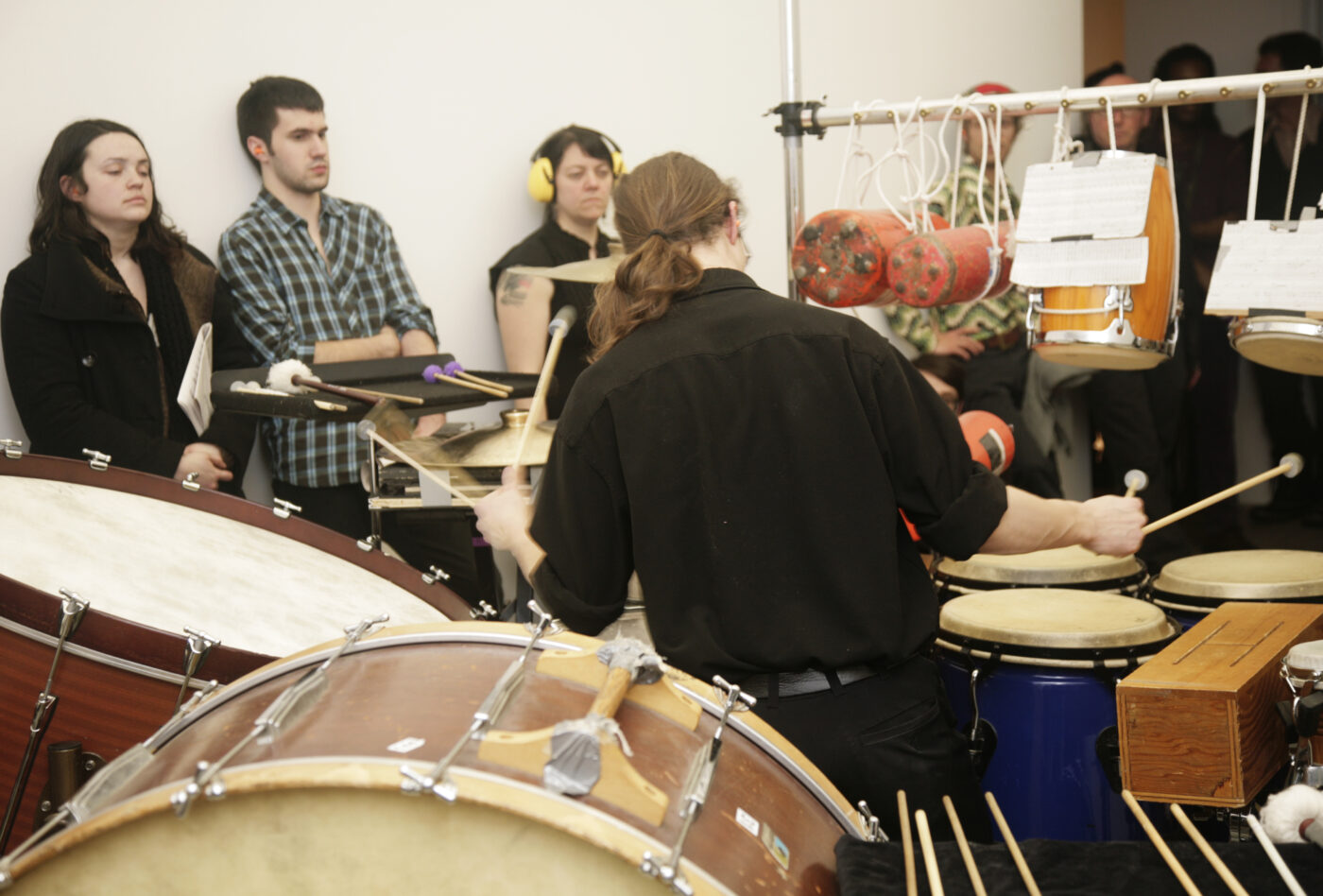
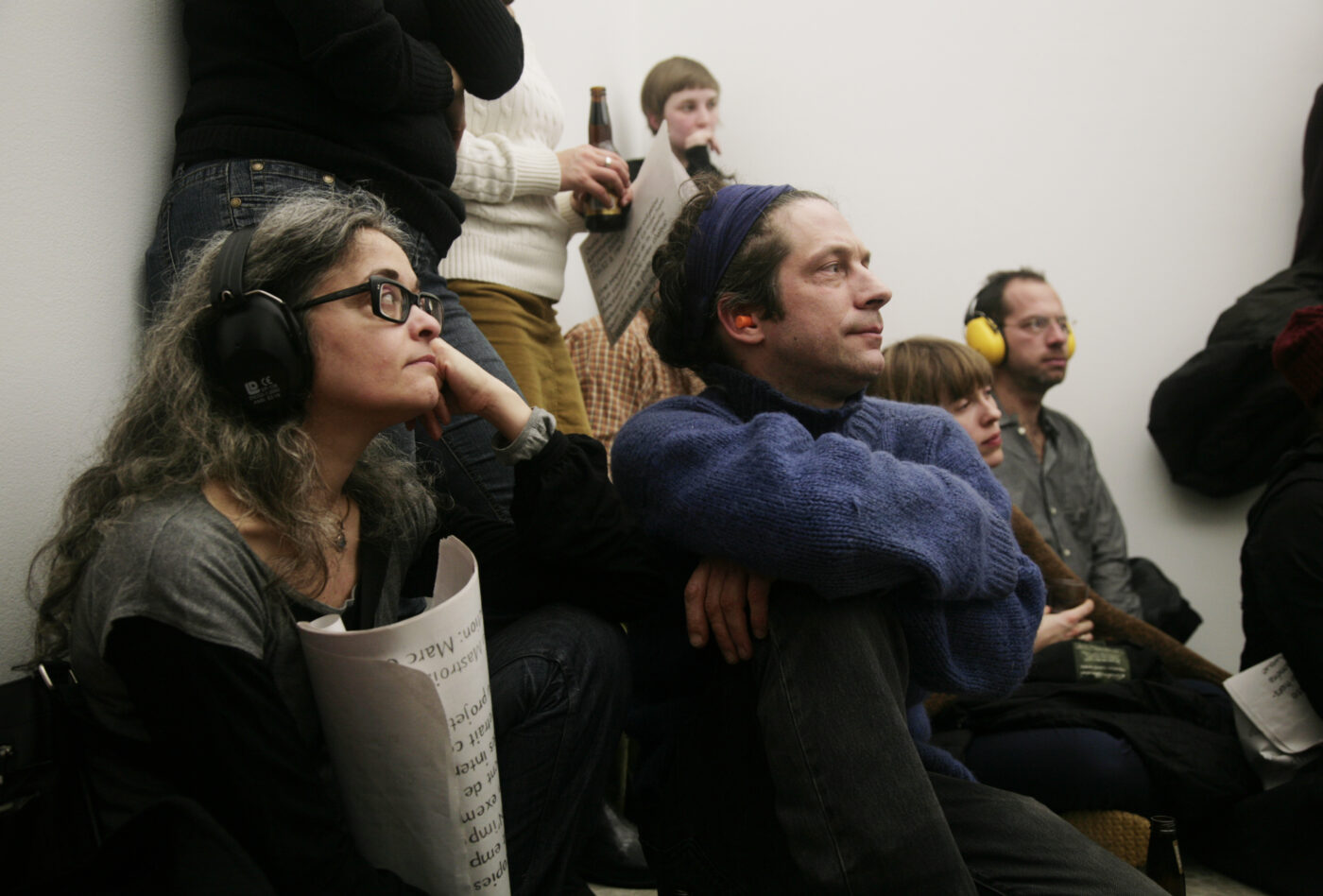
PERFORMANCE (March 10) At the vernissage, Olivier Maranda will perform Iannis Xenakis’ solo percussion work Psappha (1975) and will not adapt his interpretation to the gallery dimensions. Length: 17 minutes. Commission: The Gulbenkian Foundation for the English Bach Festival. Dedicated to Sylvio Gualda. The work will be performed true to the score, at full volume, and will therefore require listeners to be equipped with auditory protection.
Olivier Maranda (1985) Percussionist. Olivier is a founding member of the Allogène ensemble and also plays with l’Ensemble Contemporain de Montréal (ECM), Codes d’accès and the Orchestre métropolitan du grand Montréal. He is currently working on a PhD at l’Université de Montréal on the issue of performing Iannis Xenakis’ solo percussion works; his thesis directors are Robert Leroux and Julien Grégoire.

A crowdfunding campaign for emerging artists.