Émile Riopel
S’il le faut, je me réduirai en cendres pour être sûr que le vent m’emporte
09.11–10.24.2026
Current

Sunita Prasad
Artist
Sunita Prasad
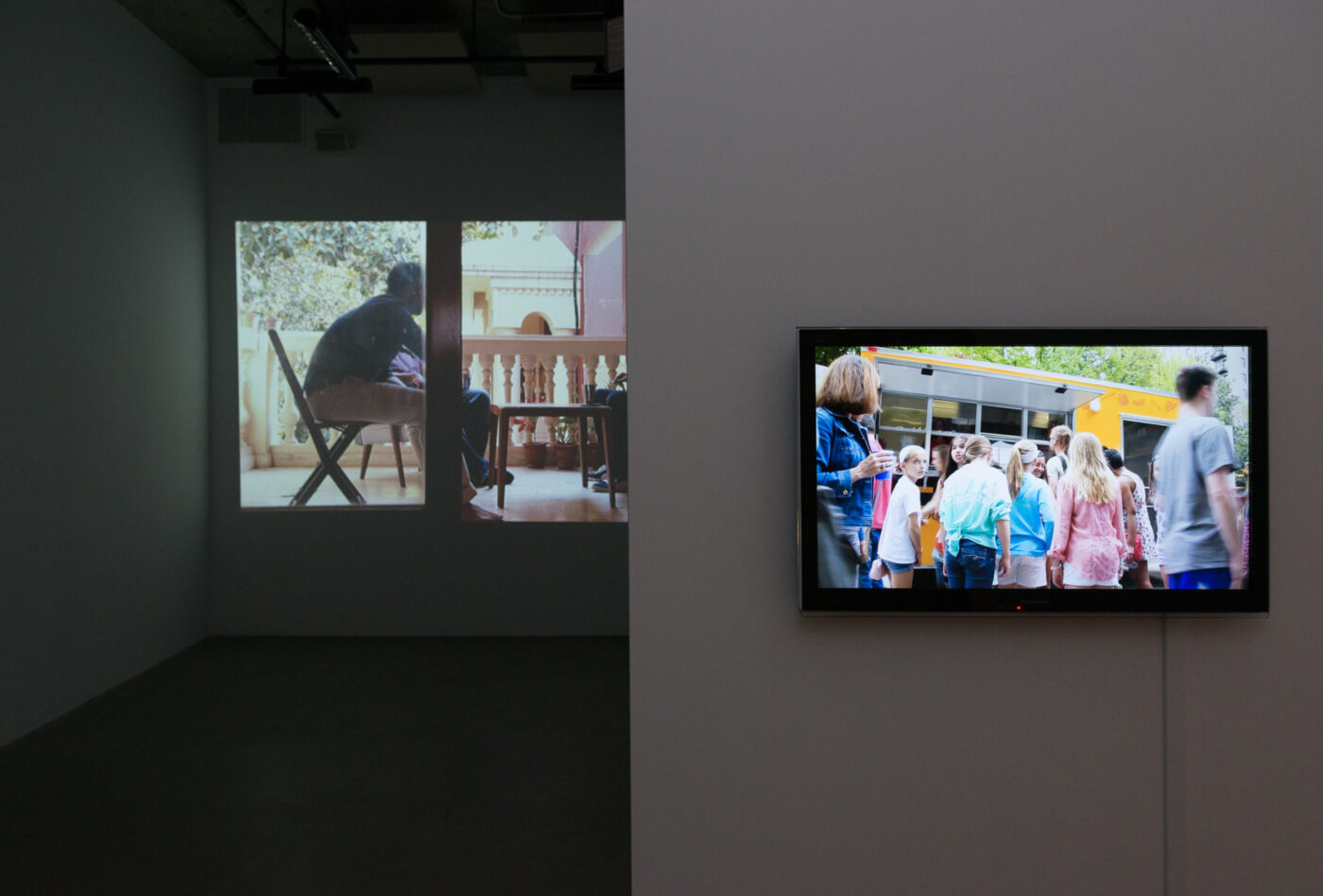
Through her film, video and performance work, Sunita Prasad examines how different research methods allow her to address issues of gender and identity. In the hybrid genre of docu-fiction, she uses re-enactment as a way to play or replay scenes that question certain expected behavioural conventions within our society. In her video titled Presumptuous, presented at the gallery’s entrance, Prasad uses a hidden camera to film individuals acting in strange ways within public space. For example, a man sits next to another man on the Paris metro, and places his hand on the other’s knee. The latter responds by taking the stranger’s hand in his and caressing it. This brief moment of intimacy reveals something both unexpected and very sensual, but could also provoke unease among other riders. Herein lies the work’s main objective: to create moments of discomfort and uncertainty in highly public contexts such as a restaurant patio, an ATM machine, a park, etc. The work seems to ask, if this were to happen to me, how would I react?
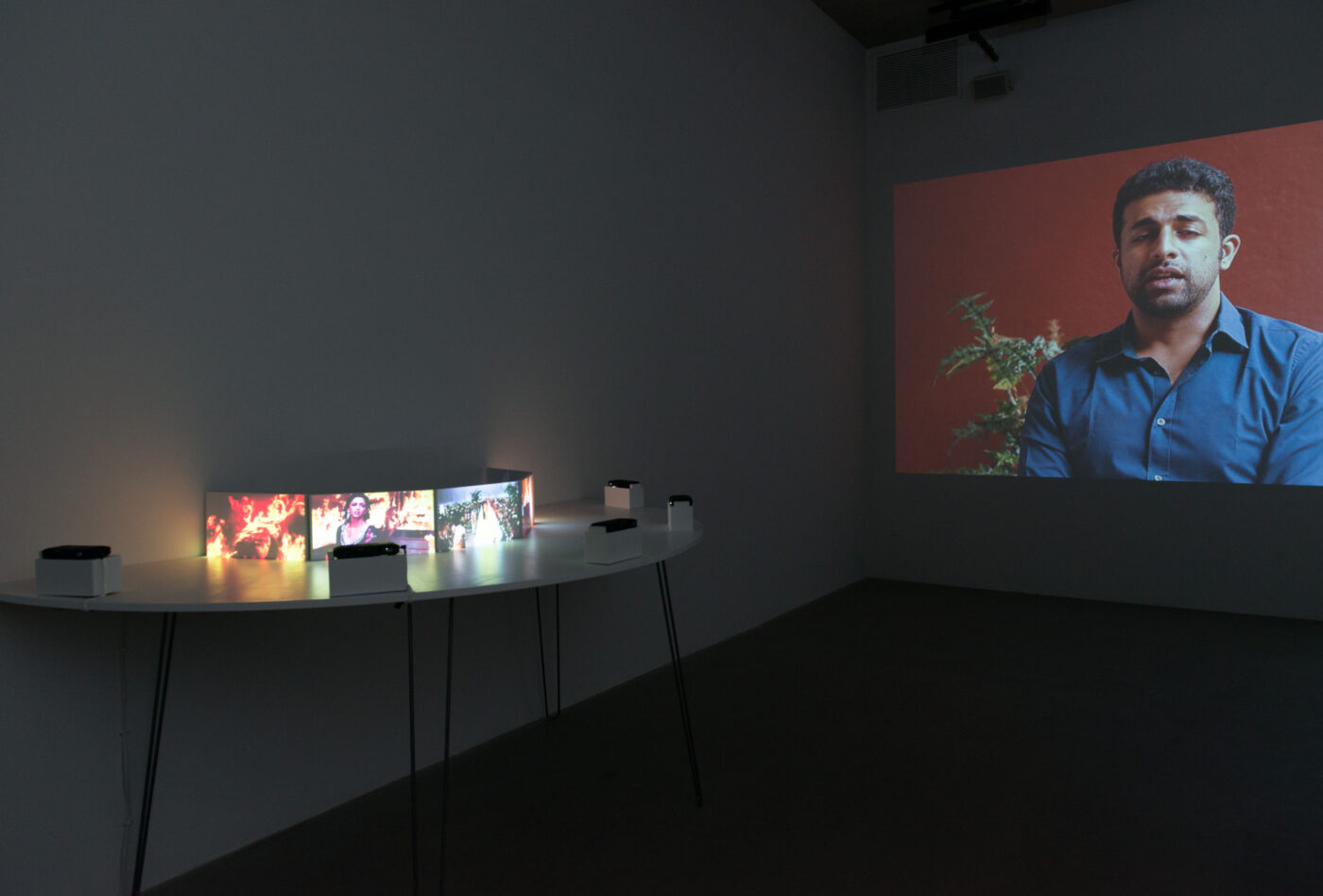
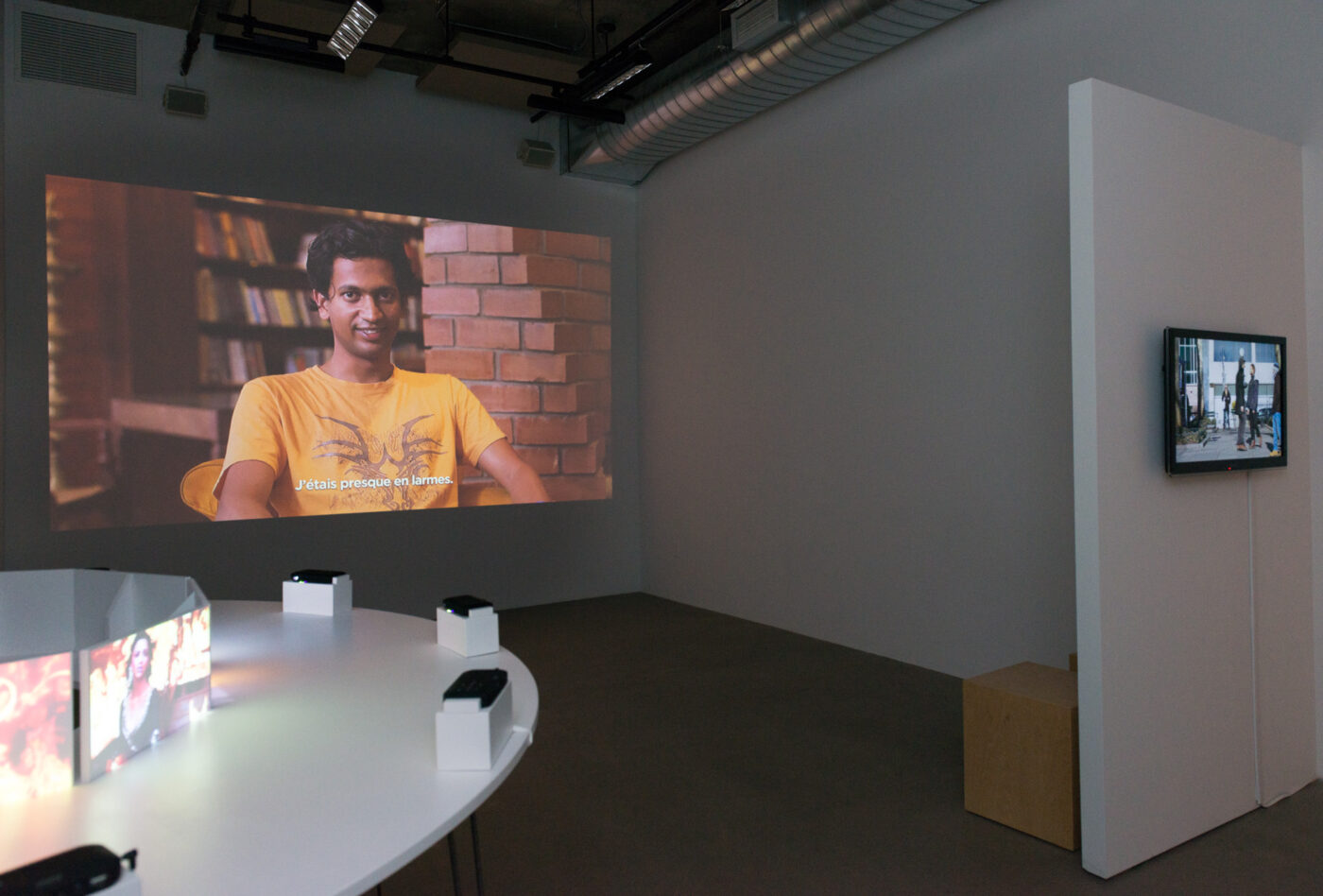
Inside the gallery are five mini-projections, comprising Agni Agonies, which is based on the artist’s own archive of Bollywood films that feature scenes of women surrounded by flames. Prasad traces this cinematic trope to the story of the Ramayana and the mythological character of Sita, who proves her purity to her husband by walking through fire, unscathed. In each video, Prasad makes a phantom-like appearance by mimicking the actress’s gestures, with overly dramatic and comical effect. By playing with these cinematic gender codes, the artist lampoons this heroine as an archetype of the ideal woman.
Prasad’s exhibition at CLARK concludes with a projection titled Recitations not from memory. Shot in Bangalore, the video addresses gender issues in India, in particular the status of women, and questions the country’s patriarchal society. Discrimination against women still exists, whether in India or throughout Western society, although the type of discrimination depends on which cultural or social group one belongs to. In an effort to understand how the mere fact of being female has tainted women’s personal histories, Prasad interviewed Indian women of the same socio-economic status as her own and asked them about their experiences. Then, as a way of shifting how these stories would be presented, Prasad asked several men – all non-actors – to recite the women’s accounts in settings that represent their everyday lives (an office, a café, etc.). This re-contextualization is further destabilized by the men’s performances, which succeed in embodying the women’s vulnerability under the status imposed on them by society.
Ultimately, Sunita Prasad’s work allows us to question societal norms, revealing its behavioural codes in the act of subverting them.
– Manon Tourigny (translated by Jo-Anne Balcaen)

CRÉDIT PHOTO: PAUL LITHERLAND
CRÉDIT PHOTO: PAUL LITHERLAND
CRÉDIT PHOTO: PAUL LITHERLAND

CRÉDIT PHOTO: PAUL LITHERLAND
A crowdfunding campaign for emerging artists.