Anne-Renée Hotte
Les rencontres ne savent pas qu’elles ont lieu
09.11–10.24.2026
Current
Opening
Thursday March 12, 6pm
Artist
Pedro Barbáchano
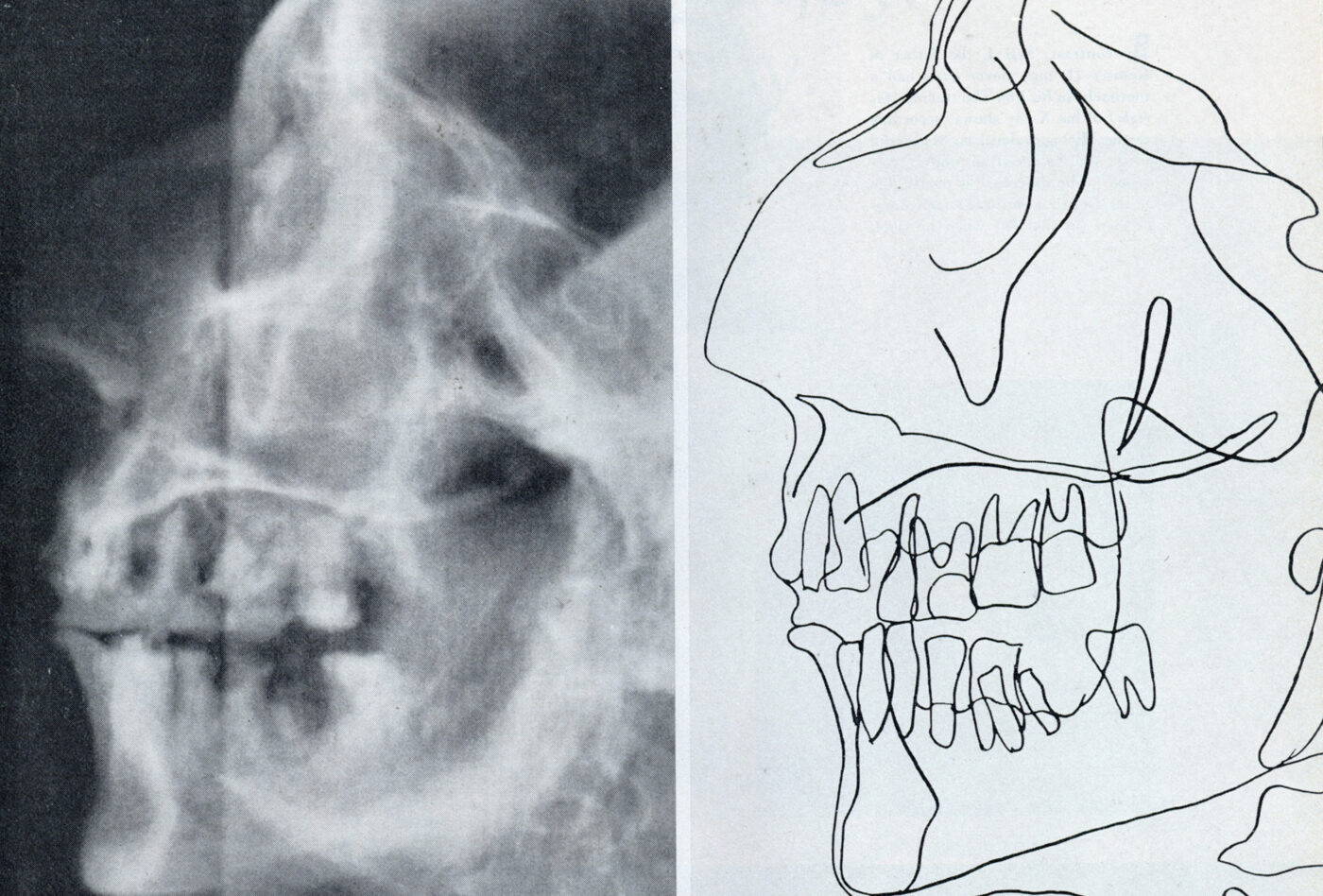
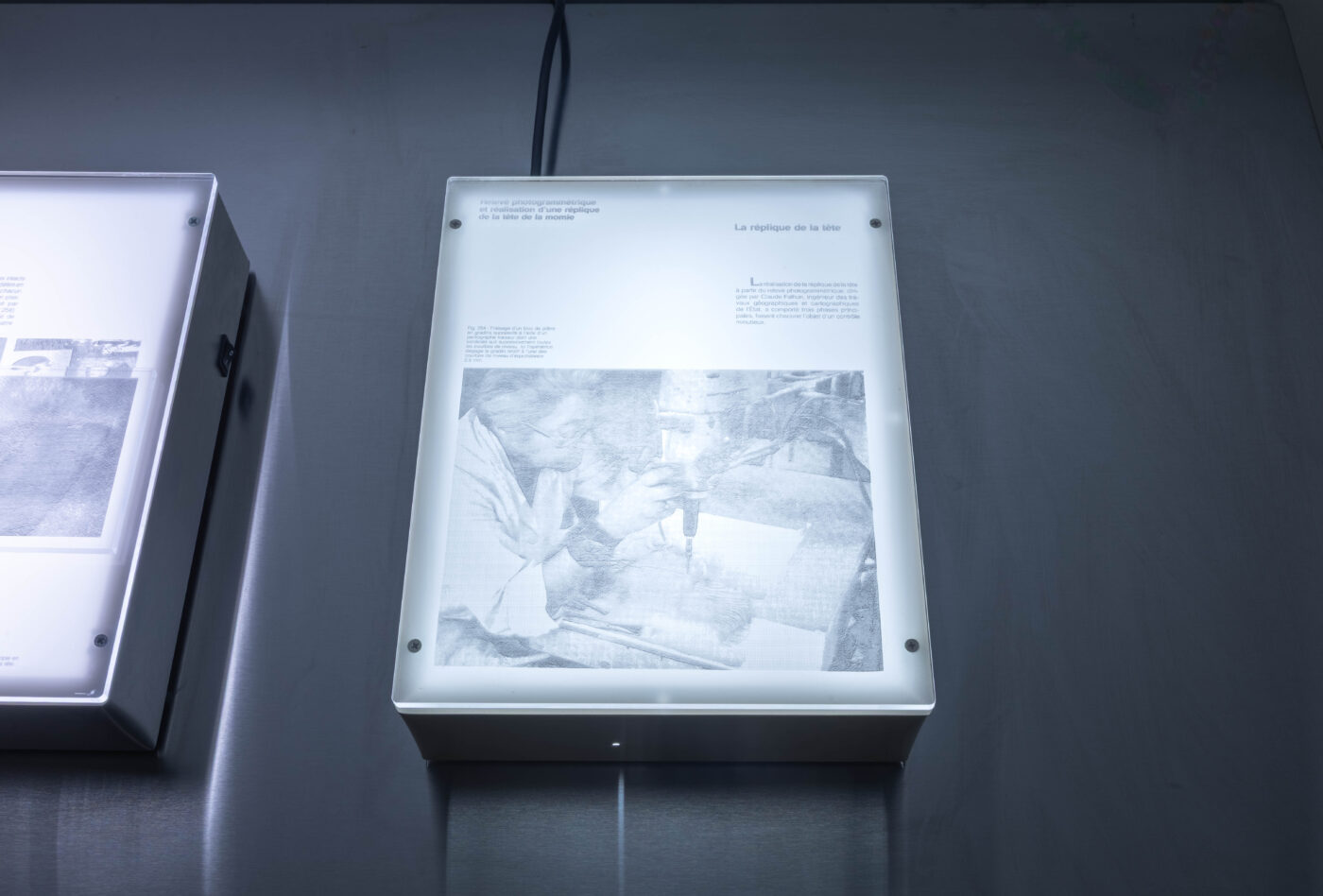
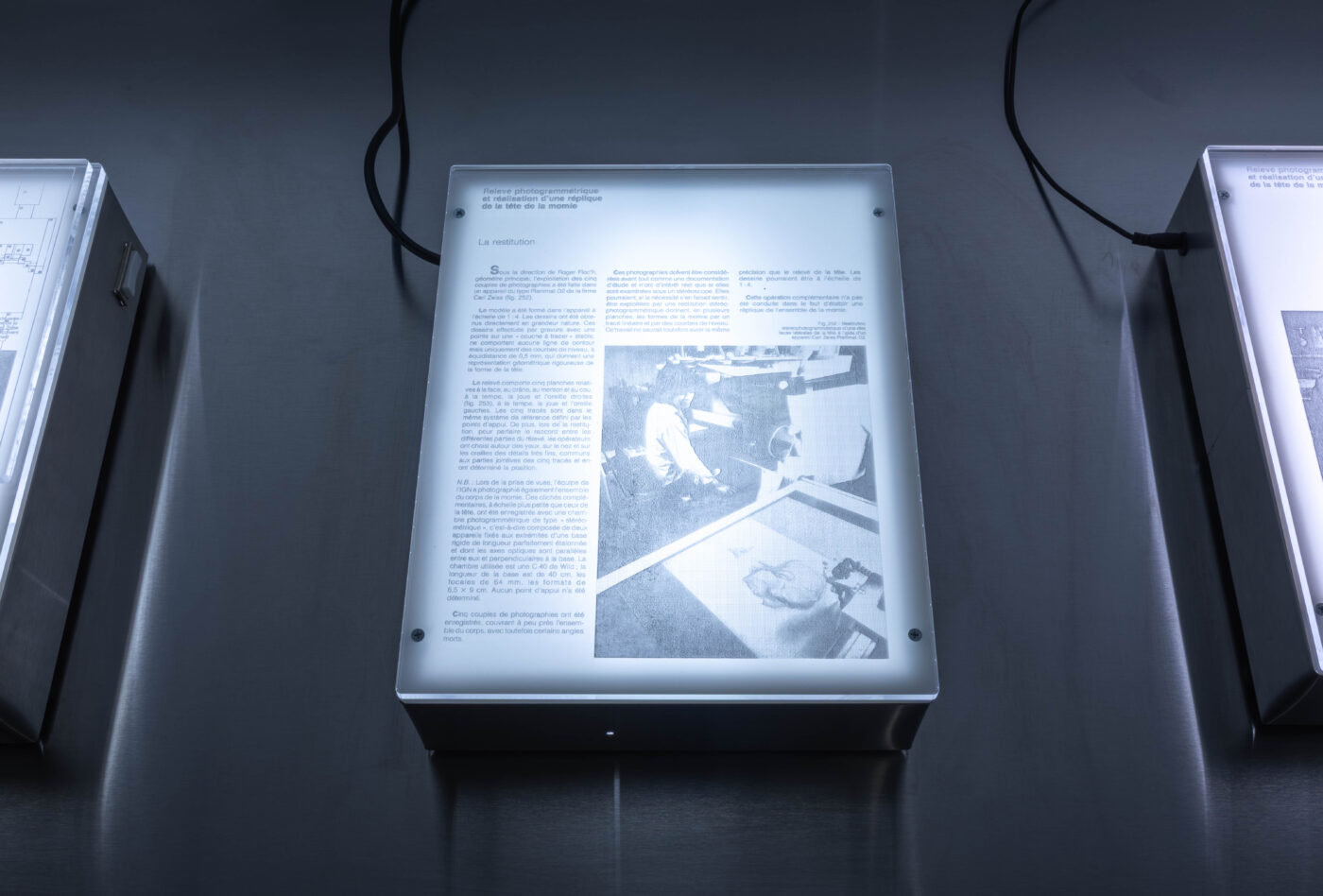
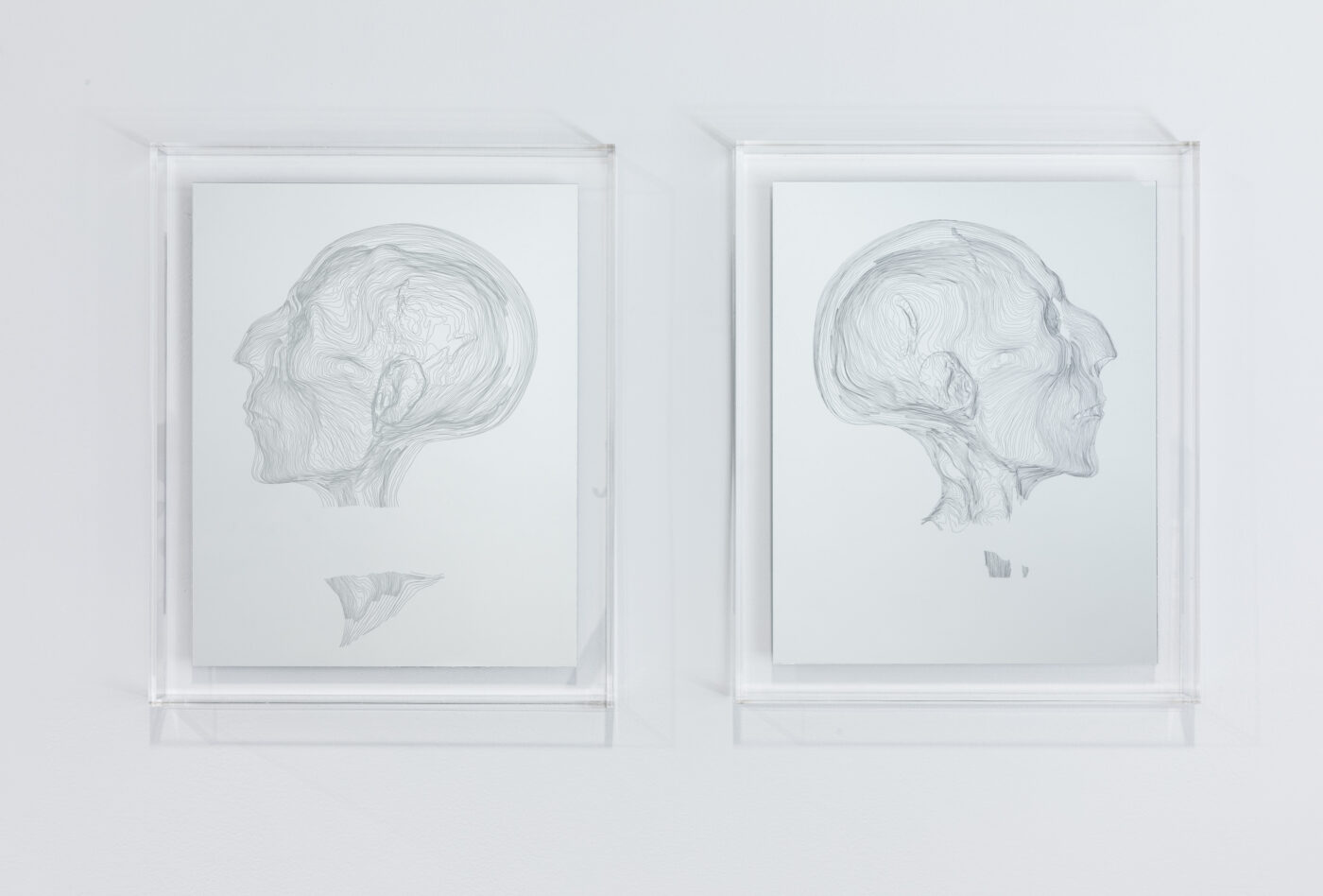
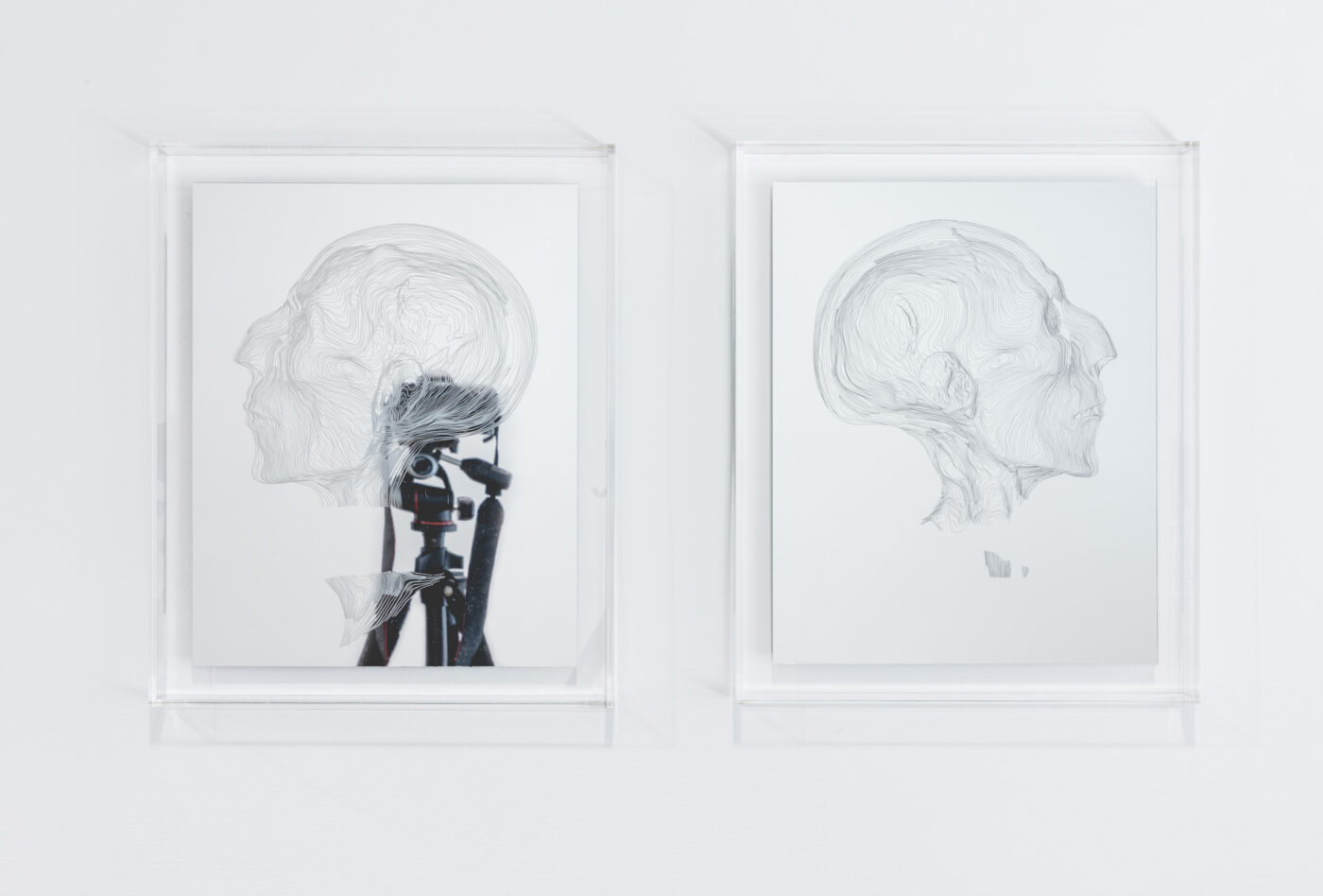
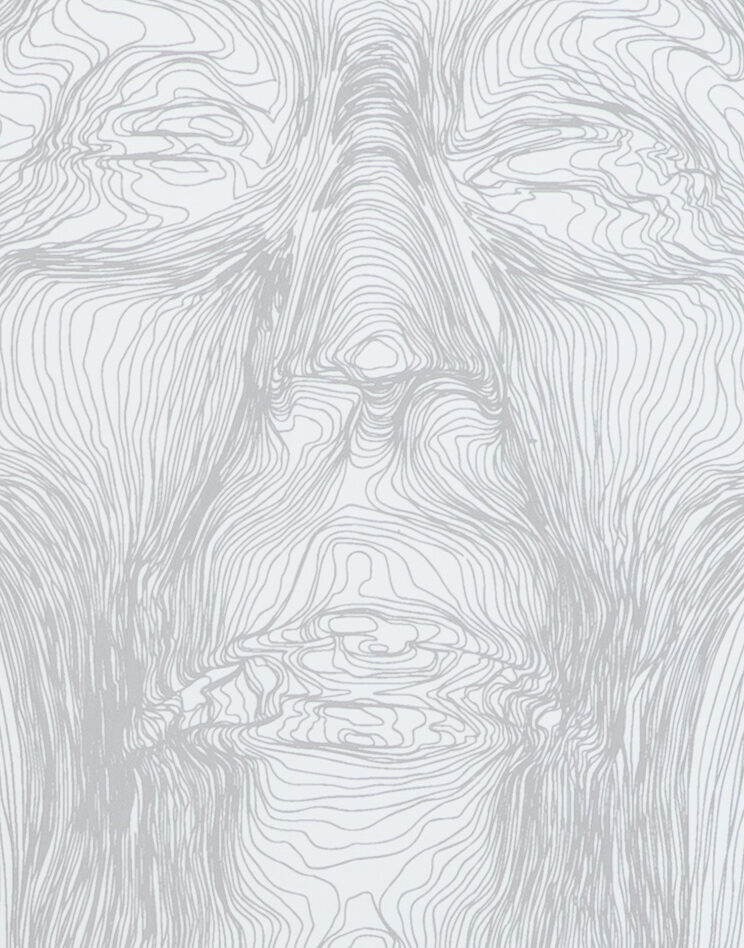
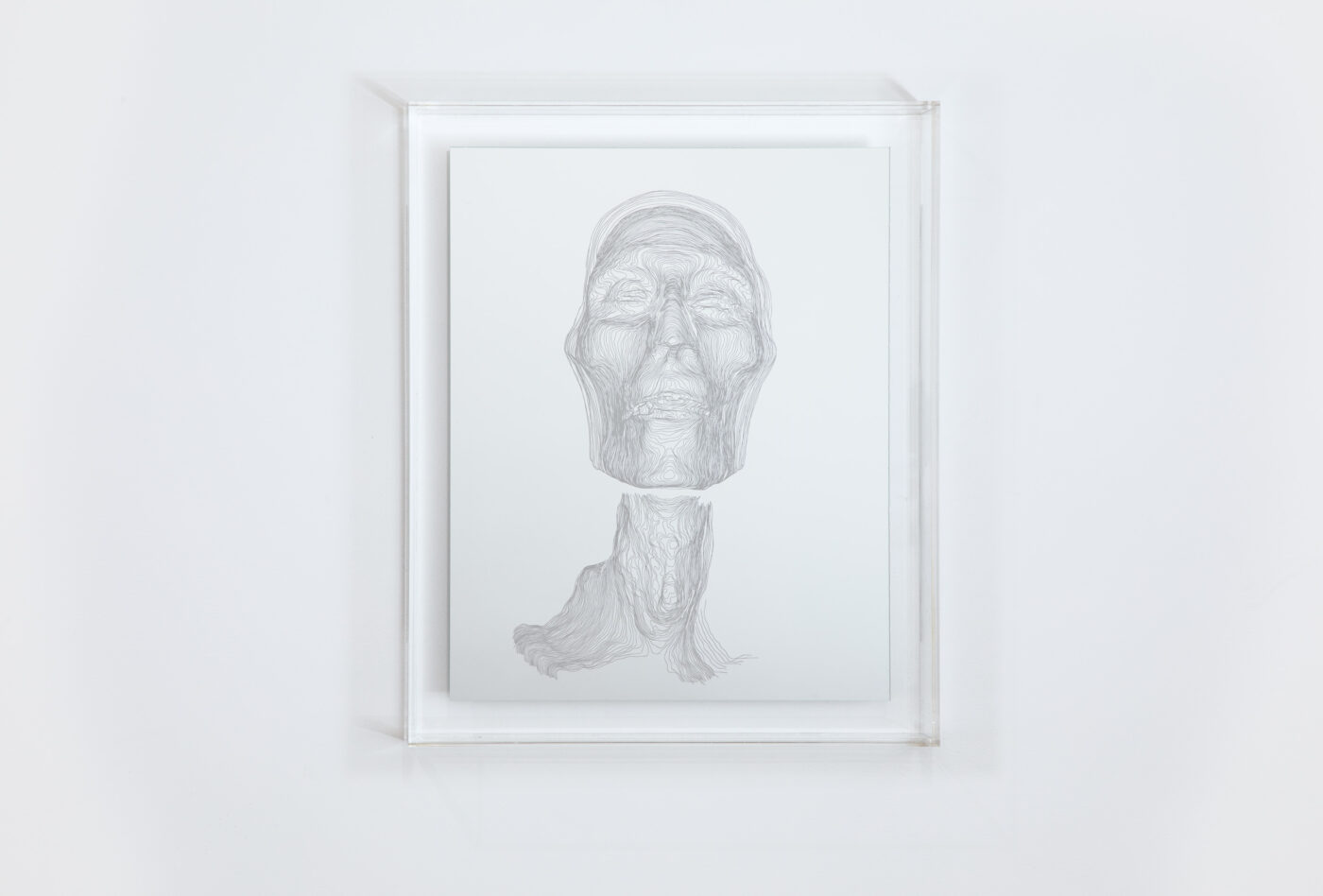
In 2022, forensic anthropologists reconstructed the features of his forty-five-year-old face using 3D modeling techniques. Forty-six years earlier, in 1976, he travelled from the Cairo Museum to the Musée de l’Homme in Paris. In an experience akin to a posthumous existence, he was granted a passport and given a dignitary’s welcome. The goal was to rid him of the pathogens or micro-organisms that may have irreversibly triggered the process of decomposition, which had been interrupted thousands of years ago. However, some newspaper articles suggested that the French had invented his illness. During his stay, while his remains were cared for and transported from one laboratory to another, he was forsaken. A photograph shows him in a sterile room, lying on an immaculate bed surrounded by a group of scientists dressed in white smocks. In 1977, before his repatriation to Cairo, the Musée de l’Homme produced a photogrammetric image of his head and bust. The unit was located at the Institut géographique national de Paris (IGN). Five series of photographs were taken, capturing his entire body, except for a few hidden spots, and a contactless three-dimensional replica was created. As the exhibition copies have no owner they are destroyed after use. While they were visible, pursuant to a biological agreement, they were nonetheless substituted for the original objects, which remained in storage and continued their infinitesimal metamorphosis.
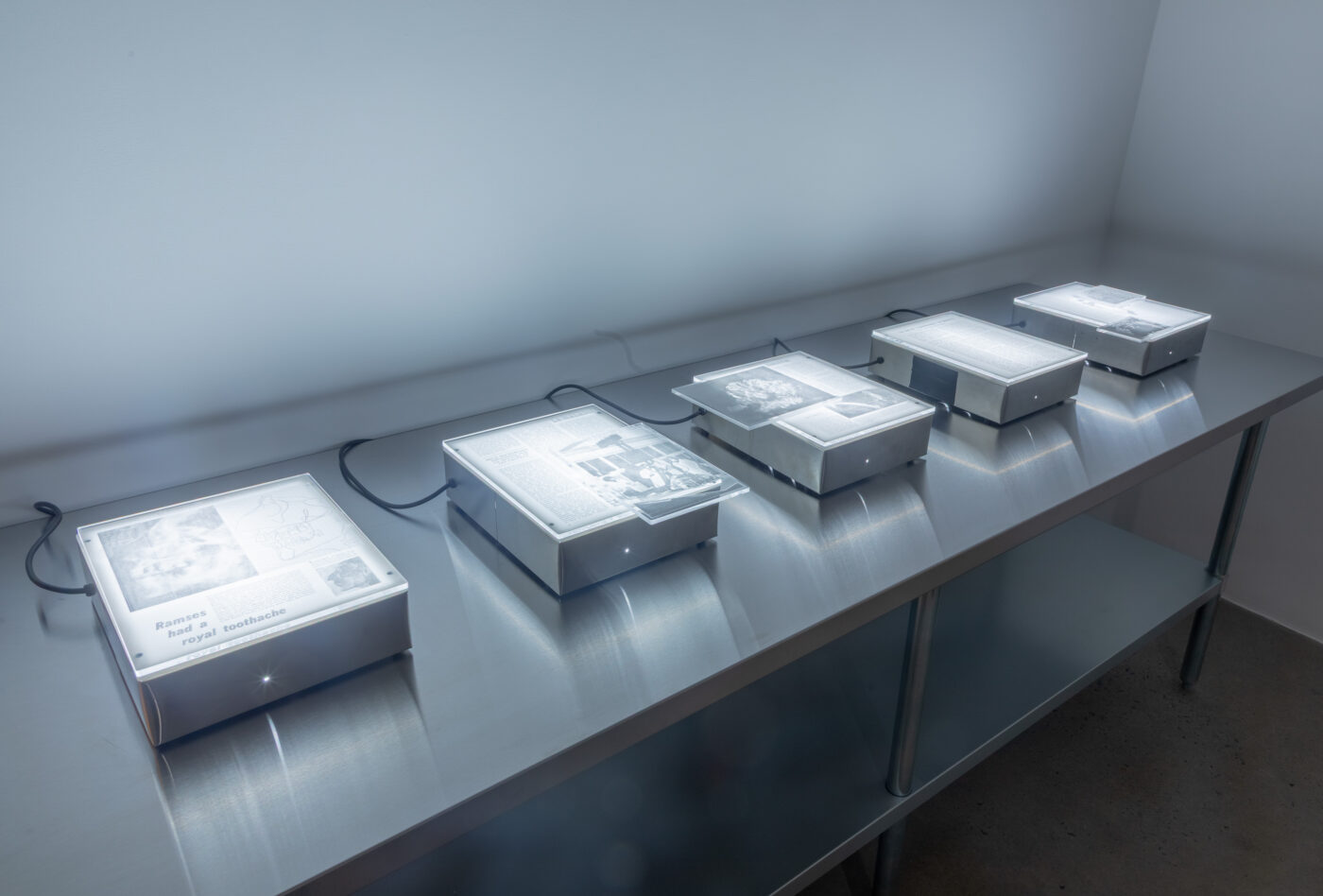
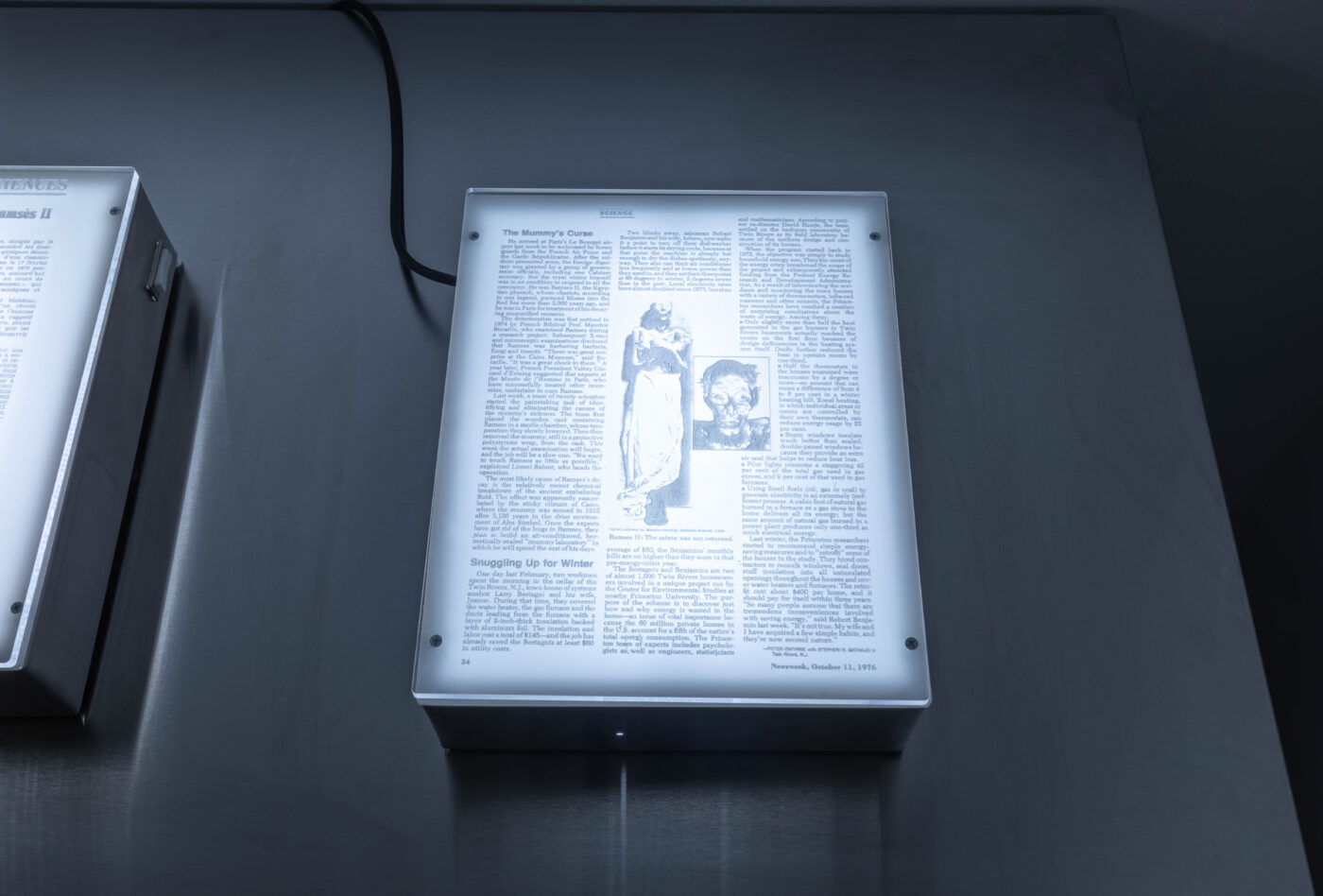
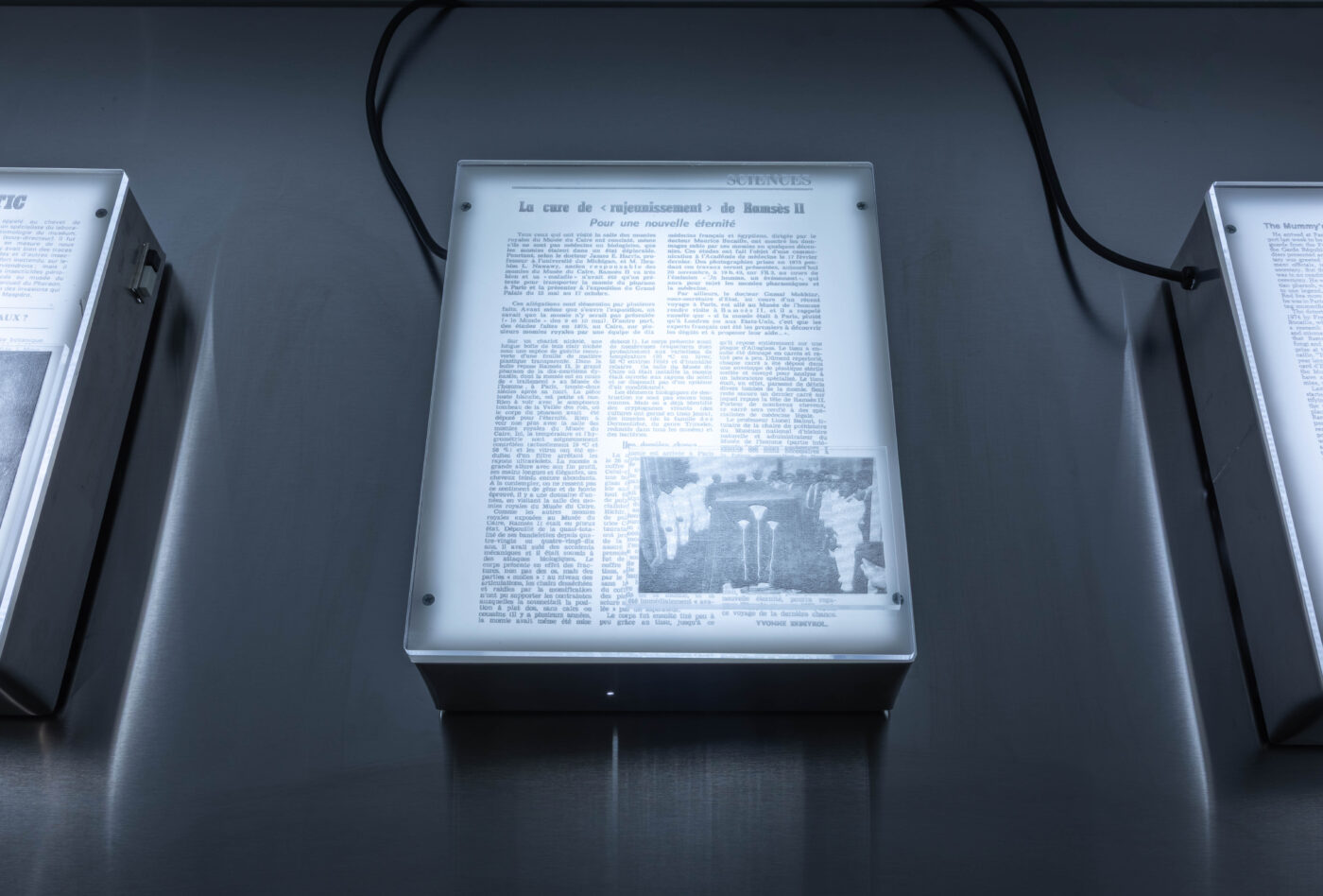
Pedro Barbáchano randomly discovered the event of the mummified person’s 1976 voyage to Paris while visiting the offices of the IGN to look at topographical maps of Nubia. I retraced part of his research trajectory in reverse by reading the articles and books he’d forwarded to me: Clyde H. Farnsworth, “Paris Mounts Honor Guard for a Mummy,” New York Times, September 28, 1976; Boyce Rensberger, “Ramses’ Illness Was Fabricated, Scientists Allege,” New York Times, November 8, 1976; Yvonne Rebeyrol, “La cure de ‘rajeunissement’ de Ramsès II. Pour une nouvelle éternité,” Le Monde, November 22, 1976; Lionel Balout, Christiane Descroches-Nobelcourt, Colette Roubet, La momie de Ramsès II : Contribution scientifique à l’égyptologie, (Paris: Éditions Recherches sur les civilisations) 1985.
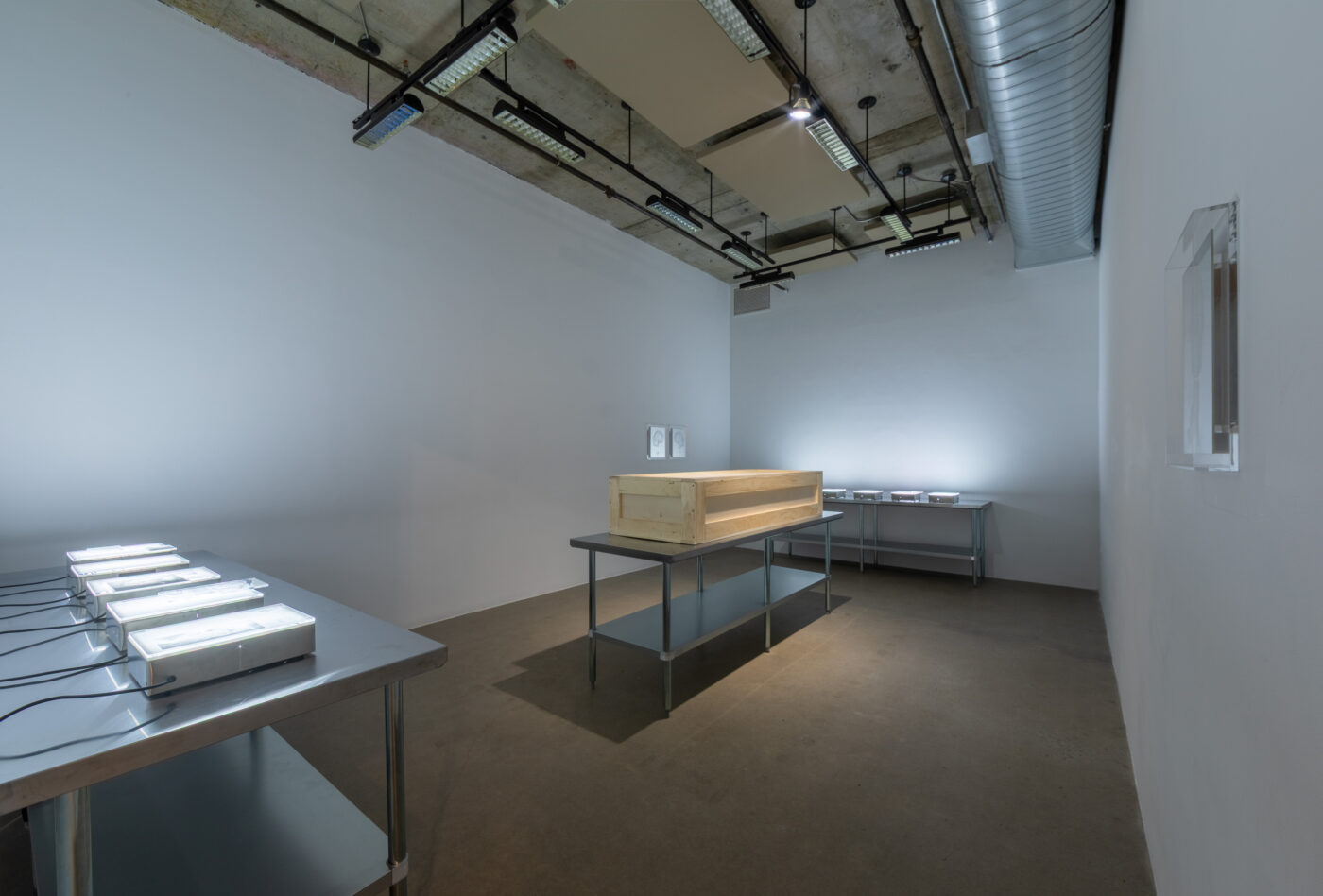
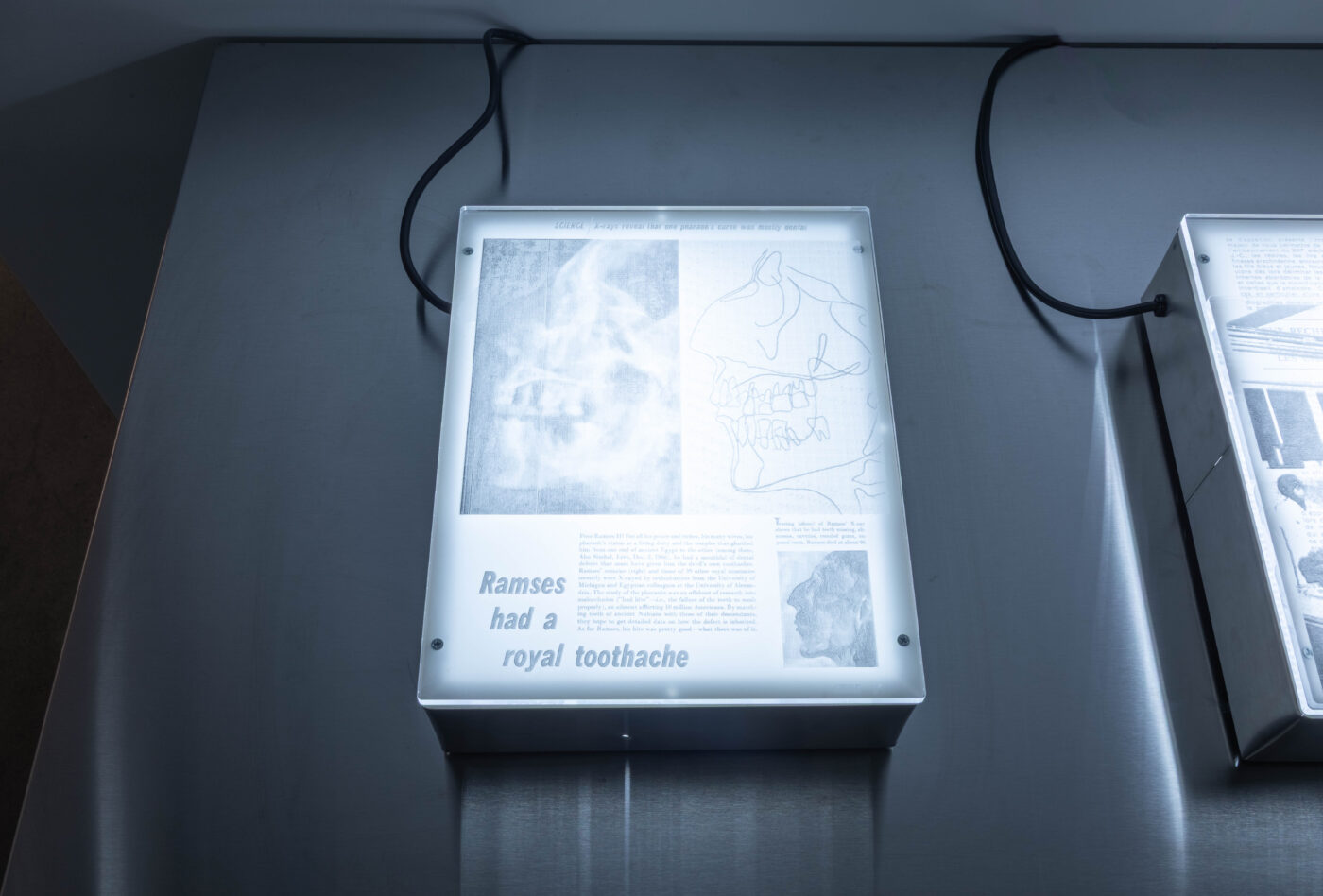
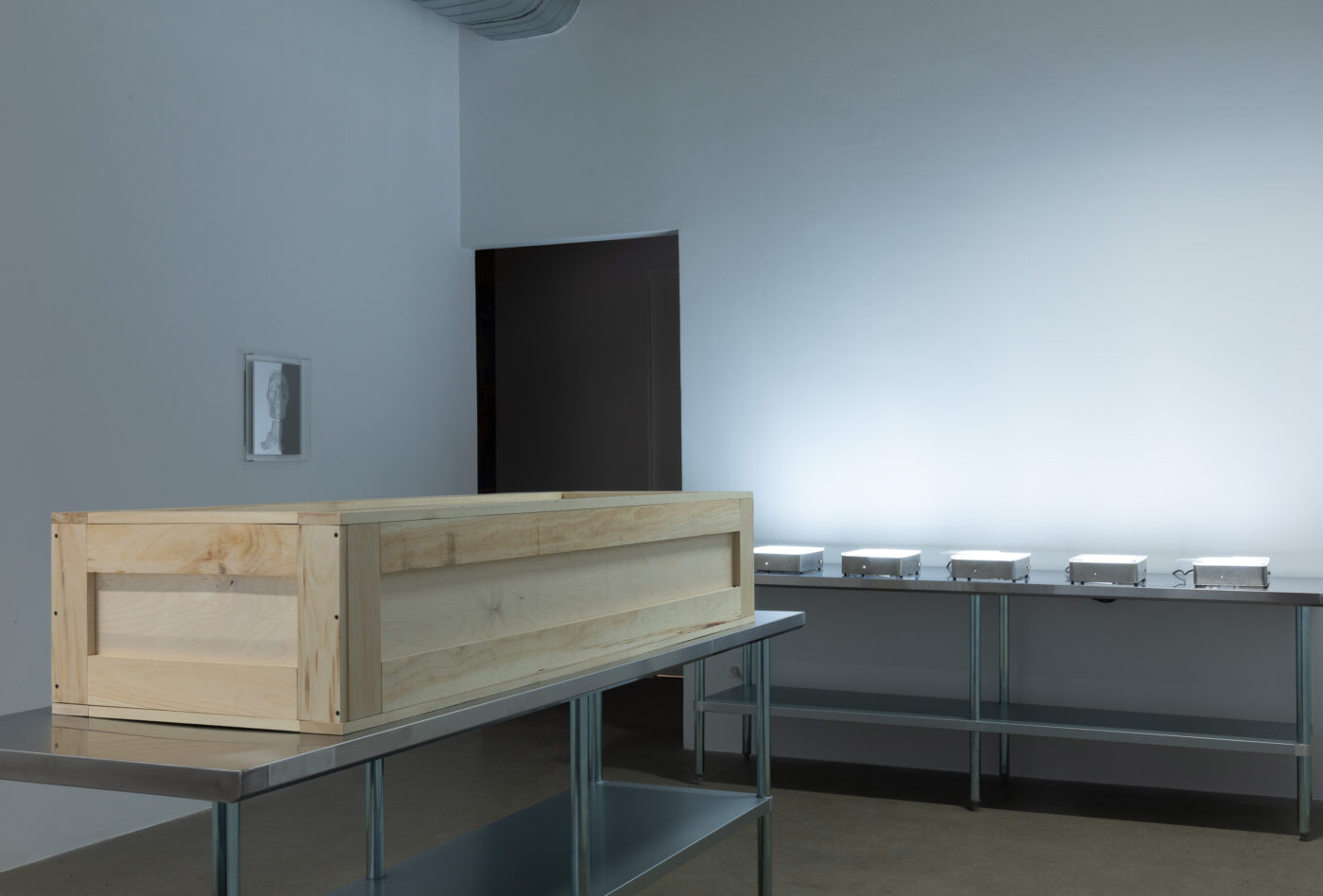
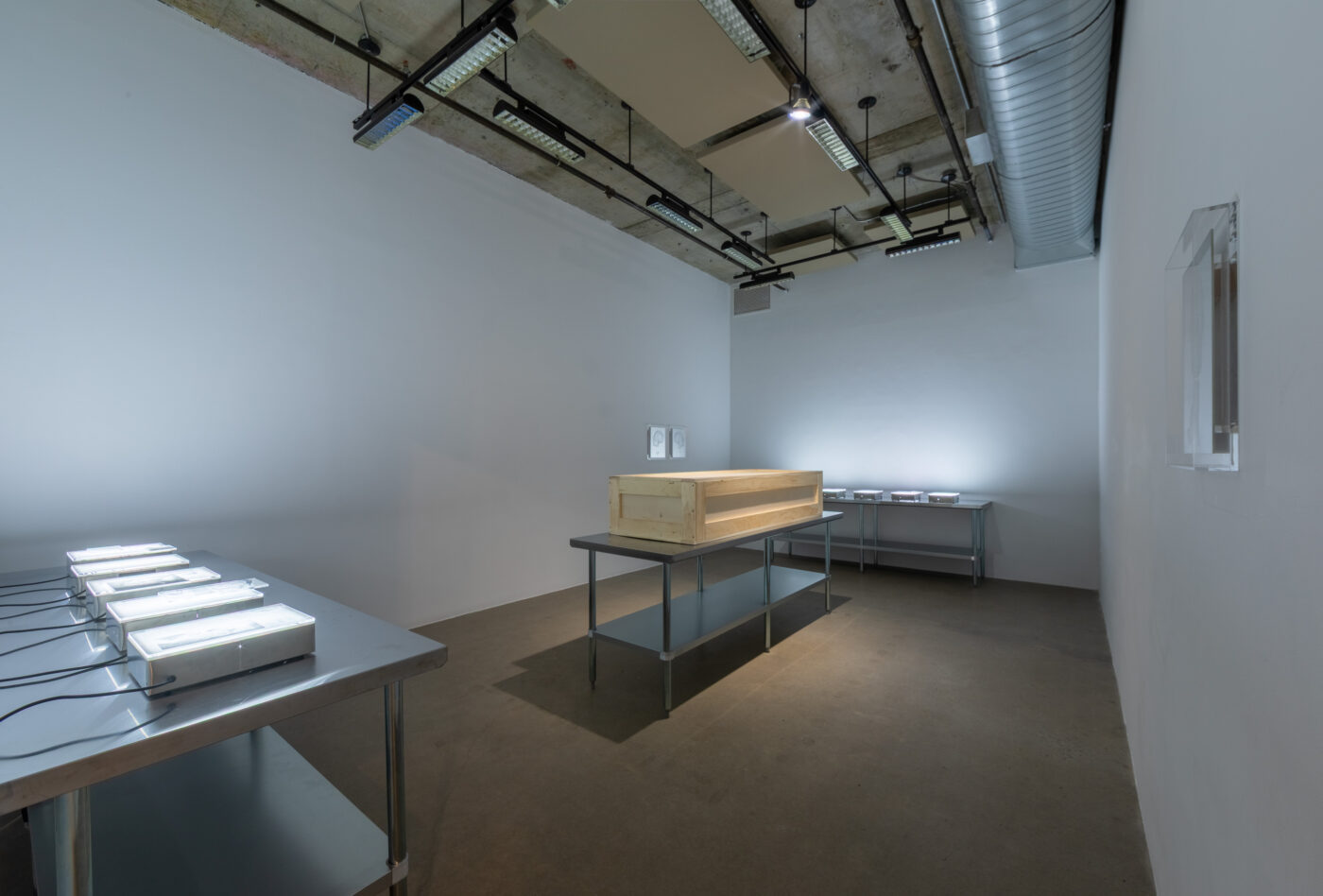
Within this collage of fragments there are gaps where a surname should be. Anonymity is the price to pay for opacity. As I describe what will be on display from March 12 to April 25, 2026, I use the conditional tense, the language of inaccessible images. On a stainless-steel table would be a shipping crate identified by an aluminum plaque reproducing a form in Arabic. A cross between a shipping label for a heritage artifact and a tourist card currently used in Egypt, the document would signal the presence of a body inside the empty container. The form’s boxes would remain blank, except for “profession: king (deceased).” Excerpts from newspaper articles and technical manuals would highlight forensic language: soft parts, desiccated flesh, cracks, biothreat agents, living cryptograms, arthritis… As we would cross the mirrored surfaces that surround the crate, we might see our own face along with the cutouts from a photogrammetric model, in frontal view and in profile, of a head.
Vincent Bonin
The artist would like to thank Vincent Bonin, Rafael Escalante, Aly Genena, Constatinos Giannoussis, Luigi Iagulli, Felipe Romero, and Julia Eilers Smith; CLARK (Hubert Bolduc-Cloutier, Natacha Chamko, Corine Lemieux, Joséphine Rivard, Guillaume Saur, Myriam Simard-Parent, Greg Prescott); as well as the Concordia Core Technical Center (Jules Beauchamp, Léah B.G., Joé C-R., Christopher Latchem).
This exhibition was produced with the support of the Conseil des arts et des lettres du Québec, and with archival documents from the Institut national de l’information géographique et forestière (IGN), UNESCO, the newspaper Le Monde, and Newsweek magazine.

A crowdfunding campaign for emerging artists.
