Émile Riopel
S’il le faut, je me réduirai en cendres pour être sûr que le vent m’emporte
09.11–10.24.2026
Past
Francine Lalonde
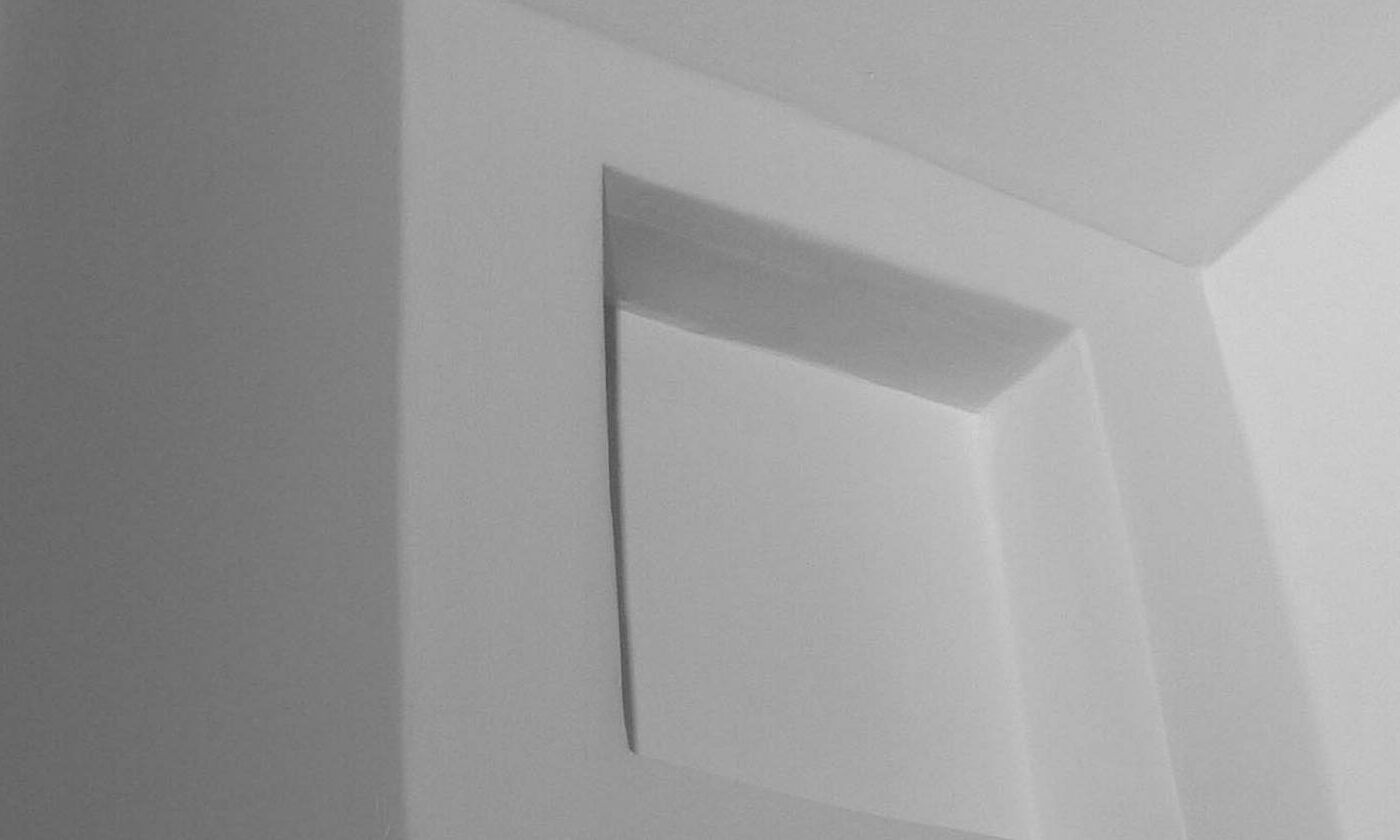
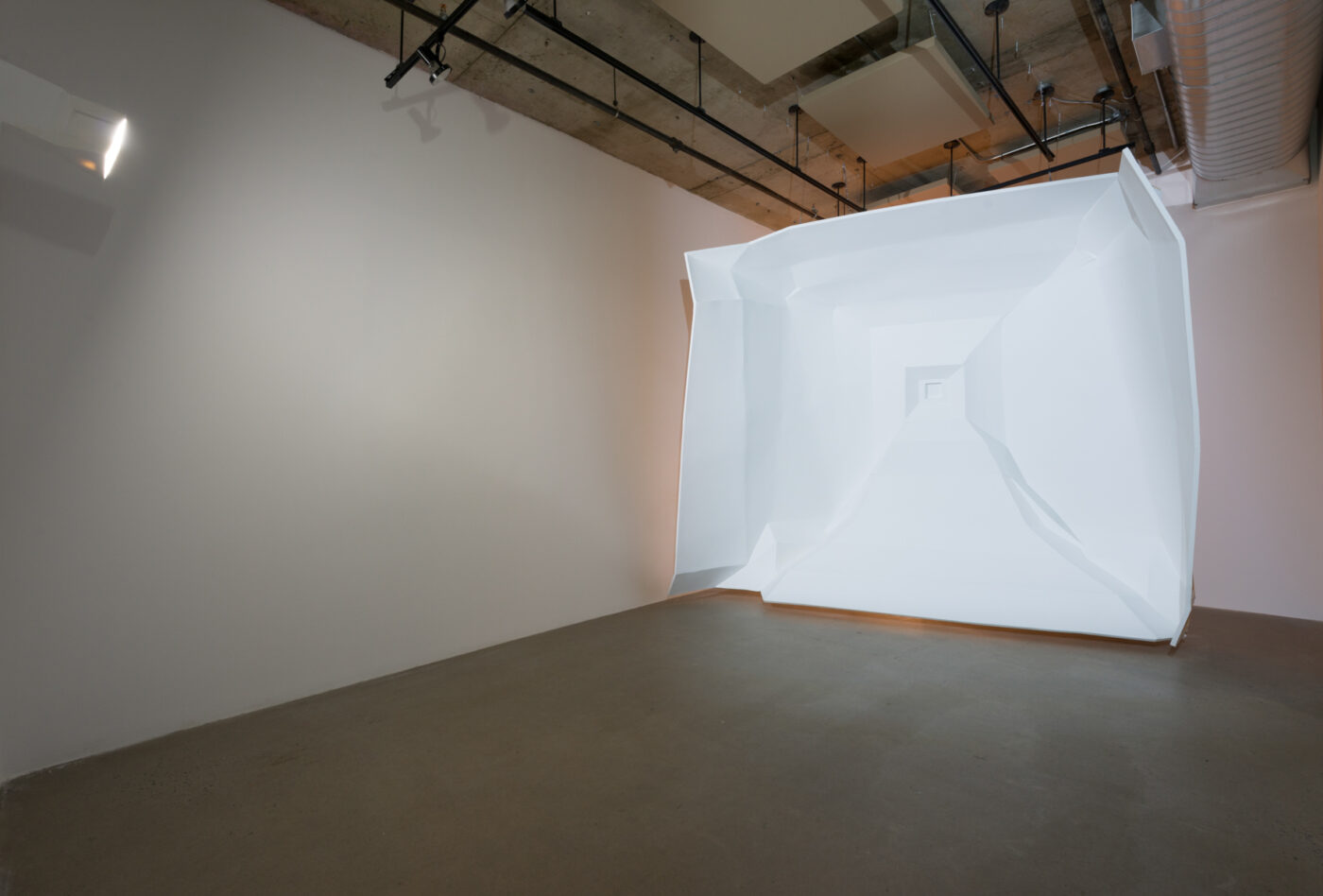
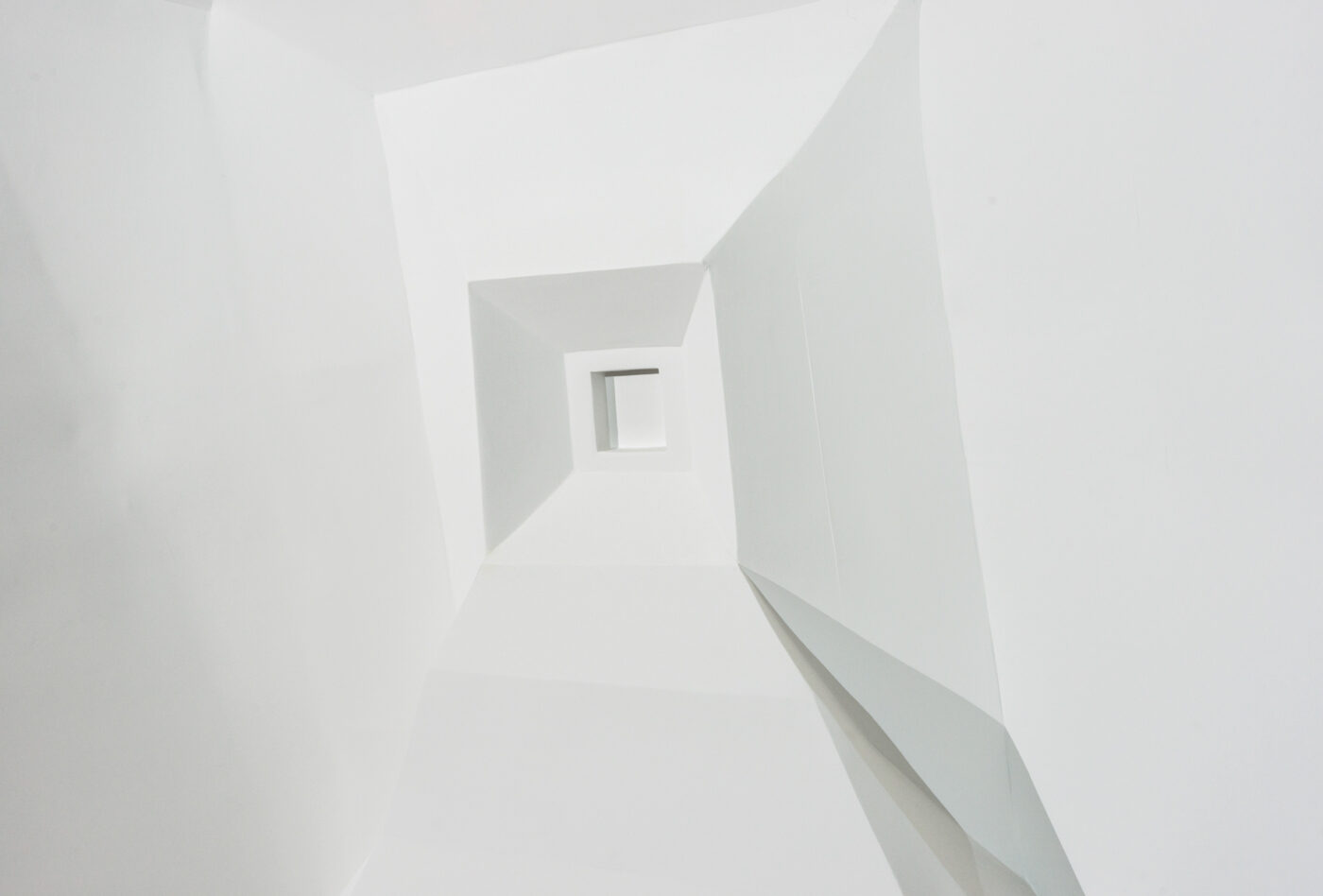
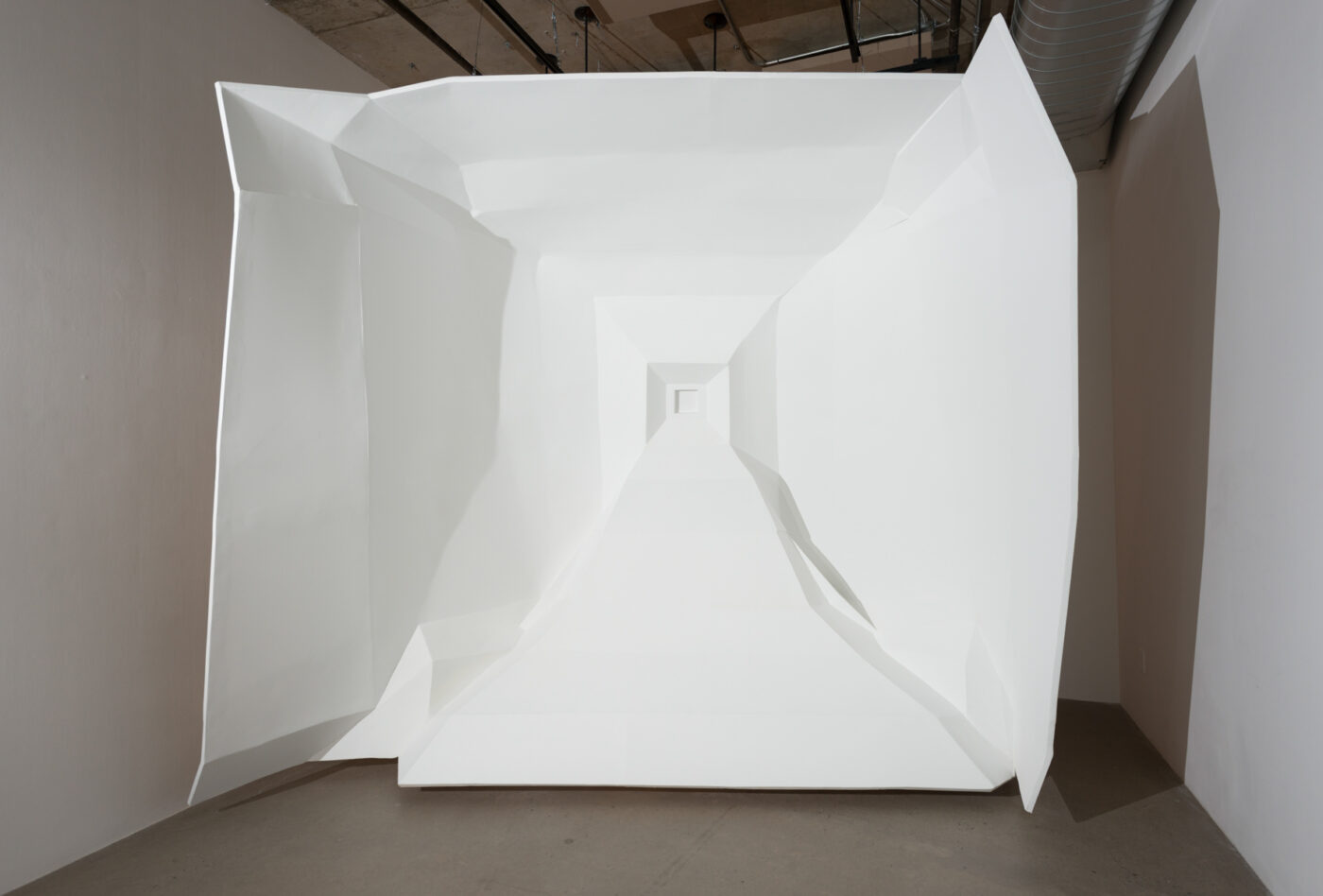
Francine Lalonde, whose last solo exhibition was held at Circa in 2010, continues her formal research into the physical experience of space. For CLARK, she presents a monumental sculpture that dominates the small room, literally inhabiting the space. Titled Désirs fantômes, the work becomes a pure, meditative space, allowing viewers to pause in an environment that stands in stark contrast to Rebetez’s. The artist describes her sculpture this way: “I superimpose a large-scale, faceted form onto the original space, where it captures light and reveals it as an autonomous phenomenon.”1 As such, the sculpture becomes a receptacle for various sources of light. This luminous exchange is like a tale of attraction, of invisible or phantom desire. Lalonde’s piece also acts as a surface that receives and releases our desires. The form redefines the room, possesses it. This effect is emphasized by the use of paint that matches the room’s walls, allowing the sculpture to seamlessly merge with the room itself even as it pulls away from the very walls that appear to support it.
This represents a shift in the artist’s practice and her way of occupying the gallery space. While she previously used light as a means to reveal space, she has now modified her approach to create a space where the primary function is to receive light in order to reveal its tonalities. Using foam core (normally used in the fabrication of maquettes) as her base material allows the artist to play with form, given the flexibility of this low-tech material. She can then better control the construction of this floating structure, an assembly of multi-planed, polyhedron forms resembling a faceted rock. Use of this lightweight material enables her to create a structure that is detached from the wall yet still overwhelms the room. The viewer becomes quasi-emerged in this white, larger-than-life, light-absorbing space.
In the end, the sculpture strangely resembles the interior of a cathode-ray tube monitor with its external components removed. Its images no longer received from an external source, but rather formed by our own intimate projections, our phantom desires.
1. From a text sent by the artist on August 26, 2015
CRÉDIT PHOTO: PAUL LITHERLAND

CRÉDIT PHOTO: PAUL LITHERLAND
CRÉDIT PHOTO: PAUL LITHERLAND
CRÉDIT PHOTO: PAUL LITHERLAND

CRÉDIT PHOTO: PAUL LITHERLAND
A crowdfunding campaign for emerging artists.