Émile Riopel
S’il le faut, je me réduirai en cendres pour être sûr que le vent m’emporte
09.11–10.24.2026
Current
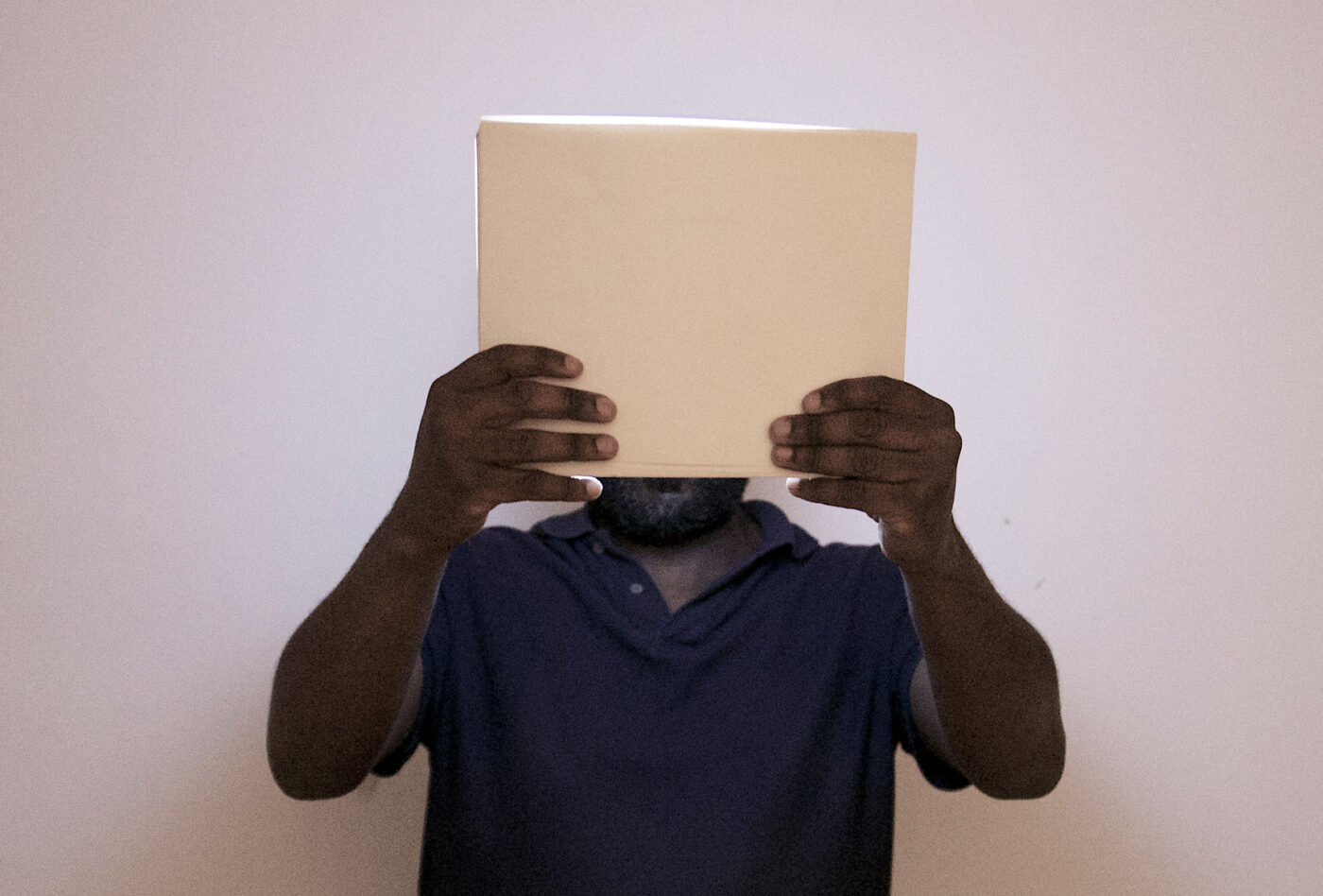
Mathieu Lacroix, Dans une optique de fulguration relative, 2021.
Artists
Anna Binta Diallo
Mathieu Lacroix
Frantz Patrick Henry
Michaëlle Sergile
Habiter le Monde : esquisse d’une rencontre (Inhabiting the World: Outline of an Exchange) is a reflection on the act of inhabiting a site, a space, a body, a geography. To live there by “choosing” modalities that allow us to become one with the territory on which we have chosen—or not—to reside. Esquisse d’une rencontre is the first part of the Montréal-Dakar project that was conceived as a multifaceted event,1 but has since been transformed by the past year’s events.
For us, the people of colour who are part of this project, Montréal is the territory we cohabit. It is from here that I, you, he, she, we consider the world. It is from here that day to day our story stories take root in a space that is as complex as the black community communities that live here.
In keeping with Felwine Sarr’s essay on interpersonal politics,2 which invites us to renew the imaginary relationship we build with our fellow human beings and all living things, my curatorial proposal—which I think of as a visual art essay—raises questions about power issues that exist within a given territory. More specifically, it questions the long term effects these issues have and the ways in which they shape us.
Drawing from their individually distinct North American realities, each of the artists in this exhibition present single or multiple works that foreground the singularity of their personal experiences.
Through his videos and installations, Mathieu Lacroix dissects the complex and (often) twisted links that exist between the individual and their environment, their life habits, and their identity.
Frantz Patrick Henry, through the intermediary of his sculptural work, reflects on the reconstruction of the self, but also on the ability to resist what the memory of a region imposes.
For her part, Michaëlle Sergile calls into question the official historical narratives of her native Haiti, which she juxtaposes with the family stories passed down to her by her parents. Through her textile and video installation, she helps us understand the importance of the archive and its influence on our ways of inhabiting space.
This reflection on trace brings us to a series of prints by Anna Binta Diallo, whose exploration of the themes of memory and nostalgia create unexpected works about identity.
Through these distinct journeys, these voices express the plurality and complexity of the Black experience, and become an outline for a broader reflection.
– Moridja Kitenge Banza (translated by : Jo-Anne Balcaen)
_
1. This project, which was entirely supported by the Conseil des arts de Montréal, was aimed at bringing together Black artists from Montréal with several African and Afro-descendant artists as part of the 2020 Dakar Biennale, in Senegal.
This trip to Dakar would have allowed these artists to discover a common ground for meeting and exchange other than Montréal; a space where multiple visual art projects offer thoughtful considerations on how each inhabits the world as a human being.
2. Habiter le monde: Essai de politique relationnelle, 2017. Éditions Mémoires d’encrier*
*On the occasion of the exhibition Habiter le monde : esquisse d’une rencontre, Librairie CLARK is proud to present a few titles from the publishing house Mémoire d’encrier, selected by Moridja Kitenge Banza. These include a book by Felwine Sarr, which inspired the title of the exhibition. Available at Librairie CLARK until June 19.
BIOS
CURATOR
Canadian-Congolese aritst Moridja Kitenge Banza was born in 1980 in Kinshasa, in the Democratic Republic of the Congo. He holds degrees from l’Académie des beaux-arts de Kinshasa, from the École supérieure des beaux-arts de Nantes Métropole, and from the Humanities and Social Sciences faculty of the Université de La Rochelle. In 2010, he was awarded the first prize of the Biennale of Contemporary African Art, DAK’ART for his video Hymne à nous and his installation work De 1848 à nos jours. He received the Sobey Art Award in 2020. His work was part of exhibitions at the Musée Dauphinois (Grenoble, France); the Museum of Contemporary Art (Rosklide, Danemark); the Arndt Gallery and Ngbk (Berlin, Allemagne); the Biennale Internationale de Casablanca (Casablanca, Maroc); the Fondation Attijariwafa bank (Casablanca, Maroc); at the Fondation Blachère (Apt, France) as well as the BAnQ; Galerie Joyce Yahouda; OBORO; and the Montreal Museum of Fine Arts (Montreal, Canada). In 2020, his artworks were included in group exhibitions at the Phi Foundation and at the Musée d’art contemporain de Montréal.
ARTISTS
Anna Binta Diallo is a Canadian multi-disciplinary visual artist who investigates memory and nostalgia to create unexpected narratives around identity. She was born in Dakar (Senegal, 1983) and raised in Saint-Boniface, Winnipeg, on the traditional territory of Anishinaabeg, Cree, Oji-Cree, Dakota, and Dene peoples, and the homeland of the Métis Nation. She completed her BFA at the University of Manitoba’s School of Art (2006) and received her MFA from the Transart Institute in Berlin (2013). Her work has been shown nationally and internationally, including exhibitions in Winnipeg, Montreal, Toronto, Vancouver, Taipei, Central Finland, and Berlin. Anna Binta Diallo has been the recipient of multiple grants and honours, notably from the Canada Council for the Arts, the Conseil des Arts et des lettres du Québec, and Francofonds. In 2019, Diallo was shortlisted for the Salt Spring National Art Prize, and in 2021 was awarded the Barbara Spohr Memorial Prize from the Walter Phillips Gallery at the Banff Centre. She is currently based in Montreal, or Tio’tia:ke, on the traditional territory of the Kanien’kehá:ka.
Mathieu Lacroix lives and works in Montréal. He has an undergraduate degree in Visual Arts from the Université du Québec à Montréal, where he took an active part in disseminating the art works of students. Since 2003, Lacroix has participated in several group exhibitions in artist-run centres and cultural events in various locations throughout Quebec. His work was recently shown at McBride Contemporain and in Toronto as part of the 7a * 11d art event. He is an active member of the Jean–Couteau and Pique-Nique collectives.
Frantz Patrick Henry is a multidisciplinary artist of Haitian origin who has been based in Montreal since 2011. He received his degree from the Université du Québec à Montréal in 2019. He received an award for excellence in sculpture from the McAbbie Foundation at UQAM’s École des arts visuels et médiatiques for his installation Je suis nouveau ici (2020). Having lived through many transitions and changing situations, he is interested in exploring the theme of “becoming” through sculpture, painting, installation, photography, and animation.
Michaëlle Sergile is an artist and curator working mainly on texts and books from the postcolonial period from 1950 to the present. Her artistic work aims to understand and rewrite the history of Black communities, and more specifically of women, through weaving. Sergile uses the lexicon of weaving, often perceived as a medium of craftsmanship and categorized as feminine, to question the relationships of gender and race.
The curator would like to thank the Conseil des arts de Montréal for their financial assistance of this project’s initiative from the very beginning, the wonderful team at CLARK who have helped me to realize this exhibition, and my close colleagues for their unending support.
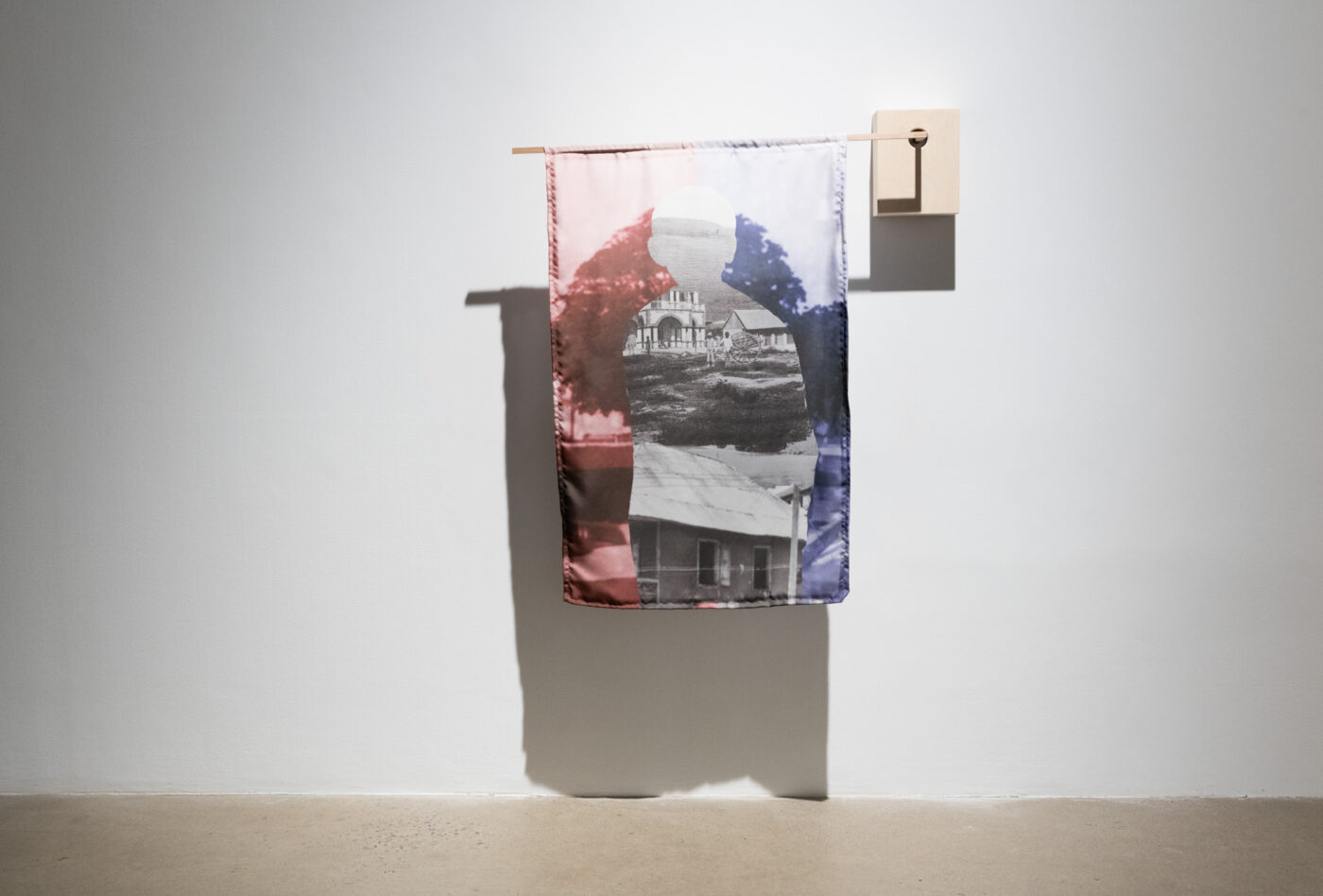
Print: Anna Binta Diallo. Flag: Michaëlle Sergile. Photo Credit : Paul Litherland.
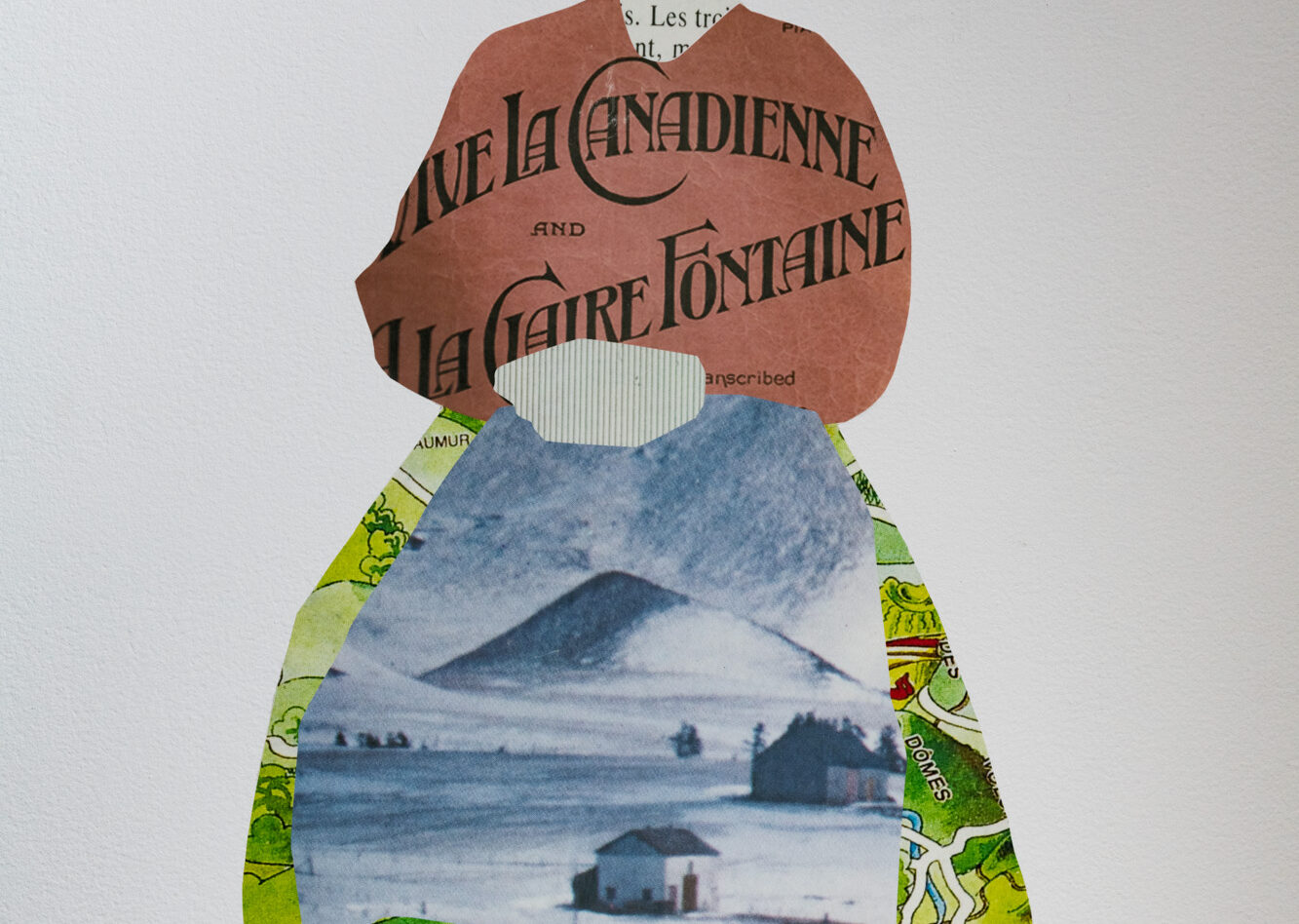
Print: Anna Binta Diallo. Photo Credit : Paul Litherland.
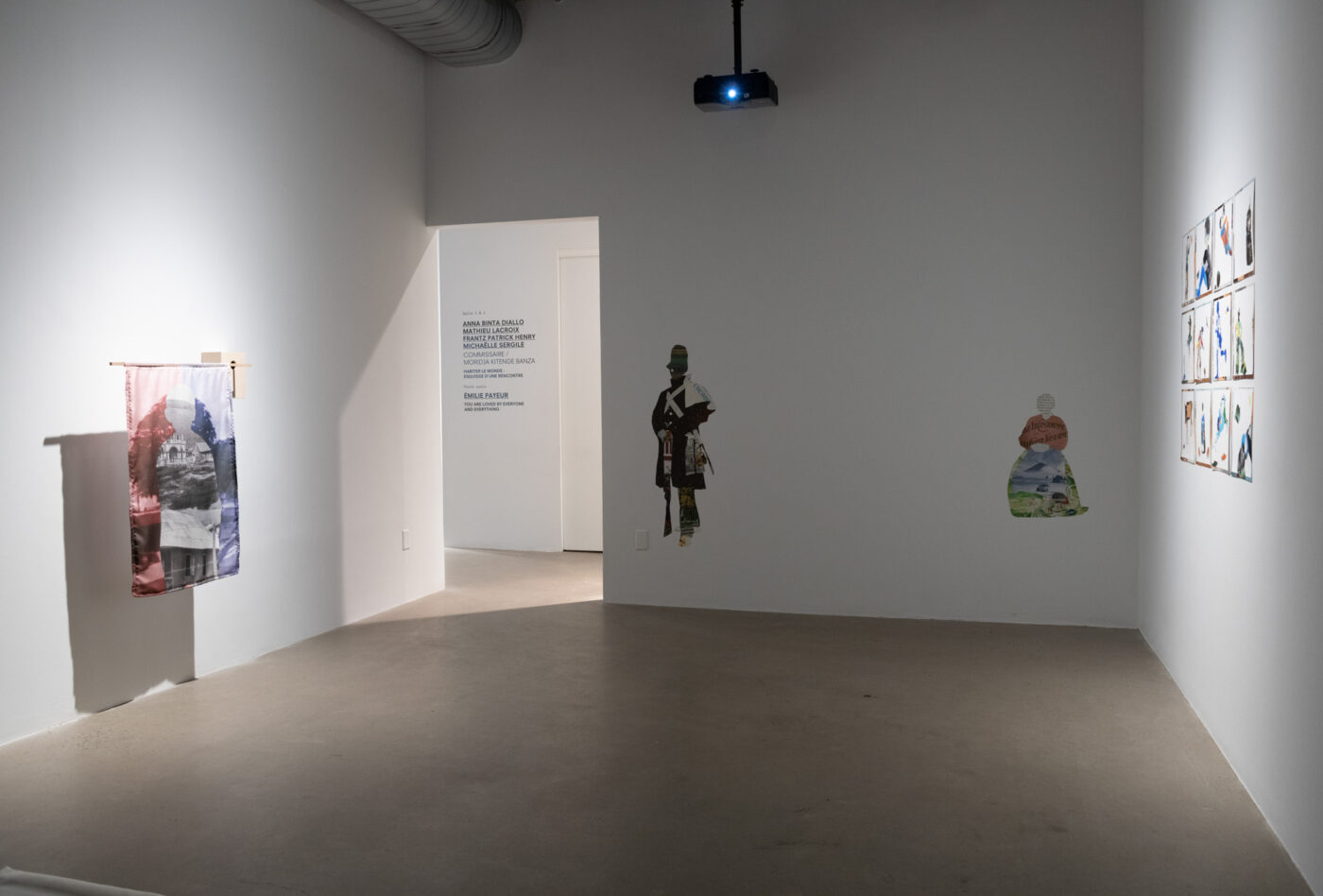
Print: Anna Binta Diallo. Flag: Michaëlle Sergile. Photo Credit : Paul Litherland.
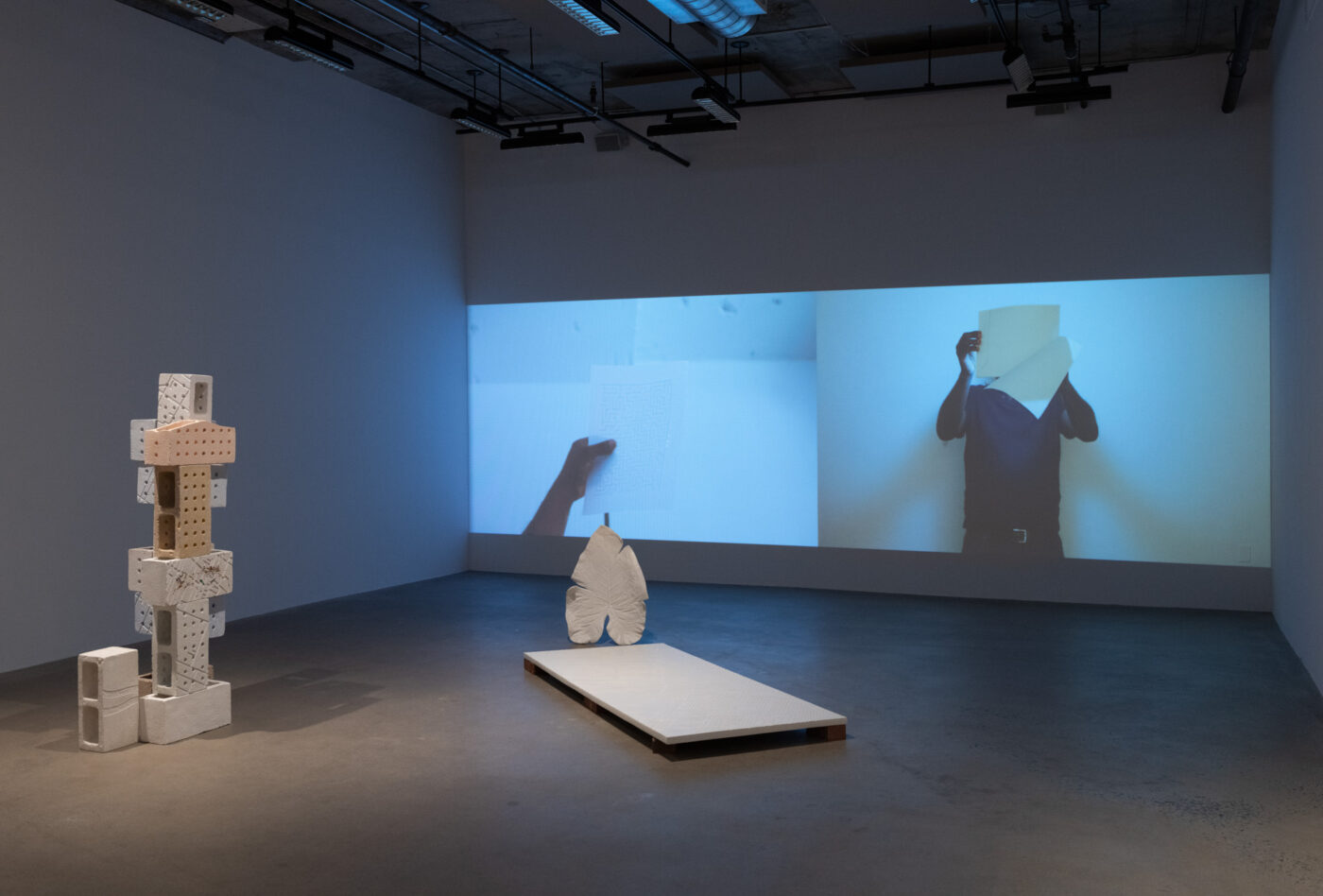
Video: Mathieu Lacroix; Sculpture: Frantz Patrick Henry. Photo credit: Paul Litherland.

Video: Mathieu Lacroix; Sculpture: Frantz Patrick Henry. Photo credit: Paul Litherland.
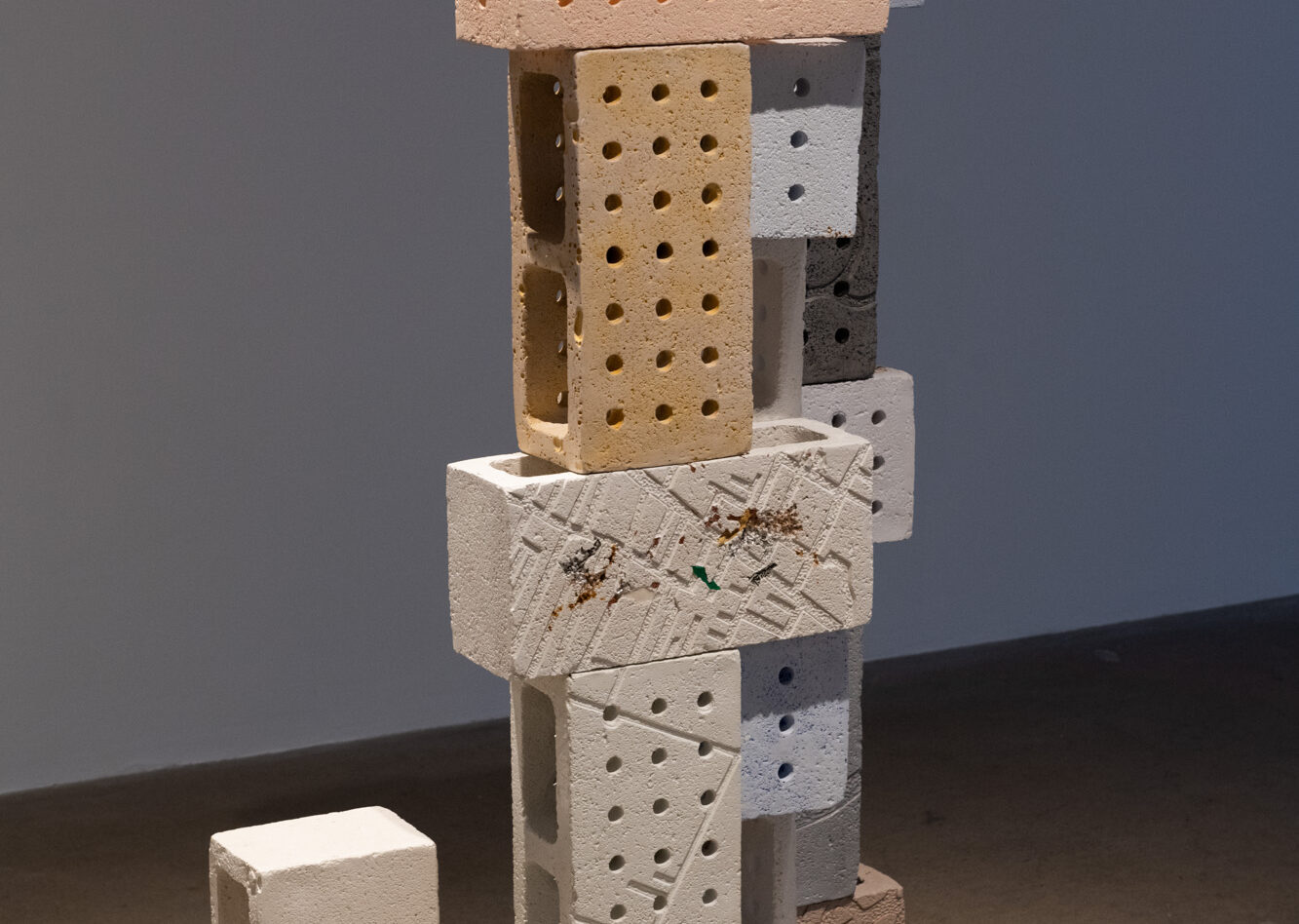
Sculpture: Frantz Patrick Henry. Photo credit: Paul Litherland.
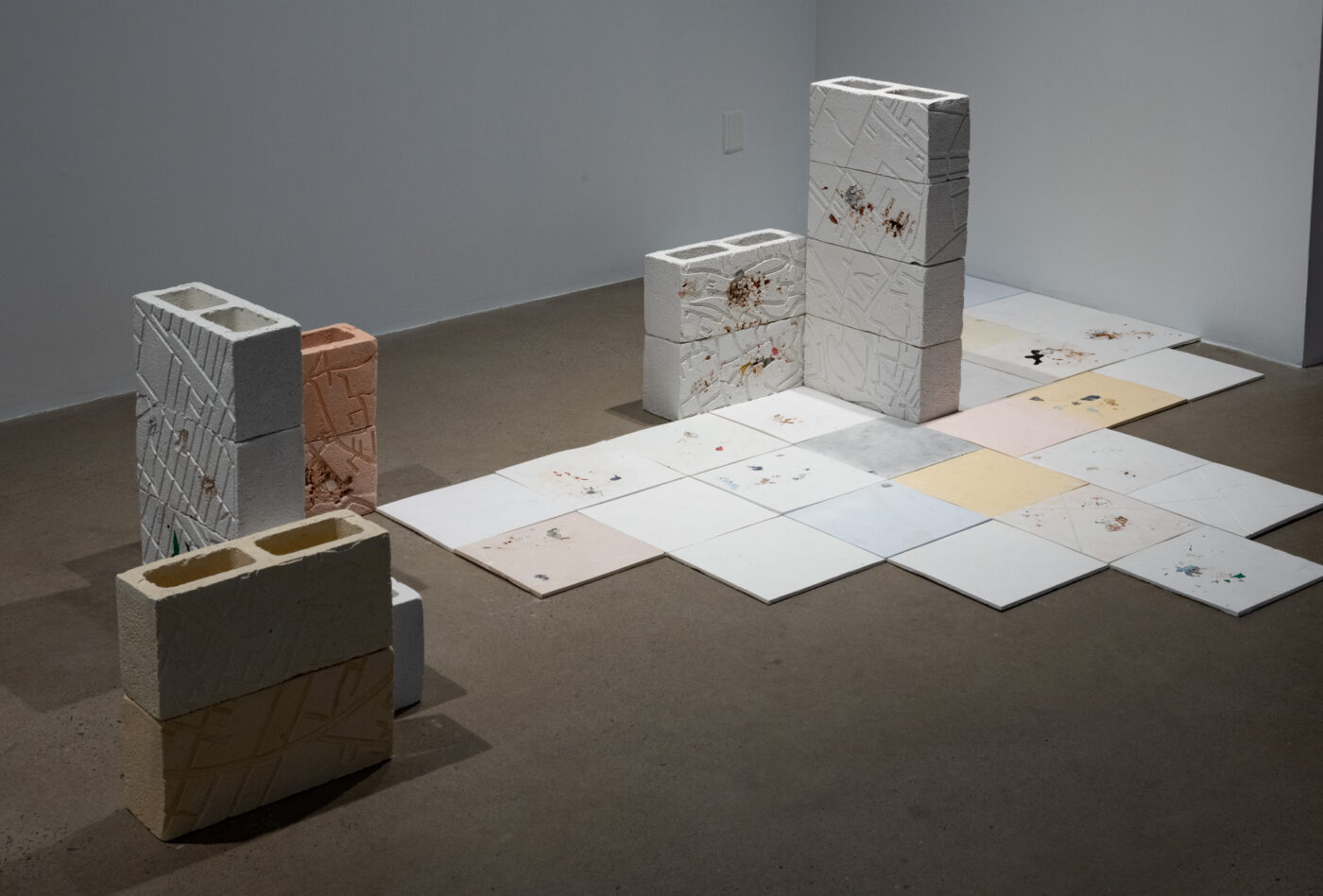
Sculpture: Frantz Patrick Henry. Photo credit: Paul Litherland.
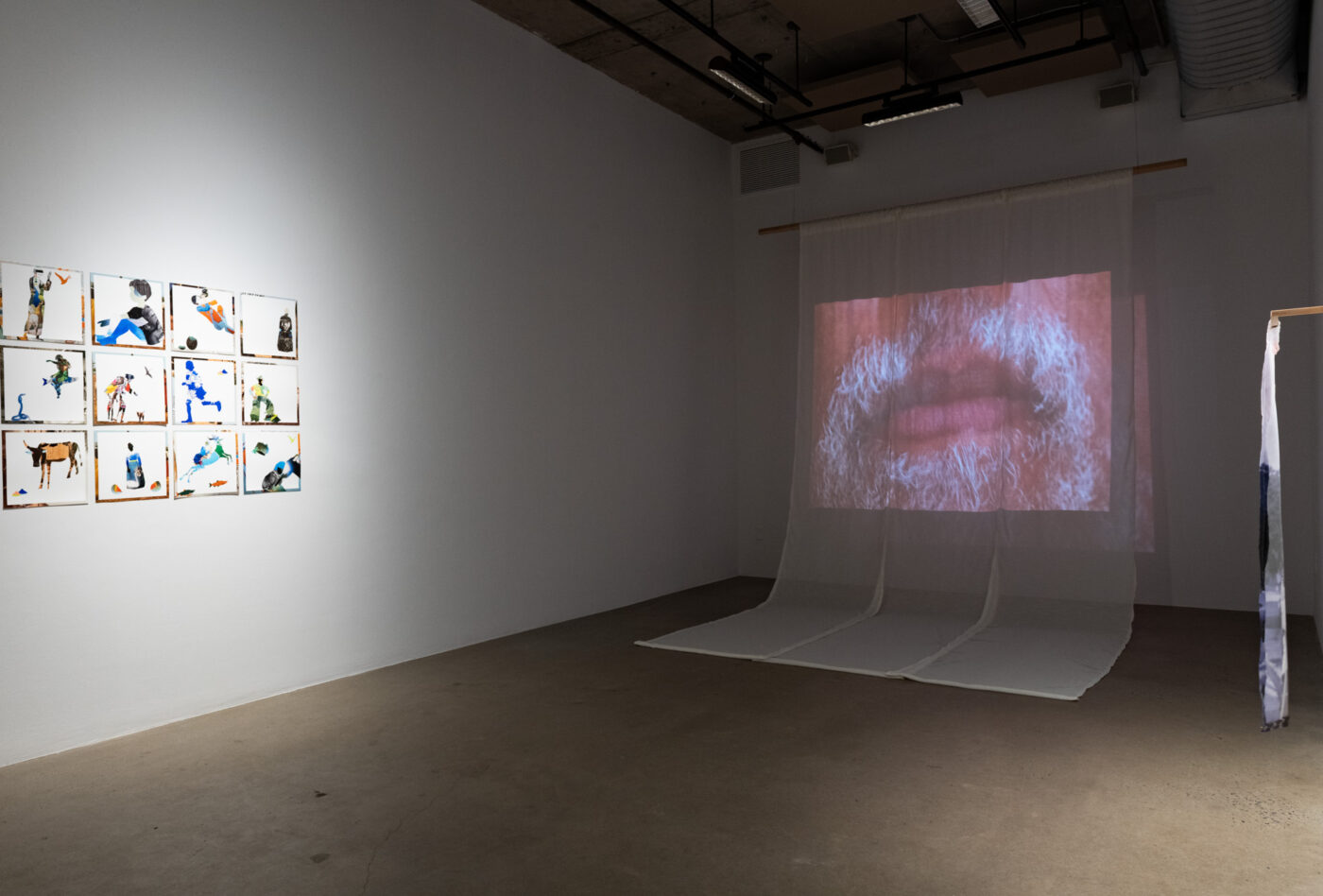
Video: Michaëlle Sergile; Print: Anna Binta Diallo. Photo credit: Paul Litherland.
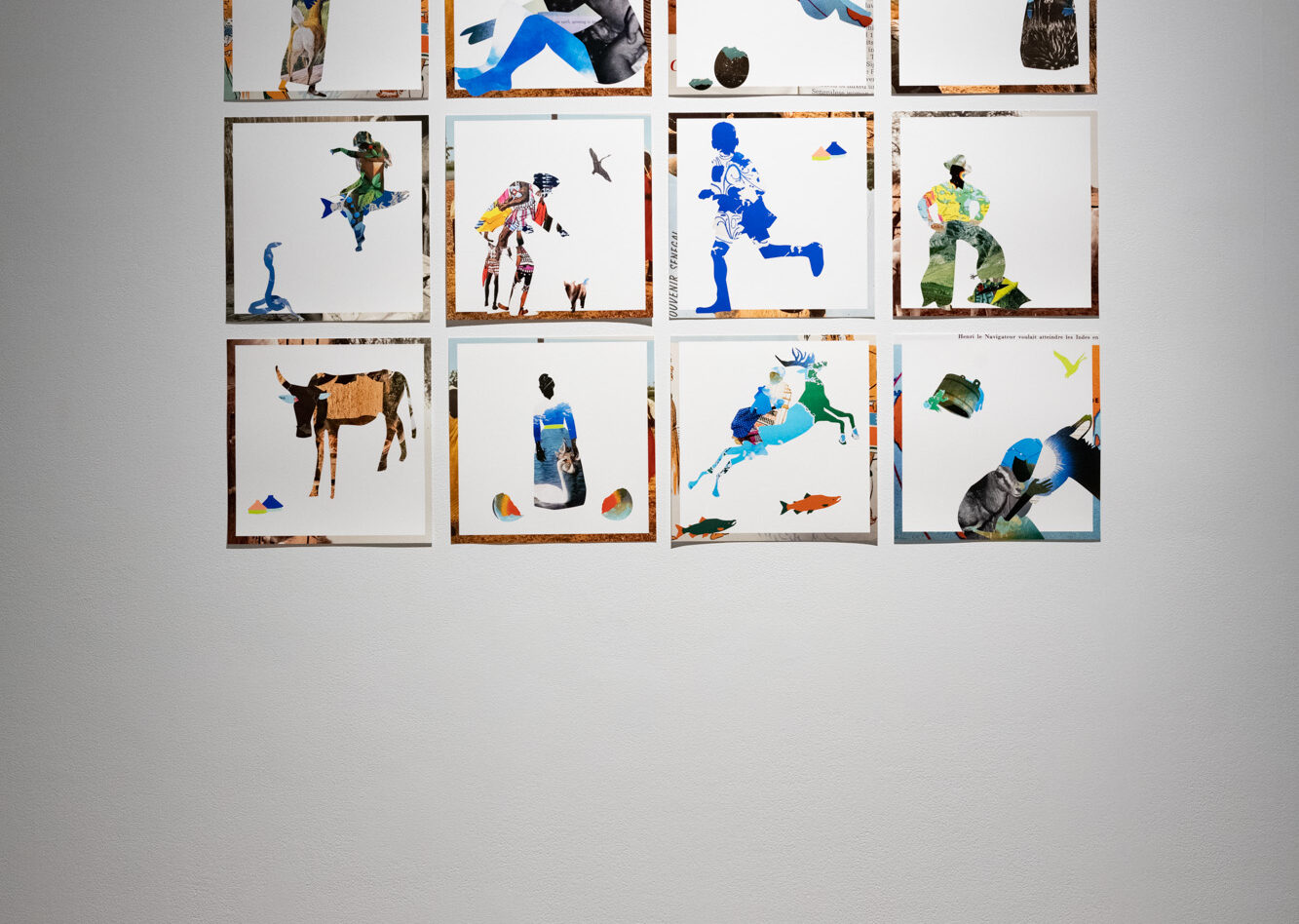
Print: Anna Binta Diallo. Photo Credit : Paul Litherland.
A crowdfunding campaign for emerging artists.