Émile Riopel
S’il le faut, je me réduirai en cendres pour être sûr que le vent m’emporte
09.11–10.24.2026
Current
Artist
Kapwani Kiwanga
While creating speculative fictions often set in the future, Kapwani Kiwanga is nonetheless concerned with the past. The Hamilton-born but Paris-based artist has a practice defined by thorough research in the fields of history, anthropology (a subject she studied at McGill University) and mythology. She intelligently weaves truth and fiction to construct narratives often formulated from multiple perspectives.
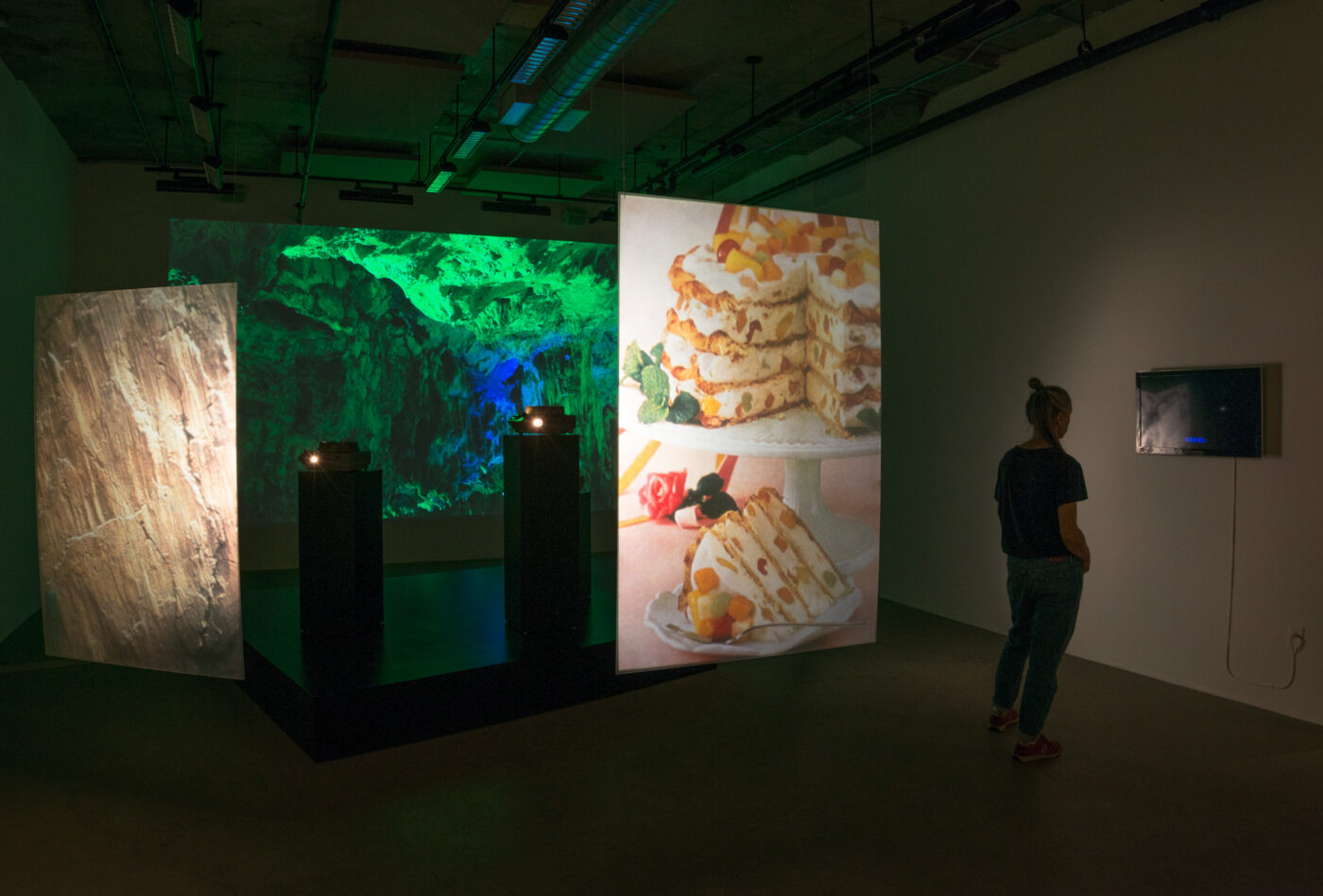
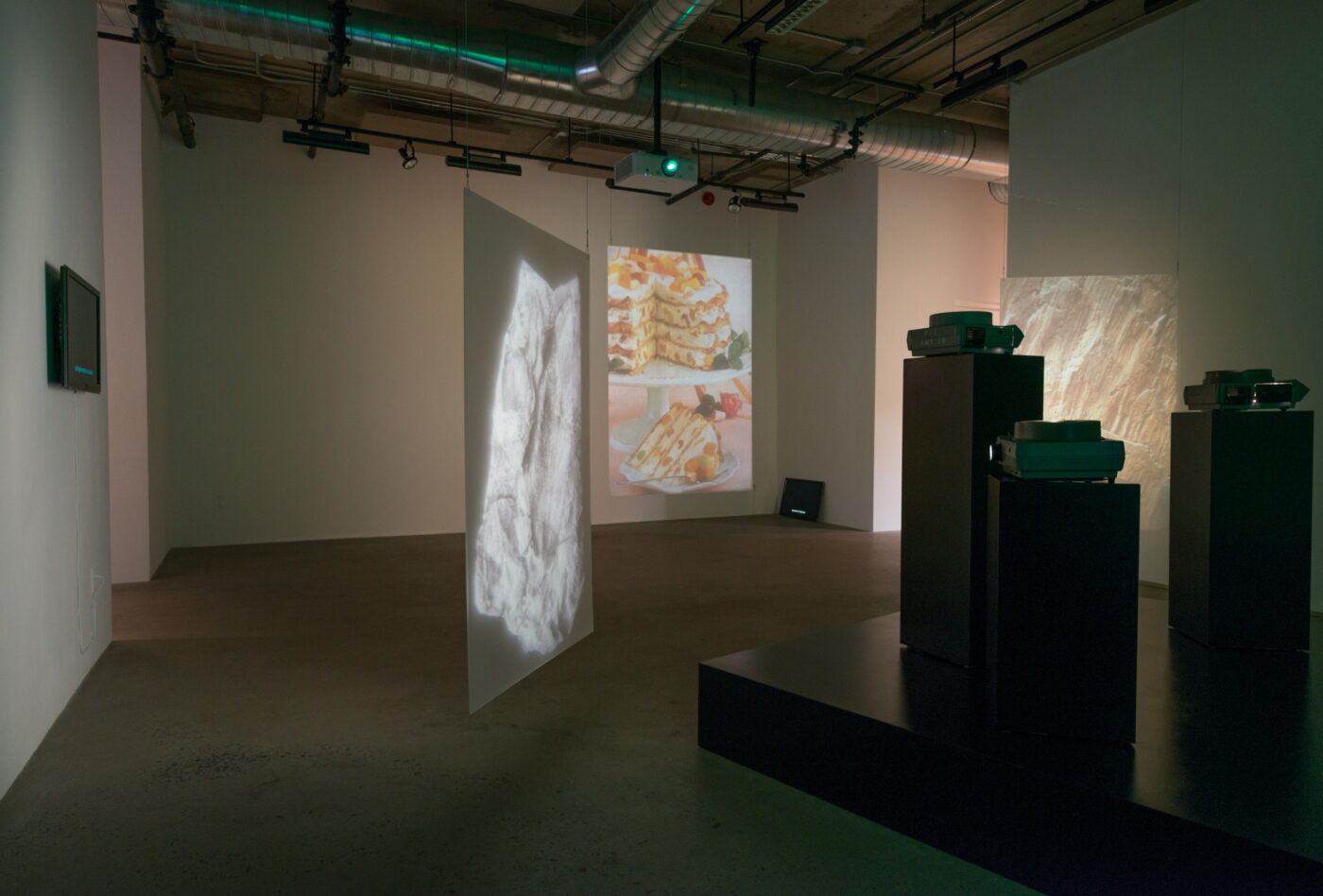
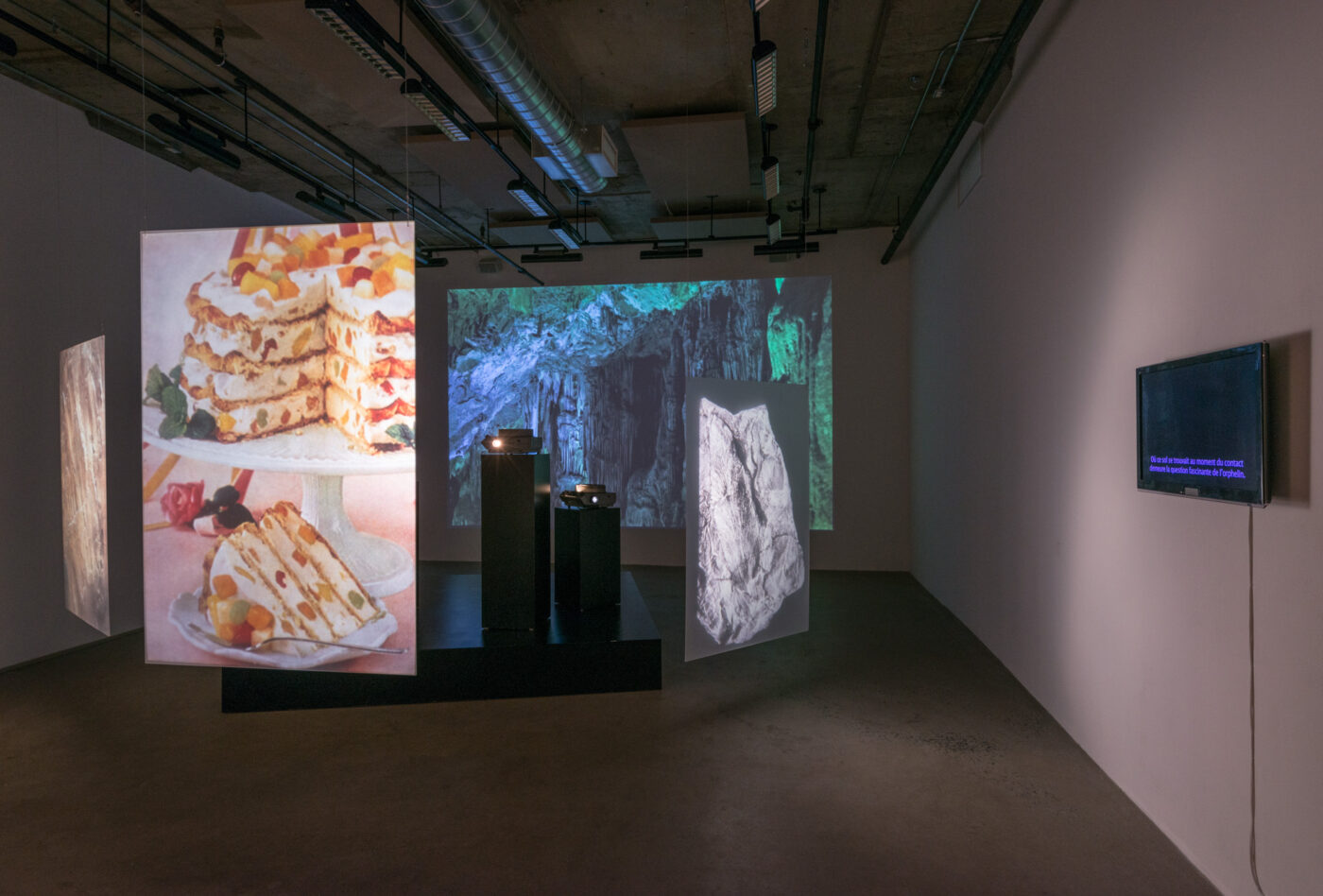
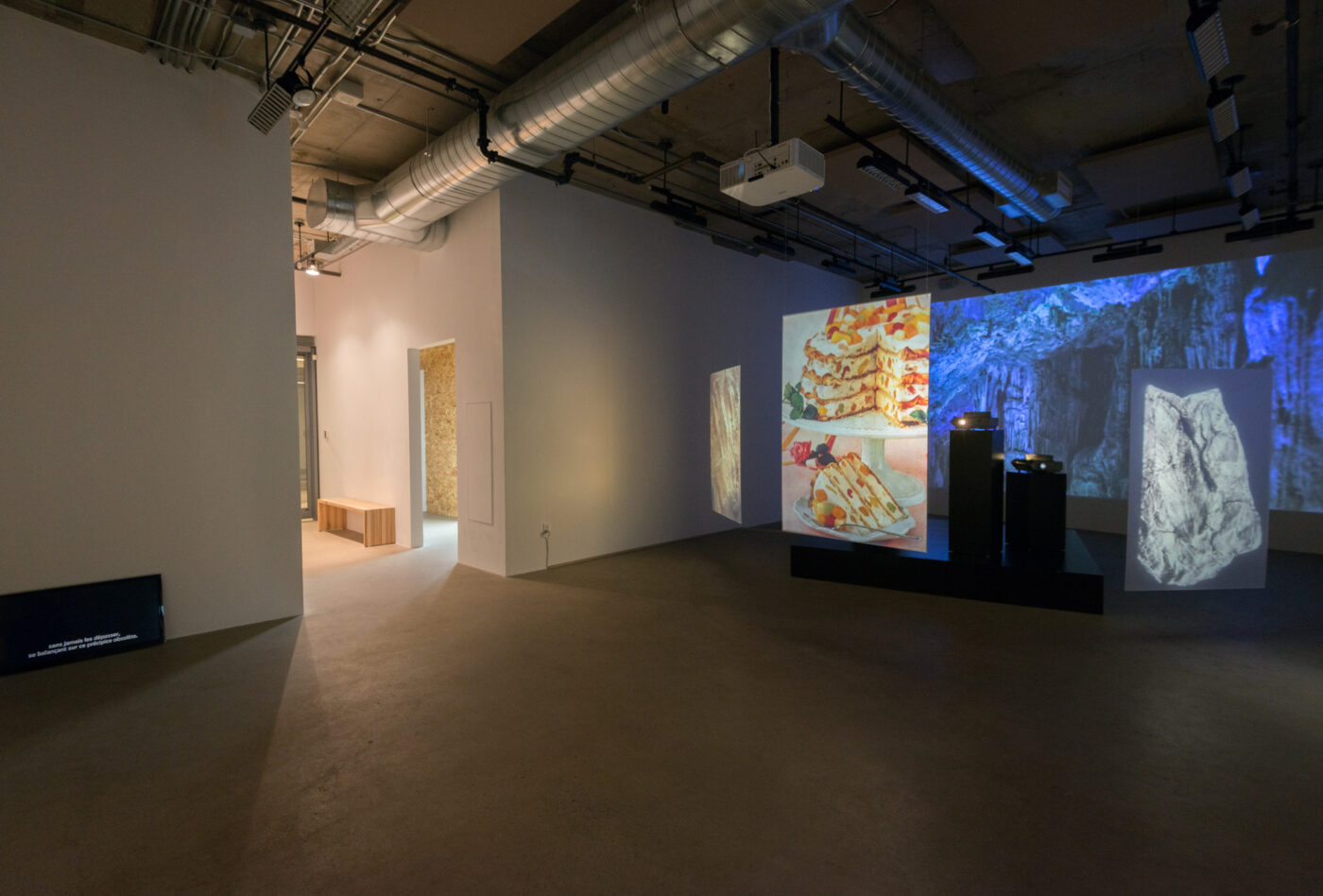
As an artist of multicultural descent and transnational history, it is rather fitting that Kapwani Kiwanga should deal with questions of geographies. For her first solo exhibition in Montreal at Centre CLARK, she presents a multichannel installation titled Strata (Technicolor), 2016. Three large projected slide images – a cake, a fossil and a pen leaning on a rock formation offer a suiting introduction that is given context by the video projection. Although, one might say it is the static images that provide context, for the video itself remains black for the most part. Organized as a play divided into acts and scenes, the narrative conducted by a female voice (the artist’s) is centered around four main characters: a Geologist on a quest to find an alleged underwater tunnel between the European and African continents via the Gibraltar strait, a Baker who is meticulous and accurate in making an exquisite layered cake, a Sailor who ponders the myths and legends of those who have traveled the seas and finally, an orphaned Fossil who wonders where it comes from. These four protagonists operate in the narrative almost as tectonic plates, independent but moving along one another – pushing closer or pulling away. The quartet is nonetheless unified by a shared interest in how things come to influence one another, in how alchemy works: the air that turns a batter into a moist cake, time that gradually transforms the fossilized shell of an extinct sea creature into a luminescent rock that brightens a hidden subterranean path between Spain and Morocco, or perhaps the legends of water witches who possess the power to influence the winds and the seas.
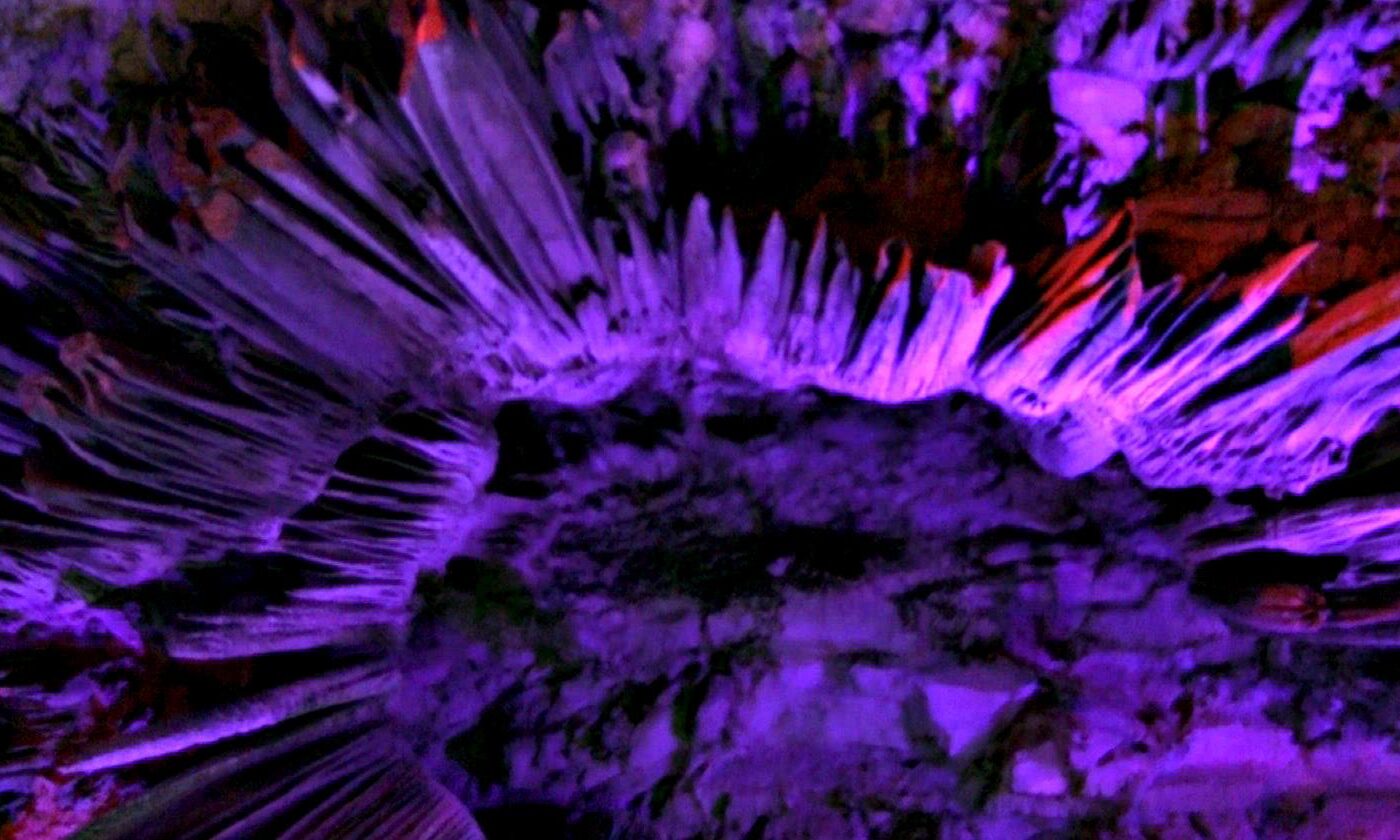
In the last tier of the video various flickering coloured lights suddenly appear to reveal images of stalactites and stalagmites captured in a cave in Gibraltar – thus transporting the viewer into the hypothetical “Afrotunnel” unfound by the story’s Geologist. Kiwanga’s narrative trajectory, which combines fictional and factual elements, layers the way our history has been inscribed into our landscape and how in turn our landscape has been conveyed by our (hi)stories. She presents us with the ongoing geo-temporal and geo-spatial shifts – both literal and metaphorical. And what better metaphor than the orphaned Fossil, a tangible record suggesting a “continent embrace.”
– Anaïs Castro
The artist would like to thank the Centre national des arts plastiques (CNAP) for their research support.

CRÉDIT PHOTO: PAUL LITHERLAND
CRÉDIT PHOTO: PAUL LITHERLAND
CRÉDIT PHOTO: PAUL LITHERLAND
A crowdfunding campaign for emerging artists.